“Are garden suites worth it?” It’s the question every Toronto homeowner asks after seeing the potential rental income and then the construction costs. The answer isn’t simple—it depends on your specific situation, timeline, and what you’re trying to achieve.
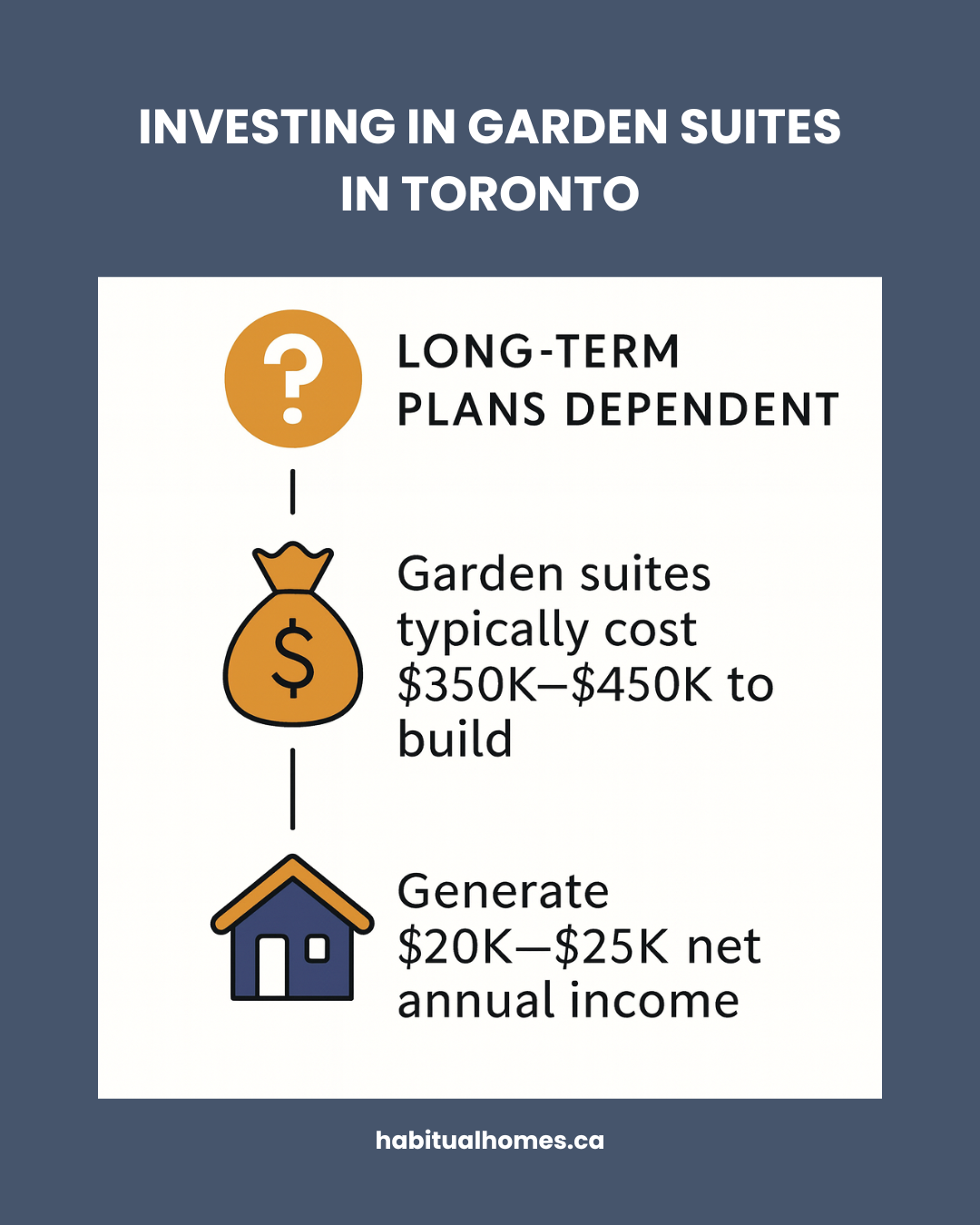
We’ve guided many Toronto families through garden suite projects, and we’ve seen which ones work out financially and which ones become expensive mistakes. Let’s break down the real numbers so you can make an informed decision.
The Financial Reality: Garden Suite ROI Analysis
Here’s what the numbers actually look like for a typical Toronto garden suite:
| Project Details | Conservative Scenario | Optimistic Scenario |
| Total Investment | $350,000 | $450,000 |
| Monthly Rent | $2,200 | $2,800 |
| Annual Gross Income | $26,400 | $33,600 |
| Annual Net Income | $19,800 | $25,200 |
| Simple Payback | 17.7 years | 17.9 years |
| Real Payback (with appreciation) | 12-15 years | 10-13 years |
Bottom line: Garden suites typically take 12-18 years to pay for themselves, depending on your specific numbers.
The Real Costs: What You’re Actually Investing
Total Project Investment Breakdown
Construction Costs: $280,000 – $450,000
- Site preparation and foundation: $40,000 – $65,000
- Structure and exterior: $85,000 – $130,000
- Electrical, plumbing, HVAC: $45,000 – $75,000
- Interior finishing: $60,000 – $110,000
- Kitchen and bathroom: $35,000 – $70,000
Soft Costs: $25,000 – $40,000
- Architect and design: $8,000 – $15,000
- Permits and approvals: $8,000 – $15,000
- Site survey and engineering: $4,000 – $6,000
- Legal and professional fees: $3,000 – $5,000
- Project management: $2,000 – $4,000
Hidden Costs: $15,000 – $30,000
- Temporary living expenses during construction: $8,000 – $15,000
- Utility connections and upgrades: $4,000 – $8,000
- Landscaping restoration: $2,000 – $5,000
- Unexpected issues and changes: $3,000 – $8,000
Ongoing Costs You Can’t Ignore
Annual Operating Expenses:
| Expense Category | Annual Cost | Notes |
| Property tax increase | $2,400 – $4,800 | Based on added assessed value |
| Insurance increase | $600 – $1,200 | Rental property coverage |
| Maintenance and repairs | $1,500 – $3,000 | 5-10% of rental income |
| Vacancy allowance | $1,200 – $2,400 | Budget for 1-2 months vacant |
| Property management | $0 – $3,000 | If you hire management company |
| Total Annual Expenses | $5,700 – $14,400 | Significantly impacts ROI |
The Income Side: Realistic Rental Projections
Toronto Garden Suite Rental Rates (2025)
By Size and Location:
| Suite Size | Downtown/Central | East End | West End | North Toronto | Suburbs |
| 400-500 sq ft | $1,800 – $2,400 | $1,600 – $2,200 | $1,700 – $2,300 | $1,500 – $2,000 | $1,400 – $1,900 |
| 500-700 sq ft | $2,200 – $2,800 | $2,000 – $2,600 | $2,100 – $2,700 | $1,900 – $2,400 | $1,700 – $2,200 |
| 700+ sq ft | $2,600 – $3,400 | $2,400 – $3,000 | $2,500 – $3,200 | $2,200 – $2,800 | $2,000 – $2,600 |
Factors That Affect Rental Income
Premium Features (Add $200-400/month):
- Separate utilities and entrance
- High-end finishes and appliances
- Private outdoor space
- Parking included
- Pet-friendly design
Income Reducers:
- Shared utilities with main house
- Limited natural light
- No parking available
- Restrictive lease terms
- Poor layout or finishes
When Garden Suites Make Financial Sense
The Sweet Spot Properties
Best Candidates for Positive ROI:
Property Value: $800,000 – $1,500,000
- Garden suite cost represents reasonable percentage of home value
- Neighborhood supports rental rates needed for payback
- Home equity available for financing
Lot Characteristics:
- 35+ foot width, 110+ foot depth
- Good rear yard access
- Minimal existing structures
- No major tree or grading issues
Market Conditions:
- Strong rental demand in area
- Limited rental supply
- Growing neighborhood with young professionals/families
- Good transit access
Real-World Success Example
Case Study: Leslieville Property
- Home value: $1,200,000
- Garden suite cost: $385,000
- Suite size: 650 sq ft, 1-bedroom + den
- Monthly rent: $2,500
- Annual net income: $22,500
- Payback period: 17 years
- Verdict: Worthwhile for long-term owners
When Garden Suites DON’T Make Sense
Financial Red Flags
Over-Improvement Risk:
- Garden suite cost exceeds 40% of home value
- Neighborhood rental rates too low for reasonable payback
- Construction costs spiral beyond $500,000
Property Limitations:
- Lot too small for reasonable suite size
- Major site challenges (rock, trees, access)
- Existing structures limit options
Personal Circumstances:
- Planning to sell within 10 years
- Can’t handle tenant management responsibilities
- Tight budget with no contingency for cost overruns
Quality of Life Impacts
Positive Aspects:
- Additional income stream provides financial security
- Flexible space for family use when not rented
- Increases overall property value
- Provides housing for extended family if needed
Negative Aspects:
- Loss of backyard privacy and space
- Ongoing landlord responsibilities
- Potential tenant conflicts and issues
- Construction disruption (8-12 months)
Landlord Reality Check
Monthly Responsibilities:
- Rent collection and tenant communication
- Maintenance and repair coordination
- Utility bill management (if shared)
- Property inspections and upkeep
Annual Responsibilities:
- Tenant screening and turnover
- Tax reporting and record keeping
- Insurance claims and documentation
- Major maintenance planning
Crisis Management:
- Emergency repairs (plumbing, heating, electrical)
- Tenant disputes and legal issues
- Vacancy periods and re-renting
- Damage assessment and repairs
Alternative Investments: What Else Could You Do?
$400,000 Investment Alternatives
Stock Market Investment:
- Historical average return: 7-10% annually
- $400,000 invested = $28,000 – $40,000 annual return
- Much more liquid than real estate
- No landlord responsibilities
REIT Investment:
- Real estate exposure without property management
- Typical returns: 6-8% annually
- $400,000 = $24,000 – $32,000 annual income
- Professional management included
Main House Renovation:
- Kitchen and bathroom upgrades: $100,000 – $150,000
- Remainder invested in markets
- Improved daily living experience
- Potential home value increase
Investment Comparison Table
| Investment Option | Annual Return | Liquidity | Management Required | Risk Level |
| Garden suite | $20,000 – $25,000 | Very low | High | Medium-high |
| Stock market | $28,000 – $40,000 | High | None | Medium |
| REITs | $24,000 – $32,000 | High | None | Medium |
| Main house reno + investments | $25,000 – $35,000 | Medium | Low | Medium |
The Break-Even Analysis
Scenario Planning: When Does It Become Worth It?
Best Case Scenario:
- Construction cost: $350,000
- Monthly rent: $2,600
- Annual expenses: $6,000
- Net annual income: $25,200
- Break-even: 14 years
Worst Case Scenario:
- Construction cost: $480,000 (overruns)
- Monthly rent: $2,100
- Annual expenses: $8,400
- Net annual income: $16,800
- Break-even: 29+ years
Most Likely Scenario:
- Construction cost: $400,000
- Monthly rent: $2,350
- Annual expenses: $7,200
- Net annual income: $21,000
- Break-even: 19 years
Making the Decision: Questions to Ask Yourself
Financial Readiness Check
Can You Afford It?
- Do you have 20% down payment for construction loan?
- Can you service debt payments during construction?
- Do you have 6 months emergency fund beyond project costs?
- Can your family budget handle tenant vacancy periods?
Timeline Alignment:
- Are you planning to stay in the home 15+ years?
- Can you handle 8-12 months of construction disruption?
- Are you prepared for the long payback period?
Personal Suitability Assessment
Landlord Skills:
- Are you comfortable dealing with tenant issues?
- Do you have time for property management tasks?
- Can you handle maintenance and repair coordination?
- Are you prepared for the legal responsibilities?
Risk Tolerance:
- Can you handle construction cost overruns?
- Are you comfortable with tenant turnover and vacancy?
- Can you manage the illiquidity