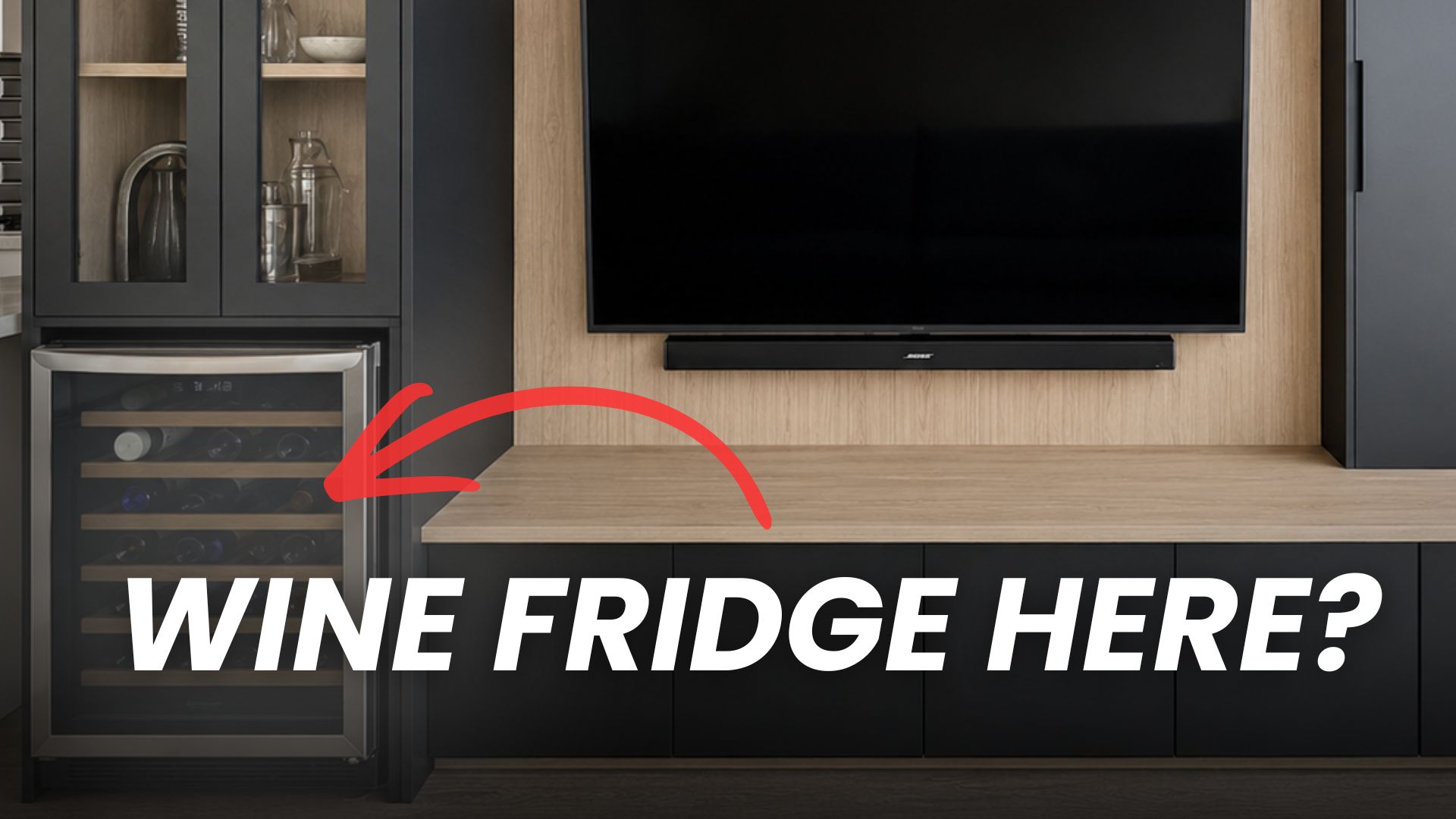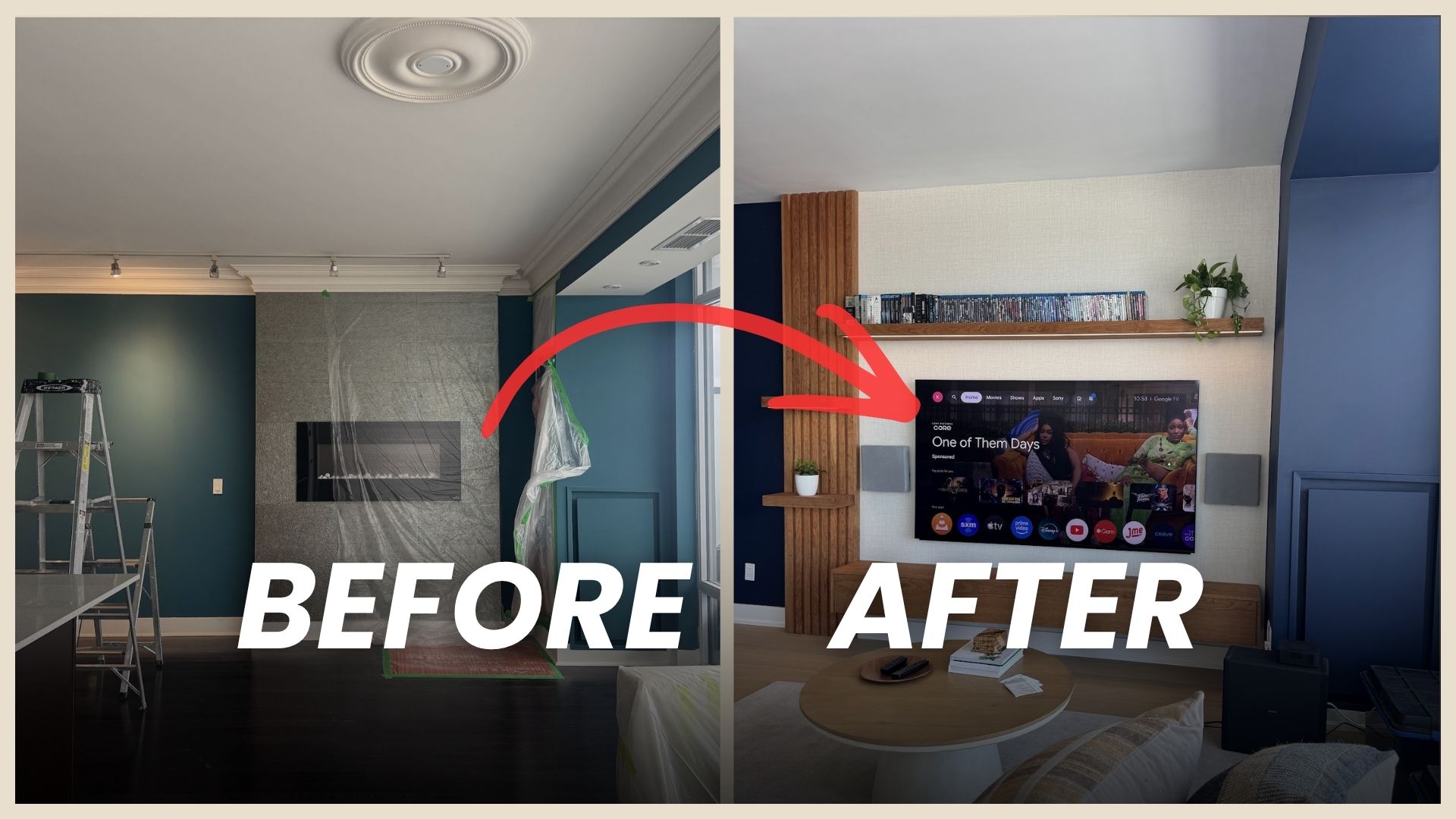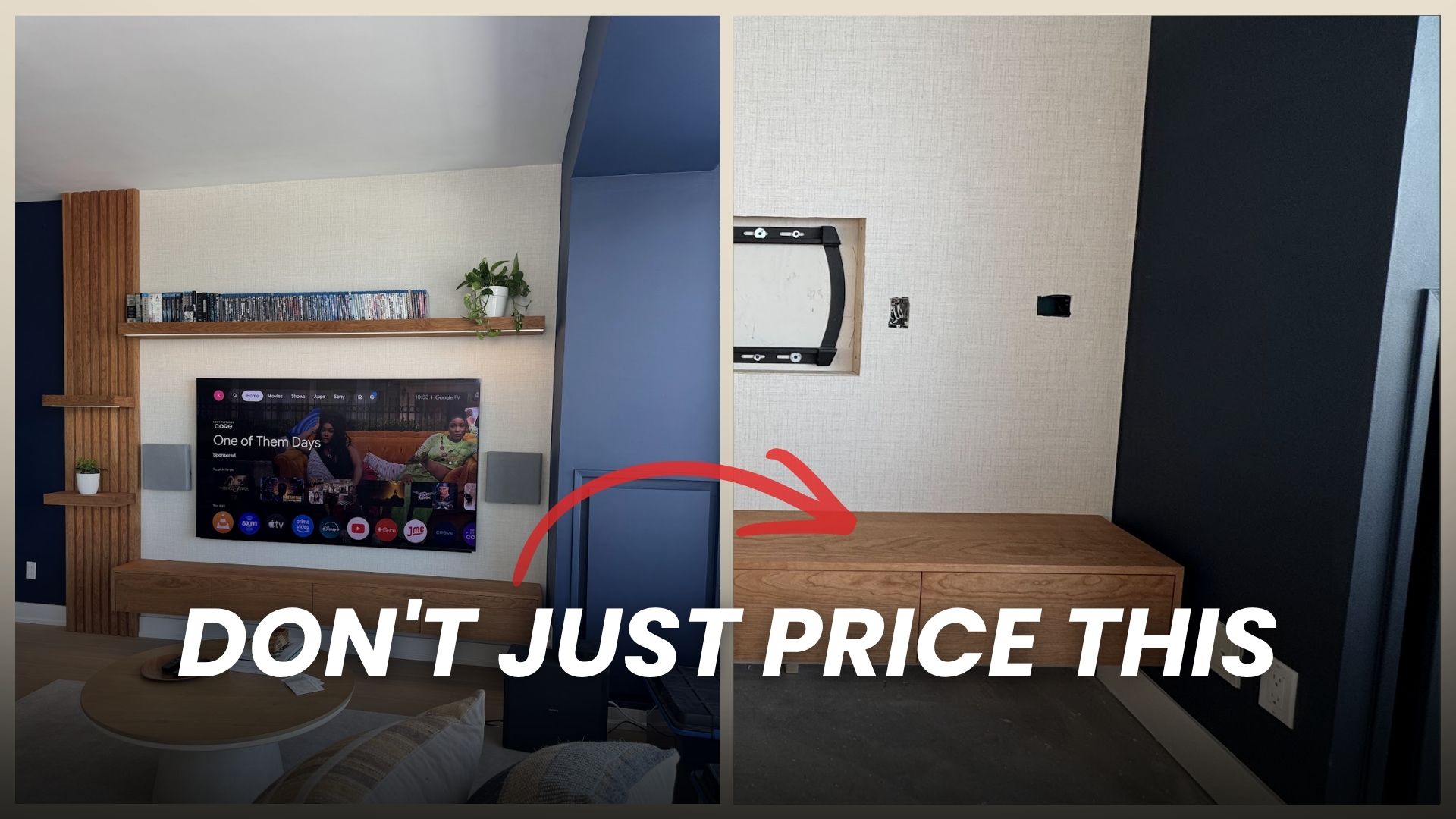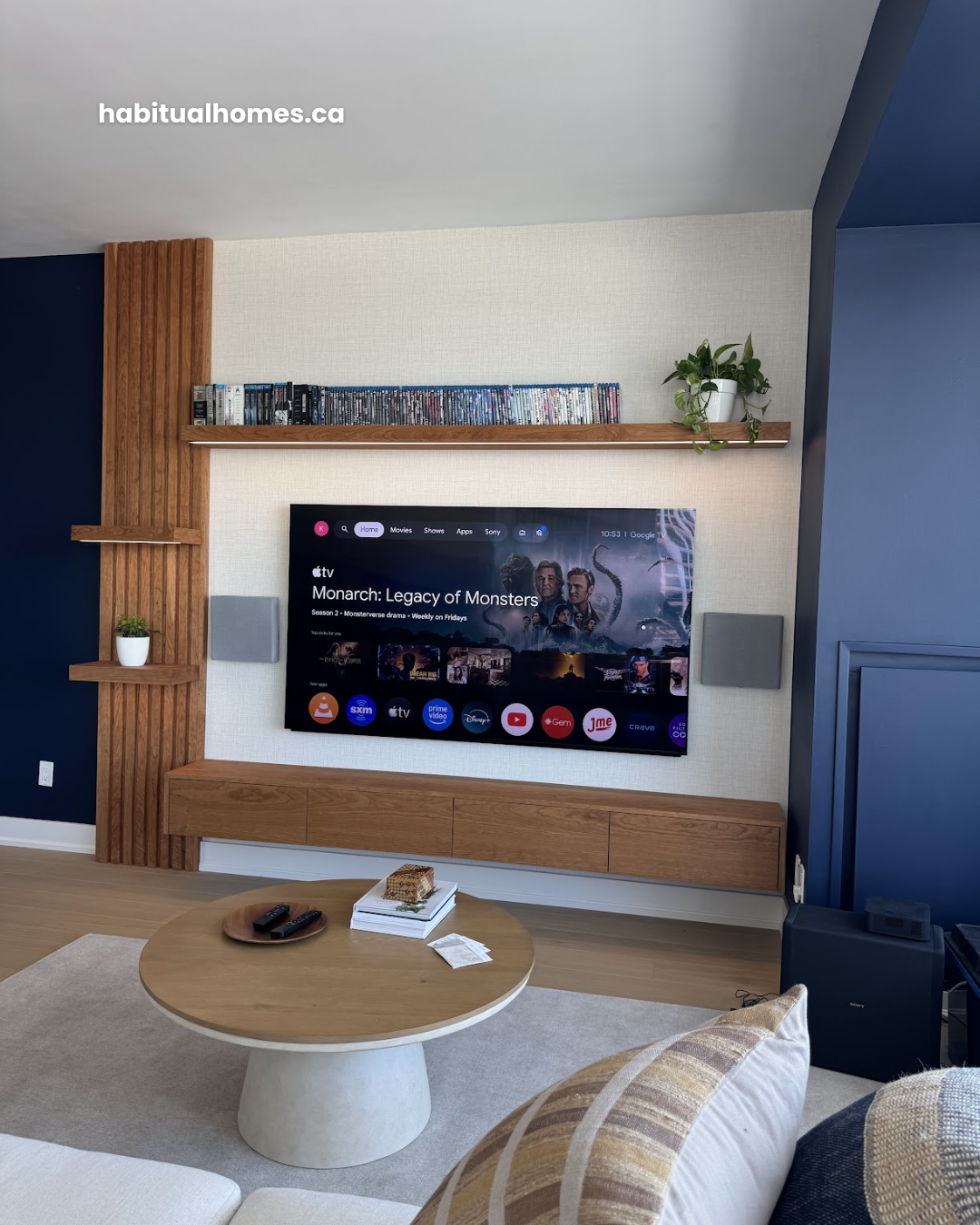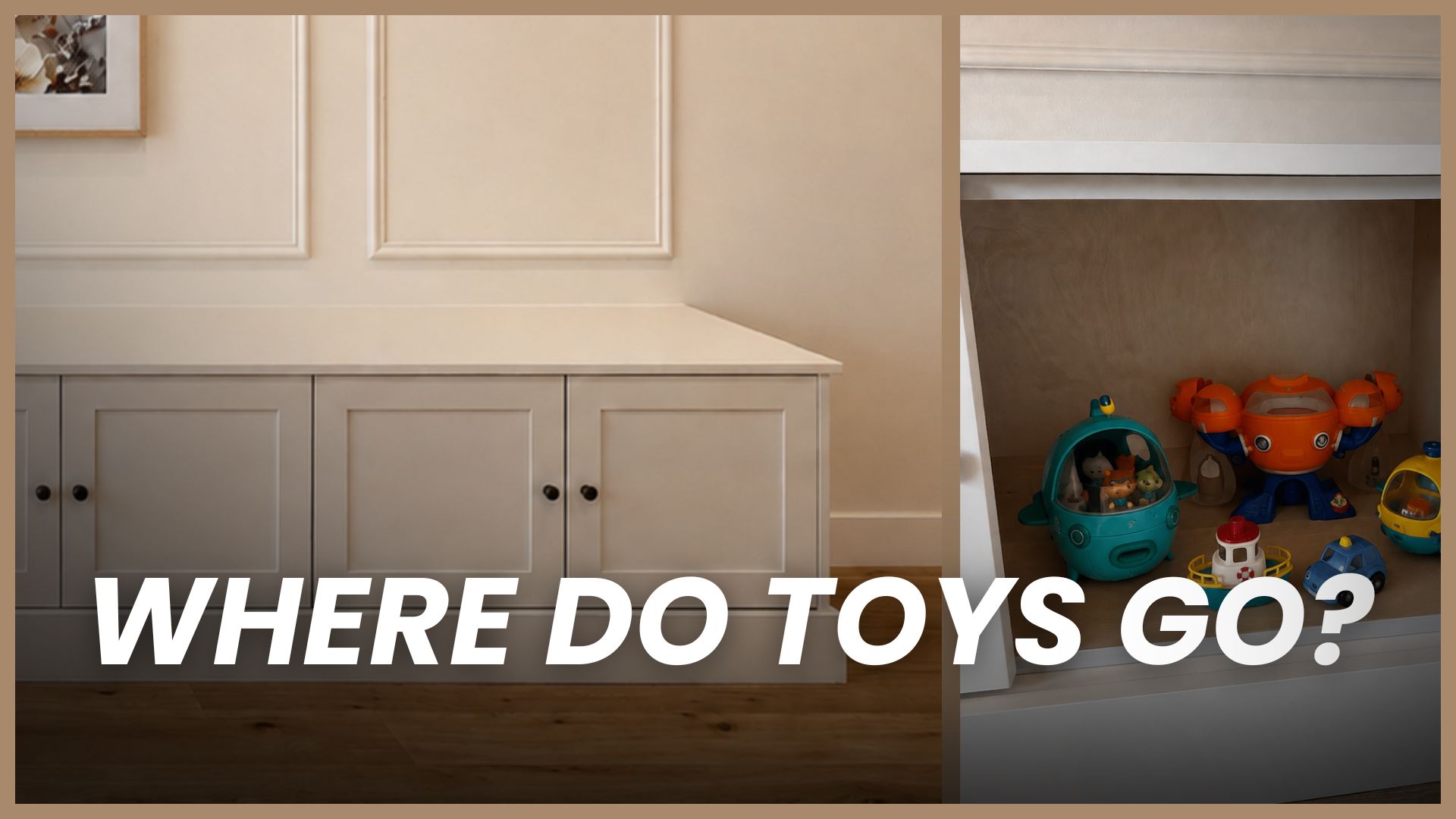
Quick Answer: TV wall storage that actually works with kids means closed storage, not open shelving, sized and placed to hold toys and everyday mess with a door that closes on it. On one of our projects, we built closed storage directly into the TV wall using the same materials and finishes as the rest of the wall, so it still reads as a timeless piece of furniture, not a kids’ storage unit dropped into the room.
Why Toy Storage in the Living Room Usually Falls Apart
Open shelving and loose bins are the most common answer to toy clutter, and they’re usually the first thing to fail. Shelves get overloaded, bins spill, and everything ends up back on the floor by the end of the day. None of that is a discipline problem. It’s a design problem, the same gap we cover in a cabinet alone isn’t enough: open storage puts everything on display, including the mess, and gives kids no natural stopping point for putting things away.
What Closed Storage Actually Solves for a Family With Kids
Closed storage built into the TV wall gives toys, electronics, and everyday items an actual place to go, with a door that closes over all of it. That single change does a few things open shelving can’t:
- Removes the mess from view, so the living room doesn’t read as a playroom even when it’s being used as one.
- Gives kids a clear place to put things away, instead of a shelf that slowly fills up with no obvious system.
- Handles the daily cycle of toys coming out and going back in without the room ever looking permanently cluttered.
- Holds more than a shelf can, since a closed cabinet isn’t limited by what looks tidy on display.
Storage That Still Looks Timeless, Not Like a Kids’ Room
The part that’s easy to miss is that closed storage for kids doesn’t have to look like it was built for kids. On one of our projects, we matched the storage cabinetry to the same materials and finishes as the rest of the TV wall, so the whole wall reads as one designed piece, not a media console next to a separate kids’ storage unit.
That matters for two reasons. First, it means the room doesn’t look like a playroom just because there are kids living in it. Second, it means the wall doesn’t need to be redone in a few years once the kids are older and the toys are gone. A timeless design built around real storage needs holds up long after the reason you built it changes.
Closed Doors, Glass Doors, or Open Shelves: What Actually Works With Kids
Not every storage spaces decision comes down to open versus closed. Glass door cabinets look finished and let you see what’s stored on the other side, but with kids that’s usually the wrong call. A glass door still shows the mess, it just puts a pane of glass between you and it. For a media wall with toys behind it, solid cabinet doors do more work than glass ever could.
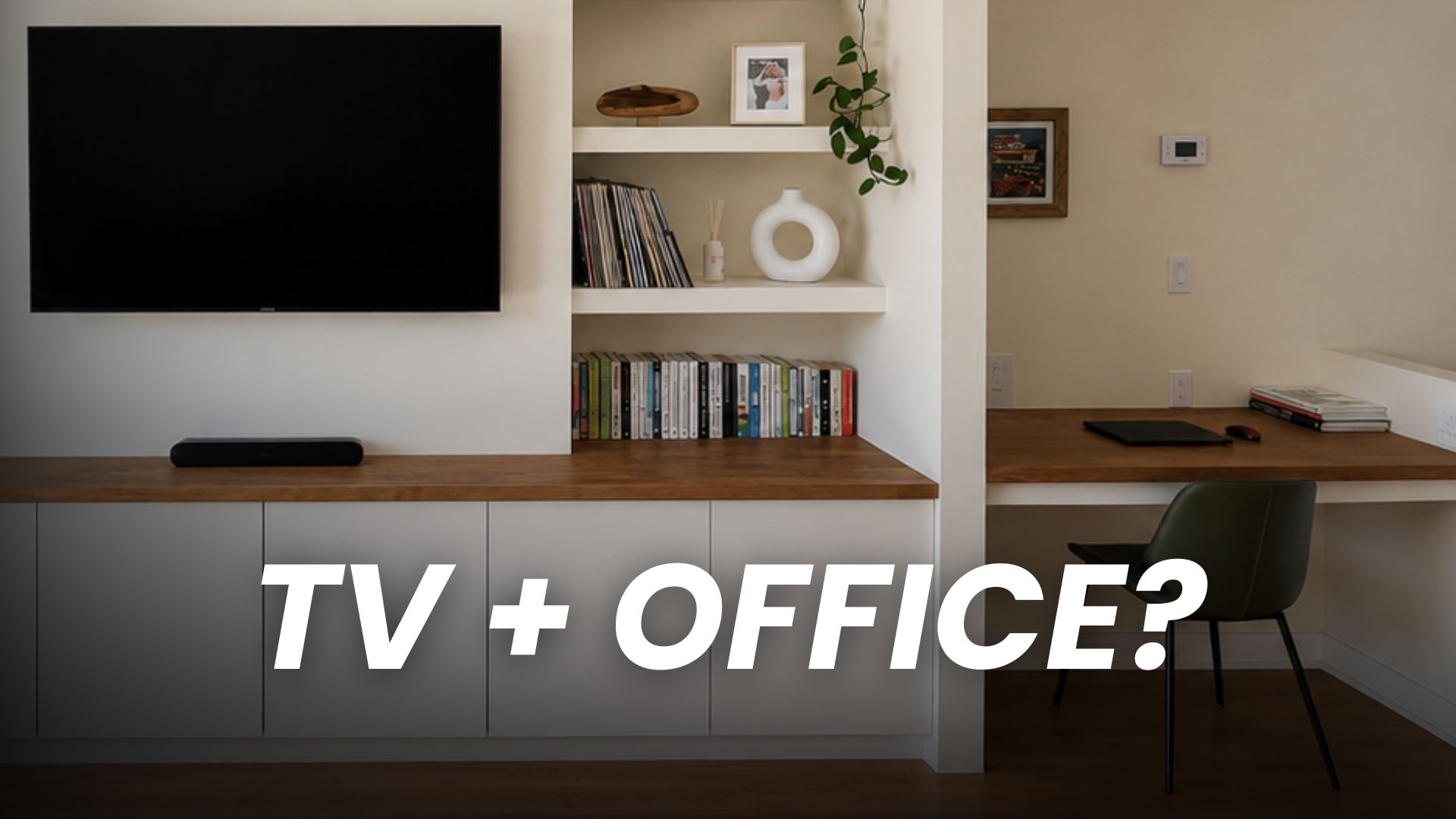
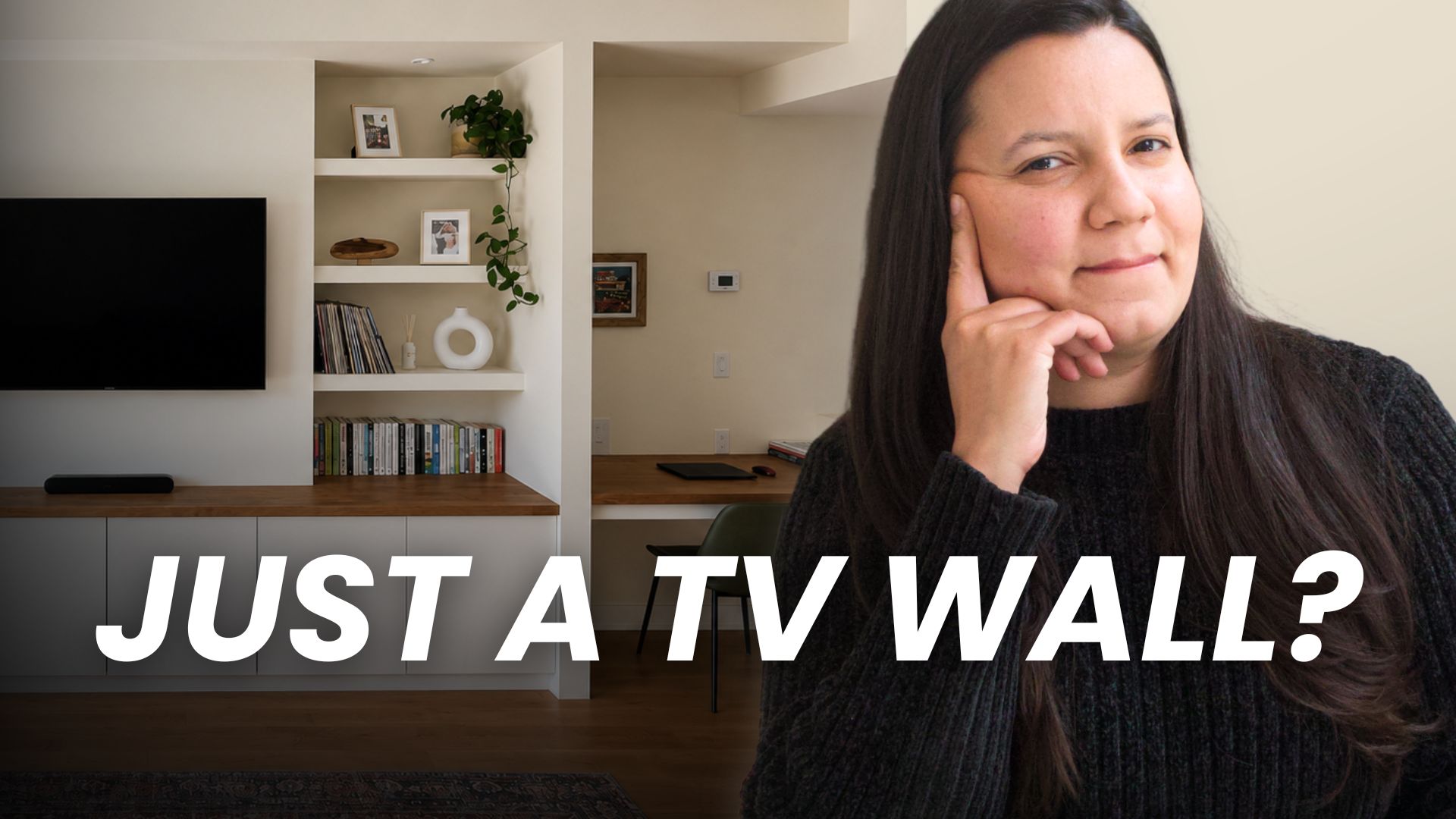
That’s part of why we treat this differently from the home office we built into a different TV wall, where open shelves and display space made sense for books and work supplies. A kids’ storage wall has a different job. The entertainment space around the TV still needs to look considered, and modern media consoles or a wall-mounted entertainment center both lean on clean lines and closed doors, not open cubbies stacked with bins.
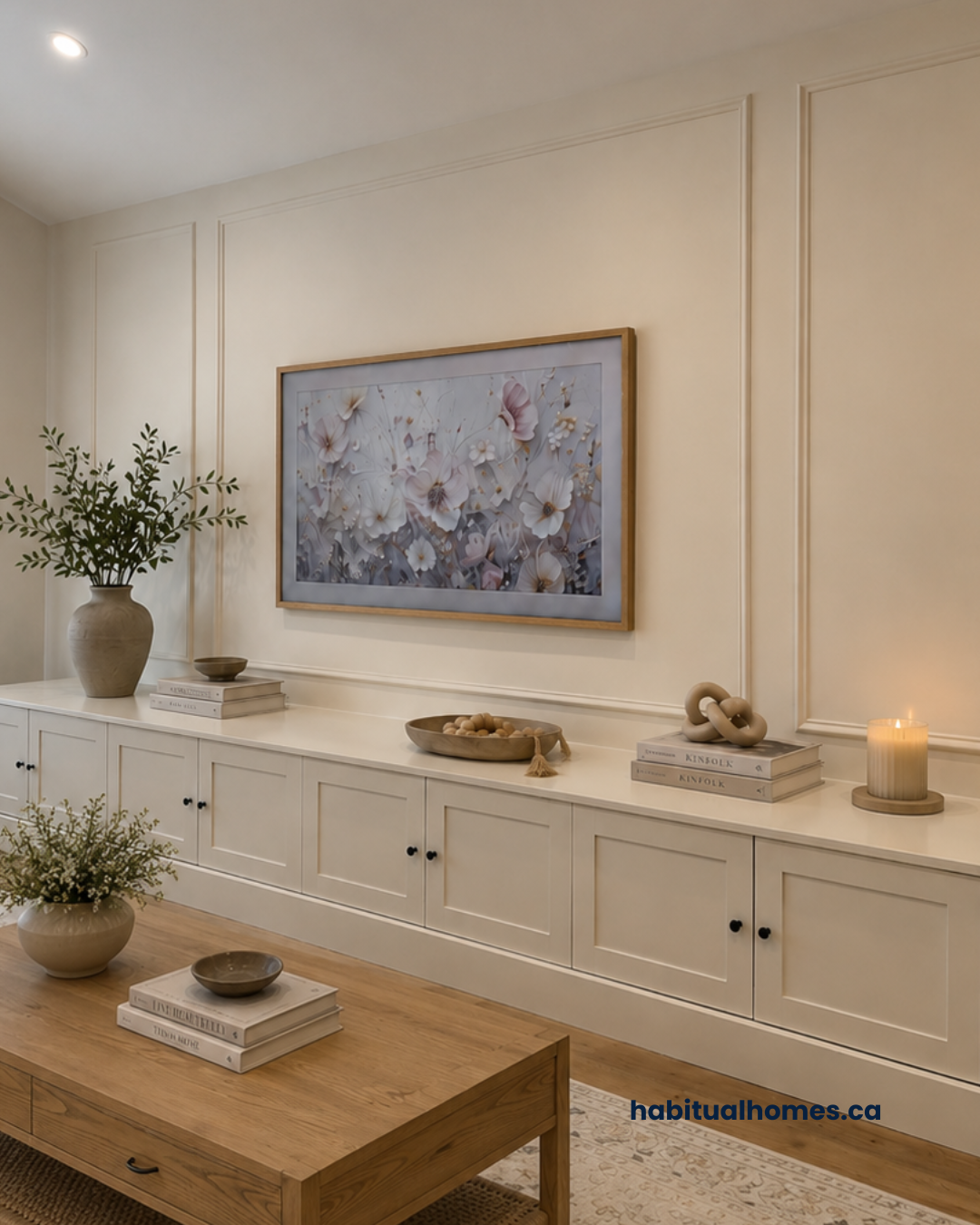
Compare that to a modern tv stand or a freestanding piece of storage furniture bought separately: those pieces solve for the TV, not for the storage spaces around it. A built-in tv wall unit solves for both at once, closed cabinet doors for the mess, a defined spot for the screen, and a footprint that doesn’t compete with tv benches or extra furniture crowded into the room. For a broader look at how this plays out across different projects, see general TV wall storage ideas we’ve built for other clients.
What to Plan Into the Storage Itself
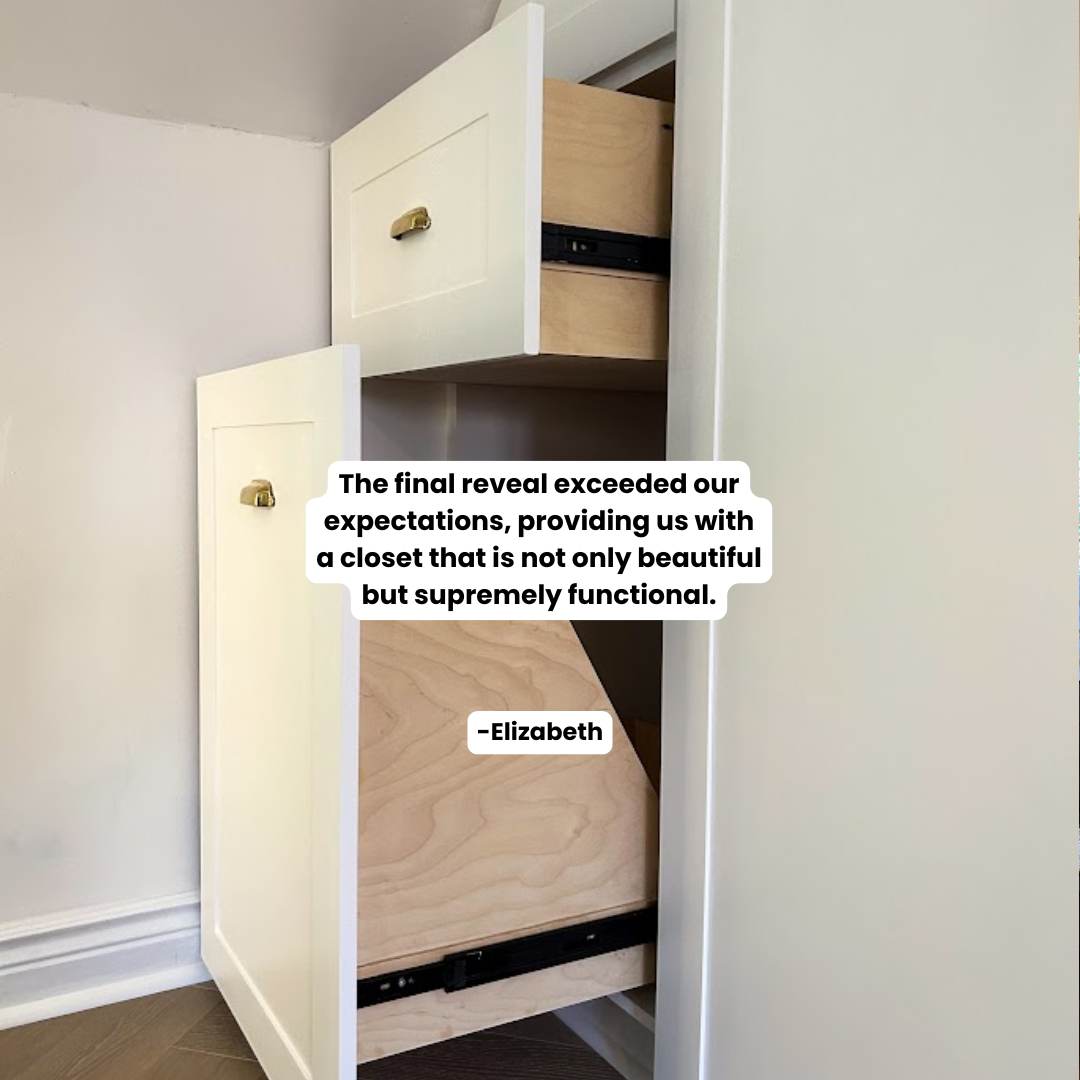
Once the doors are settled, the storage combination behind them matters just as much. Storage drawers work better than open bins for smaller items, art supplies, chargers, small toys, since a drawer closes fully instead of tipping over. Adjustable shelves behind the doors let the storage change as your kids grow, from bulky toy bins now to games and books later, without redesigning the wall.
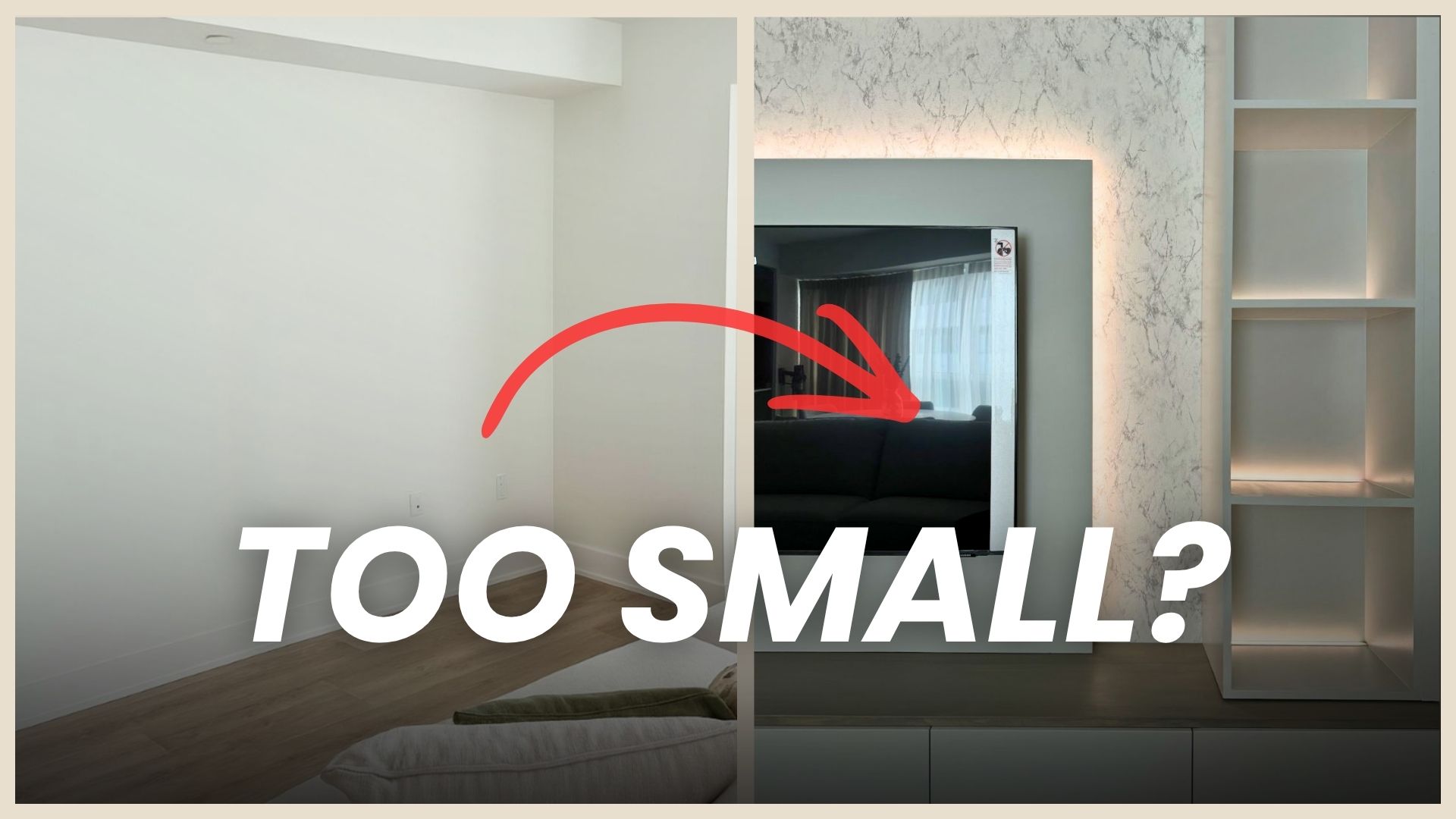
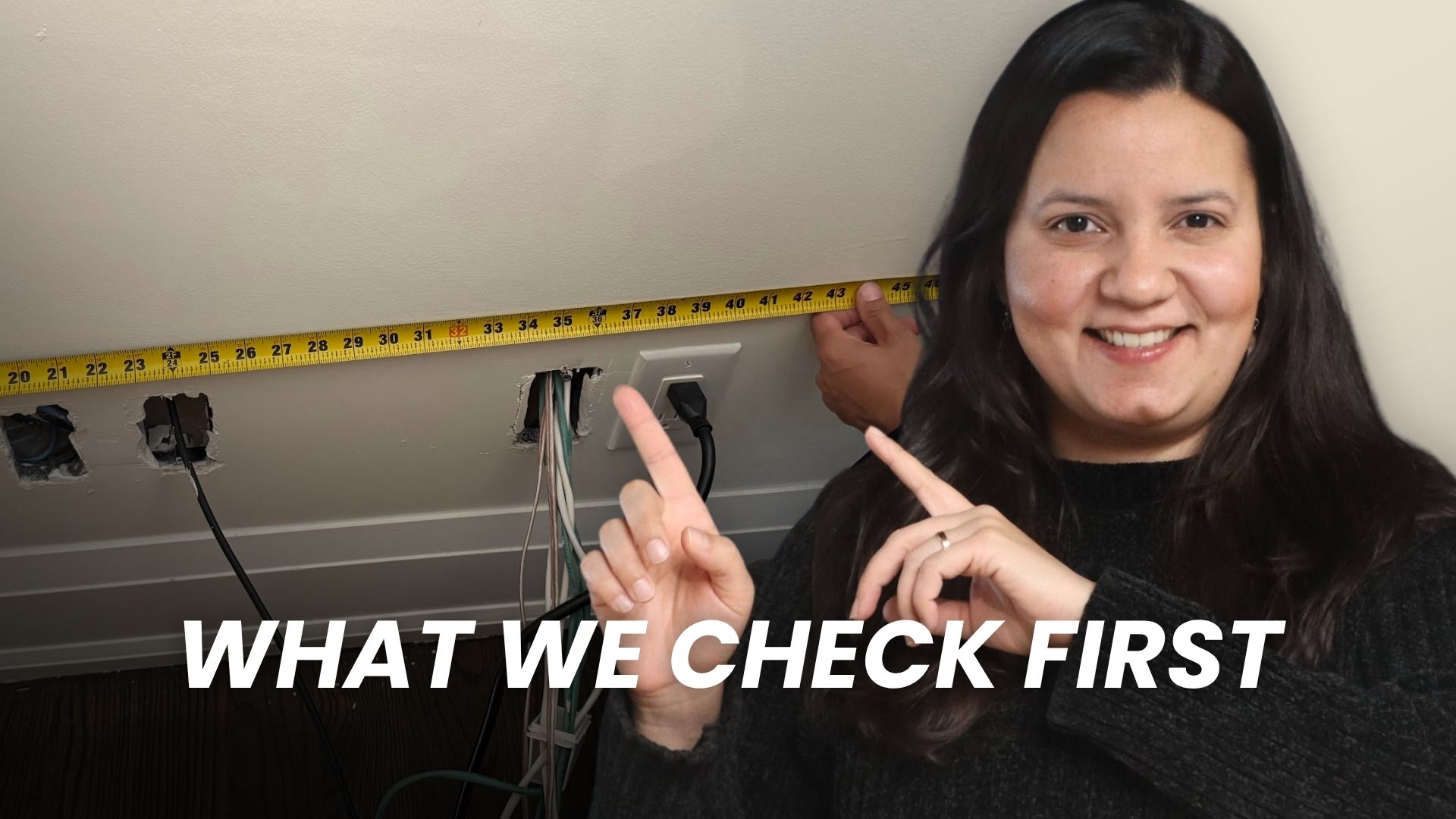
The room dimensions matter too. A wall unit sized to the actual room, not a generic size pulled from a catalog, is what makes it read as a focal point instead of a piece of storage furniture pushed against the wall. Practical details make the difference day to day: a power outlet run to the right spot for a charging station, led light strips inside open sections so the storage doesn’t disappear into shadow, and available colors and finishes chosen to match the rest of the wall rather than standing apart from it. A dark gray finish reads differently than a warm wood tone, and either can work. The point is choosing it on purpose as part of a custom TV wall design, not defaulting to whatever a stock cabinet came in.
None of this is about adding storage options for their own sake. It’s about matching the ample storage space a family with kids actually needs to storage needs that change year to year, in a practical solution that still looks like it was designed, not assembled.
A Real Example
On one of our projects, the family needed toy storage that wouldn’t take over the living room. We built closed storage directly into the TV wall, sized for a house with small kids, using the same finishes as the rest of the wall so it looked intentional, not added on. The mess had a place to go, and a door to close on it, without the room looking like it was designed around the kids instead of the family.
Curious what that could look like in your own living room?
Fill out the consultation form and we’ll walk your space together.
Book a ConsultationHow to Tell If Your TV Wall Needs Closed Storage
Look at your living room at the end of a normal day. If toys, remotes, and everyday items are visible on open shelves or piled on the floor, open storage isn’t doing its job. The fix usually isn’t more bins, it’s a wall that was designed with real, closed storage from the start, in materials that will still look right once the kids have outgrown the toys.
FAQ
Will closed storage look too plain or too much like a cabinet from a store?
Not if it’s designed as part of the wall rather than added on. Matching the materials, hardware, and proportions to the rest of the TV wall is what keeps it from looking like a separate piece of furniture.
How much storage can actually fit in a TV wall?
More than most people expect. A wall designed with closed storage in mind, rather than squeezed in as an afterthought, can hold a surprising amount without changing how the room feels.
Does closed storage work in a small living room or condo?
Yes. Closed storage is often more space-efficient than open shelving or bins, since it doesn’t rely on everything staying visibly tidy to look good.
What happens to this storage once the kids are older?
Since the design isn’t built to look like a kids’ storage unit, it keeps working for whatever the family needs next, books, games, everyday items, without needing to be replaced.
Should the storage be at kid height or adult height?
That depends on how independent you want your kids to be with putting things away. We talk through this during the design consultation based on your kids’ ages and how the room actually gets used.
Is closed storage more expensive than open shelving?
Every project is different. We provide a transparent estimate that covers everything involved, so you know what you’re getting before anything is built.
Does the storage need to hide media devices like a game console or streaming box, too?
Yes, and it’s worth planning for from the start. Cable management and ventilation for media devices behind closed doors work best when they’re designed in, not added as an afterthought once the cabinetry is built.
Will closed storage give the wall a modern look, or does it read as more traditional?
Either is possible. Linear media cabinets with simple hardware and a clean finish tend to read modern, while more traditional door styles and trim can give the same closed storage a different feel. It comes down to the finishes chosen for the rest of the wall.
Still figuring out what your TV wall needs to hold? Fill out the consultation form and we’ll help you figure it out.