One of the most common questions homeowners ask is, “How long does a bathroom remodel take?” The answer can vary depending on the scope of the project, whether permits are required, and the complexity of the work.
In this blog post, we’ll explore the timeline for a recent bathroom remodel in Toronto, where we transformed an outdated master bathroom into a sleek, modern retreat in just two weeks.
Project Overview: A Quick and Efficient Remodel
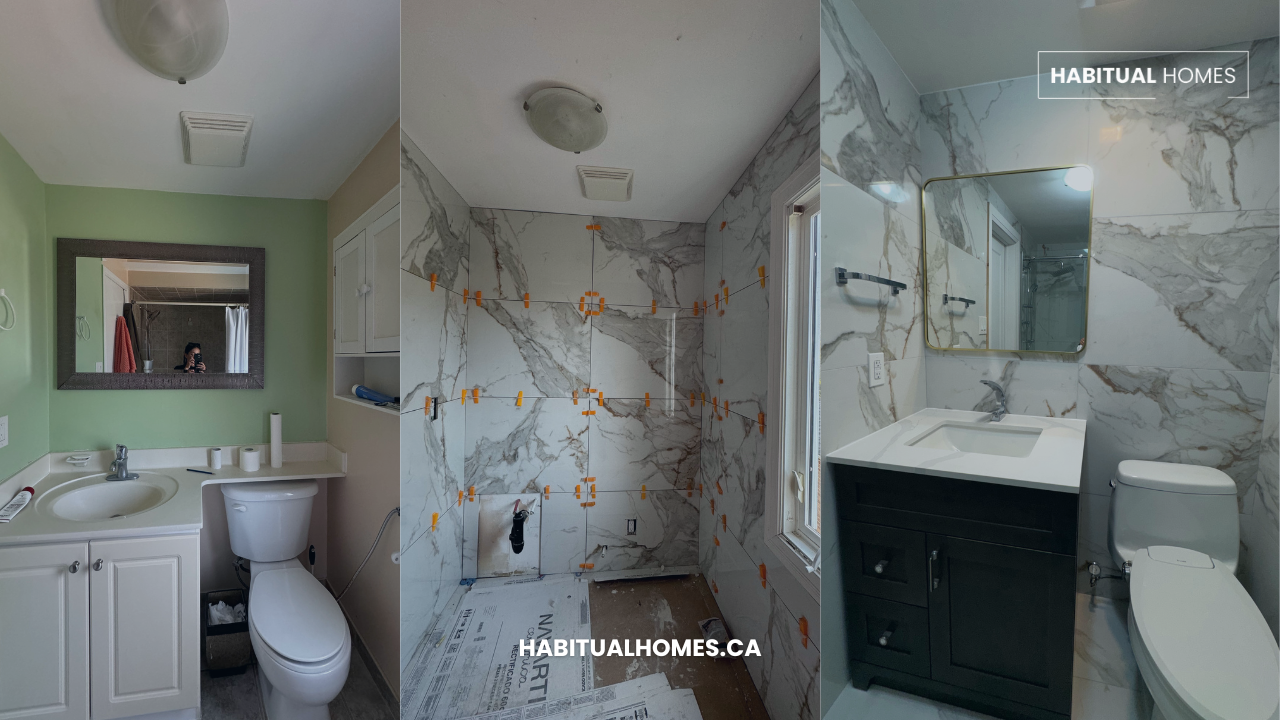
This bathroom remodel was completed in a house and did not require building permits, as there were no changes to the plumbing layout. The focus was on cosmetic upgrades and improving the overall functionality and design of the space. Here’s what we achieved:
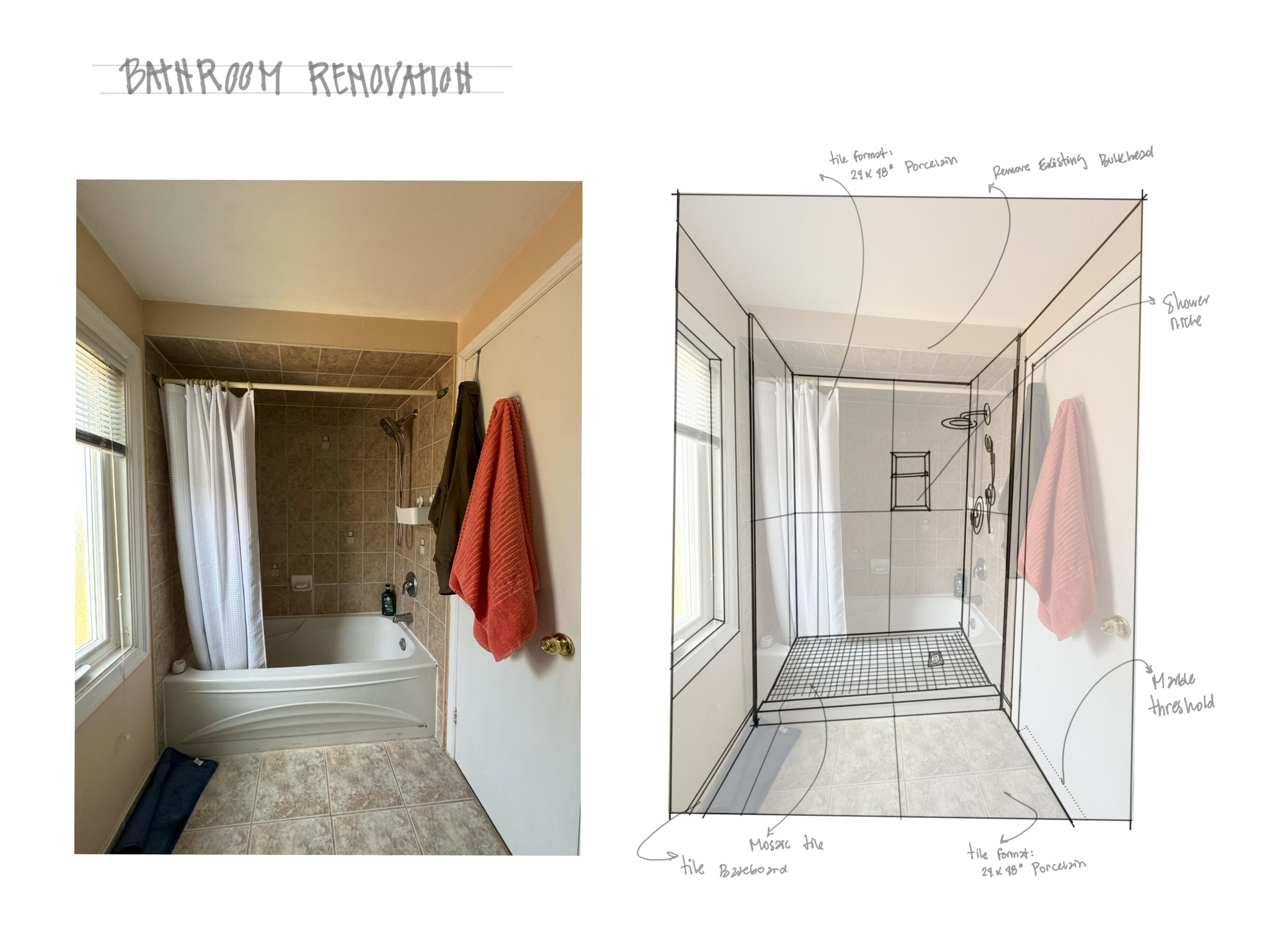
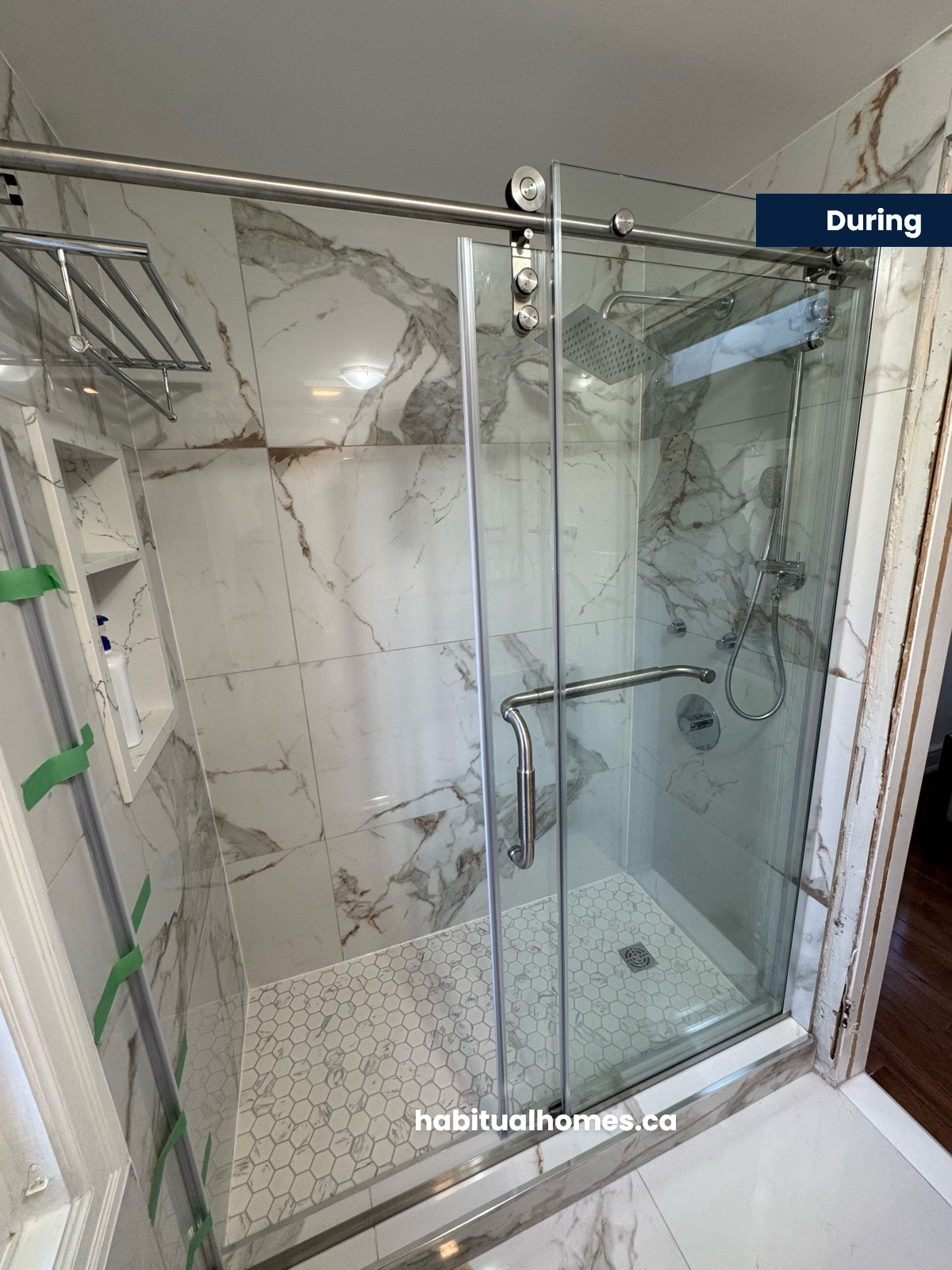
- Replaced a dated bathtub with a spacious walk-in shower.
- Installed frameless glass shower doors for an open, modern look.
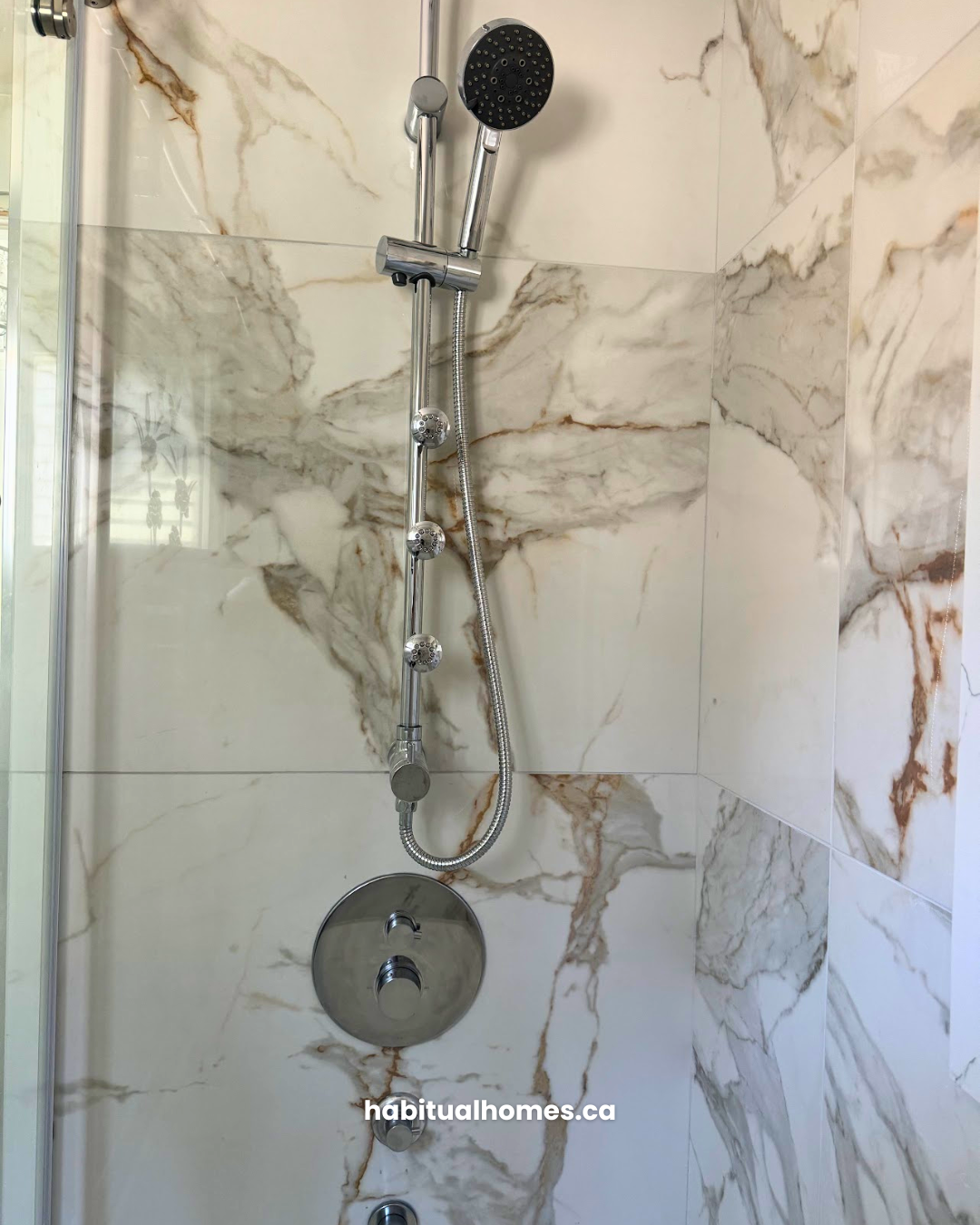
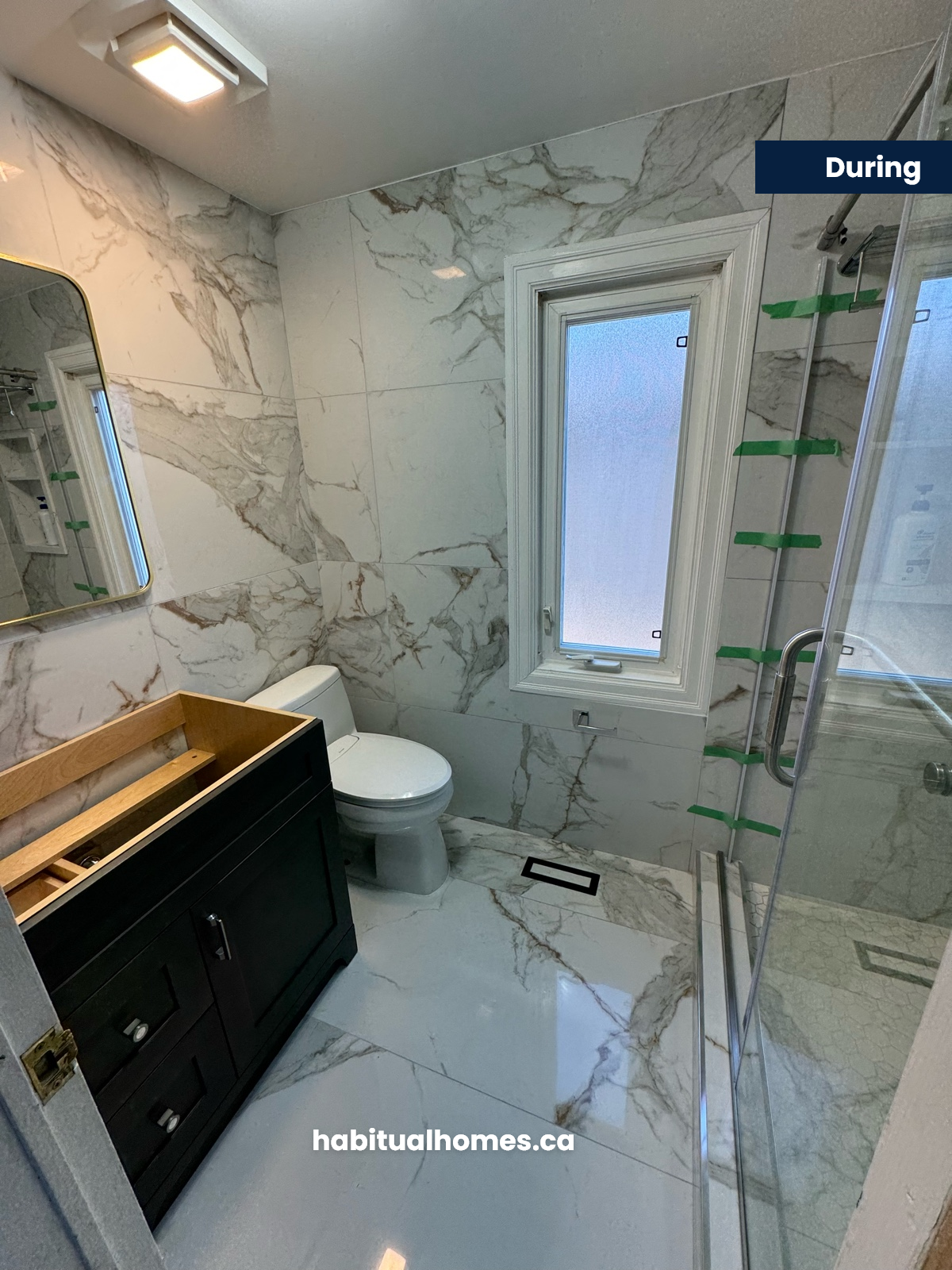
- Updated the walls with large-format marble porcelain tiles, making the space feel bright and expansive.
- Removed a bulky bulkhead above the old tub to allow more natural lighting into the space.
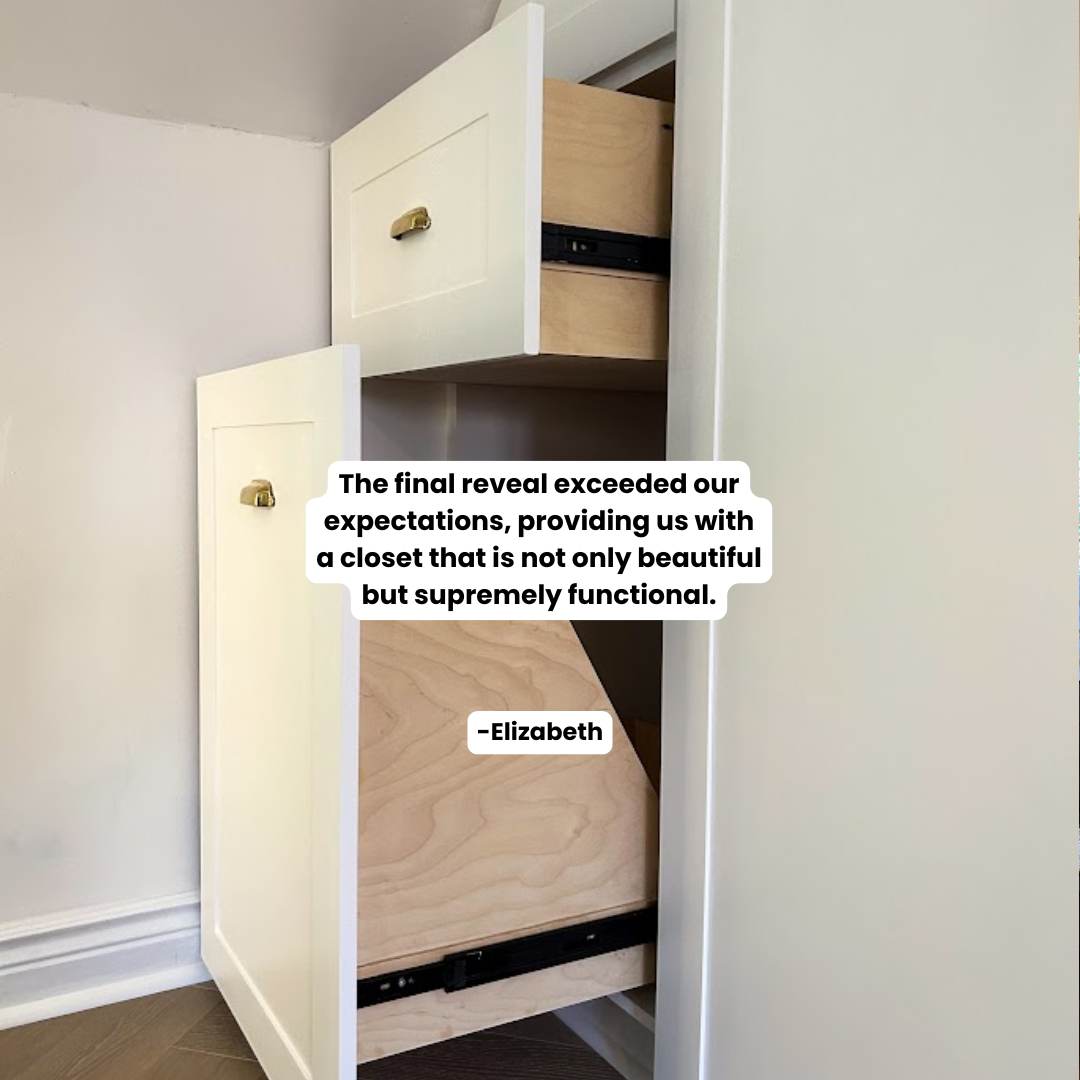
- Refreshed the vanity and added storage to improve usability without compromising style.
Timeline for a Bathroom Remodel
For this project, the timeline was relatively short due to the following factors:
- No Structural or Plumbing Changes:
Since the existing plumbing layout remained unchanged, we didn’t need to request permits or relocate pipes, saving significant time. - Focused Scope:
The work involved mainly surface upgrades, including tile replacement, fixture installation, and a few minor structural adjustments like bulkhead removal. - Well-Planned Execution:
With detailed planning and skilled tradesmen, we completed the remodel efficiently without compromising on quality.
Day-by-Day Breakdown:
- Day 1-2: Demolition and removal of old fixtures (tub, tile, and bulkhead).
- Day 3-5: Plumbing preparation and waterproofing for the shower area.
- Day 6-8: Tile installation on walls and floors, including grout work.
- Day 9-10: Installation of shower glass, vanity, and other fixtures.
- Day 11-12: Painting, finishing touches, and cleanup.
Factors That Impact Bathroom Remodel Timelines
While this project took just two weeks, not all remodels are the same. Here are some factors that can affect the duration of your bathroom renovation:
- Scope of Work:
Adding features like a freestanding bathtub, relocating plumbing, or creating a steam shower can extend the timeline. - Permits and Approvals:
Projects that require structural changes or plumbing modifications may need permits, which can take weeks to secure. - Material Availability:
Custom materials like natural stone or specialty fixtures can delay the timeline if not ordered in advance. - Size of the Bathroom:
Smaller bathrooms may take less time, while larger spaces with features like a large walk-in shower or additional storage can add to the timeline.
What Made This Remodel Efficient?
This project’s success came down to proper planning, clear communication, and the absence of permit requirements. By focusing on modern design, using readily available materials like porcelain tiles, and ensuring every detail was accounted for, we delivered a high-quality transformation in just two weeks.
Thinking About Your Own Bathroom Remodel?
If you’re wondering how long your bathroom remodel might take, the answer depends on your unique project. For homeowners looking for quick yet impactful upgrades, like swapping a tub for a glass-enclosed shower or updating wall tiles, timelines can be as short as 1-2 weeks.
Ready to start your own bathroom remodel? Contact us today to discuss your vision, and let’s make your dream bathroom a reality—on a timeline that works for you.
How Plumbing Work Affects a Bathroom Remodel Timeline
Plumbing can be one of the biggest factors in how long your bathroom remodel takes. If you’re moving a toilet, sink, or shower, it means rerouting pipes—and that takes time. It’s not just the labor; you might also need inspections to make sure everything’s up to code.
In this project, we kept it simple. The plumbing stayed where it was, so we didn’t have to spend time moving pipes or waiting for approvals. That meant we could focus on making the new walk-in shower and updated vanity look amazing. This saved time and money, which is always a win.
If your remodel involves moving fixtures or adding new ones, be ready to add a week or two to your timeline. It’s worth it to get it done right, but it’s good to know upfront so you can plan accordingly.
Do You Need Permits for Your Bathroom Remodel?
Whether or not you need permits depends on what you’re changing. If your remodel involves big structural changes, plumbing or electrical work, or moving walls, chances are you’ll need permits. And that can add time to your project because permits have to be approved before work can start.
For this bathroom remodel, we didn’t need permits. Why? Because there were no changes to the plumbing layout or any major structural work. This saved us a lot of time and let us get straight to the fun stuff—like picking tiles and getting the new shower installed.
If your project does need permits, just know it could take a few extra weeks to get everything sorted. It’s worth the wait to avoid headaches later, like fines or delays during inspections.
How Major Changes Impact the Length of a Bathroom Renovation
The more changes you make, the longer your remodel will take. That’s just how it goes. Big changes—like expanding the bathroom, moving plumbing, or adding a steam shower—need more time and coordination between trades.
Here are some examples of how major changes can affect your timeline:
- Structural Changes: If you’re knocking down walls or raising ceilings, that adds demo time, framing, and inspections. Expect at least a few extra weeks.
- Moving Plumbing: Relocating a shower or toilet? That means new pipes and fittings, which can add 1-2 weeks.
- Electrical Work: Adding new outlets or lights? Older homes may need rewiring, which can add a few extra days.
For this project, we skipped the big changes and focused on upgrades instead. We swapped out the old tub for a walk-in shower, updated the tiles, and removed a bulky bulkhead to open up the space. By keeping the layout the same, we finished the entire remodel in just two weeks.
If you’re dreaming of major changes, don’t let the timeline scare you. Just make sure to budget for the extra time so you’re not caught off guard.
How Tile Work Affects a Bathroom Remodel Timeline
Tile work is a major part of most bathroom renovations, and it can take a bit of time, especially if you’re using larger tiles or intricate designs. For this project, we used large-format marble porcelain tiles for the shower walls and floor. These tiles not only look stunning but are also easier to clean and long-lasting.
Installing tiles involves several steps: prepping the surface, applying waterproofing, laying the tiles, grouting, and allowing everything to set. For a project like this, tile work can take 3-5 days depending on the size of the space and the complexity of the design. If you’re planning something more detailed, like mosaic patterns or natural stone, expect it to take a little longer.
What Is Rough-In Work, and Why Does It Matter?
Rough-in work is what happens behind the scenes before the pretty stuff goes in. This includes things like plumbing, electrical, and framing. In this project, the rough-in work was pretty straightforward because we didn’t move any fixtures. The existing plumbing was ready for the new shower and vanity, which helped us stay on schedule.
If your project involves moving a toilet, installing a freestanding tub, or adding new outlets, rough-in work could take a few extra days. It’s an important step to make sure everything is set up correctly before the finishes go in.
Dealing with Potential Delays in a Bathroom Remodel
No matter how well you plan, delays can happen in any remodel. Materials might not arrive on time, unexpected issues could pop up during demolition, or adjustments might be needed mid-project. For example, during this remodel, everything went smoothly because we planned ahead and used readily available materials.
To minimize delays, it’s a good idea to order fixtures and materials well in advance and have a clear plan for the work. If you’re making big changes like moving plumbing or adding electrical outlets, be prepared for potential inspections that might take extra time. A little flexibility goes a long way in keeping the project stress-free.
How Layout Changes Impact Your Remodel Timeline
Changing the layout of your bathroom can completely transform the space, but it’s also one of the biggest time investments. Moving a shower, toilet, or vanity requires rerouting plumbing and electrical work, which can add days—or even weeks—to your remodel.
For this project, we kept the same layout, which saved us a lot of time. Instead of moving fixtures, we focused on upgrading them. This included replacing the tub with a walk-in shower, which kept the plumbing in place but completely changed the look and functionality of the space.
If you’re considering layout changes, they’re definitely worth it for the right design, but be sure to factor the extra time into your schedule.
Custom Features: Making Your Bathroom Truly Yours
Custom features can take your bathroom remodel to the next level, adding both style and functionality. In this project, one standout was the frameless glass shower enclosure, which gave the bathroom a sleek, modern look. We also added shower niches for convenient storage and used large-format porcelain tiles to enhance the sense of space.
Adding custom elements like a freestanding tub, steam shower, or unique tile patterns can extend the timeline slightly, but the result is a space tailored to your style and needs. If you’re planning on custom features, be sure to budget both time and money for these special touches.
Do You Need City Permits for a Bathroom Remodel?
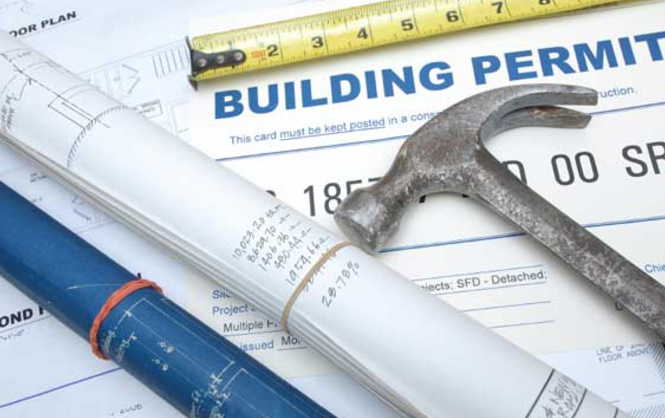
City permits are often required for bathroom remodels, but it depends on the work being done. For this project, permits weren’t necessary because there were no structural changes or plumbing relocations. However, if your remodel involves moving fixtures, altering walls, or adding new electrical outlets, you’ll likely need a permit.
Permits can take several weeks to secure, so it’s important to plan ahead if they’re required. Working with a contractor who understands local regulations is key to ensuring a smooth approval process.
Why an Experienced Contractor Makes All the Difference
Choosing an experienced contractor can save you time, money, and a lot of stress. For this project, our team handled everything from demolition to the finishing touches, ensuring the work stayed on schedule and met the highest quality standards.
An experienced contractor will know how to manage unexpected issues, like minor delays or unforeseen complications during demolition. They’ll also guide you through key decisions, like choosing materials and designing custom features, to ensure your vision comes to life.
Staying on Track with a Clear Construction Schedule
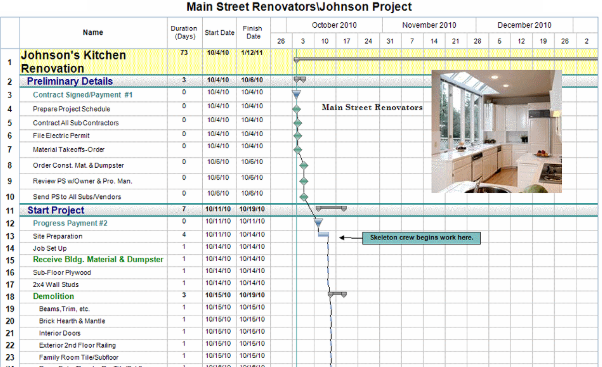
A clear construction schedule is essential for keeping your bathroom remodel on track. For this two-week project, we planned each step carefully, from demolition to tile installation and finishing touches. This made it easy to manage the timeline and ensure the work stayed on budget.
If your remodel includes more complex elements, like custom features or structural modifications, having a detailed schedule becomes even more important. A good contractor will provide you with a clear plan so you know what to expect at every stage of the project.
Structural Modifications: What to Expect
Structural changes, like moving walls or raising ceilings, can transform your bathroom but also add significant time to your remodel. In this project, we removed a bulky bulkhead above the old tub to bring in more natural light and open up the space. While it didn’t involve major structural work, this small modification made a big impact on the overall feel of the room.
For larger modifications, such as expanding the bathroom or creating a new layout, you’ll need to account for extra time for demolition, framing, and inspections. These changes are worth the investment if they help you achieve the bathroom of your dreams, but they do require careful planning and coordination.
Water Damage: What You Need to Know
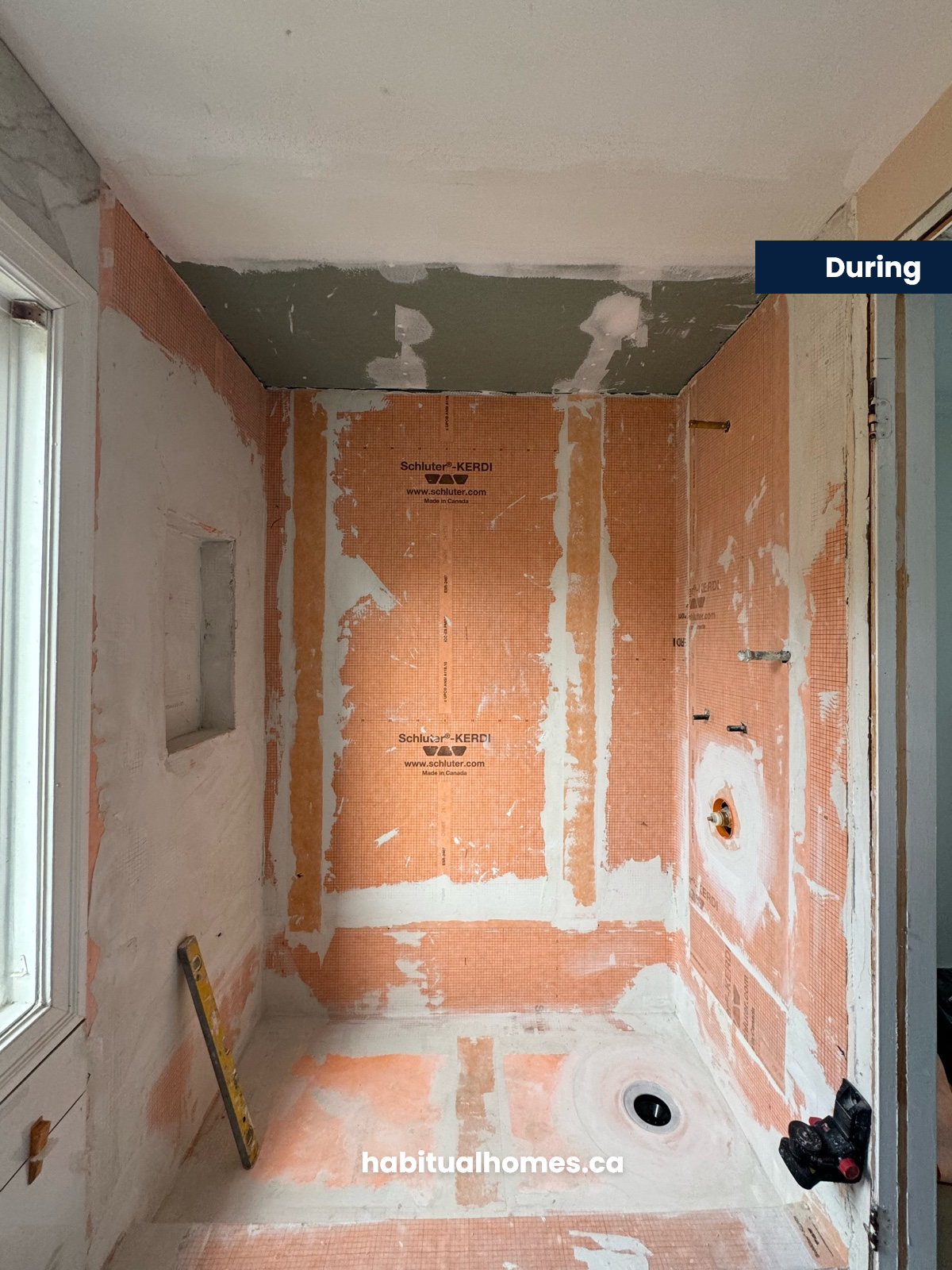
Water damage is a common concern during bathroom remodels, especially in older homes. Undetected leaks or poor waterproofing can lead to big problems down the line. For this project, we installed waterproofing systems in the shower to ensure long-lasting durability.
If your bathroom has signs of water damage, such as mold or soft spots on walls or floors, addressing it during the remodel is crucial. It may add a few extra days to your timeline, but it’s worth it to avoid bigger issues later.
Safety Concerns During a Bathroom Remodel
Safety is always a top priority during a remodel. Demolition can create debris, and working with plumbing or electrical systems requires expertise to avoid accidents. Hiring a professional team ensures everything is done safely and up to code.
In this project, we removed a bulky bulkhead above the old tub. While it wasn’t a major structural job, it required careful handling to avoid damaging nearby areas. Working with experienced tradespeople makes all the difference in managing safety concerns.
Drying Time: An Often Overlooked Step
Drying time is a critical part of the remodeling process that many homeowners don’t think about. After installing waterproofing, tiles, or grout, proper drying is essential before moving to the next step. Rushing this process can lead to problems like cracking or water damage.
For this remodel, we allowed sufficient drying time between steps, ensuring the large-format tiles and grout set properly. Typically, this takes 24-48 hours but can vary depending on materials and conditions. Factoring in drying time ensures a durable, long-lasting result.
Frequently Asked Questions About Bathroom Remodels
1. How long does a bathroom remodel take?
The timeline depends on the project scope. For a simple remodel like this one, which took just 2 weeks, it can be quick. Major renovations, involving layout changes or permits, might take 4-6 weeks or more.
2. Do I need a permit for my bathroom remodel?
It depends on the work. If you’re moving plumbing or making structural changes, permits are usually required. For cosmetic updates, you likely won’t need one.
3. Can I stay at home during a bathroom remodel?
Yes, but expect some noise and dust. Having a clear schedule from your contractor will help you plan around the work.