A dark kitchen does not have to become a white kitchen to feel more open and livable. Most of the time, the solution is not a full gut renovation. It is a few intentional adjustments to contrast, light, and warmth.
The short version:
- Dark kitchens need contrast between the cabinets and the surrounding surfaces, not a full cabinet replacement.
- Layered lighting (pot lights, pendants, under-cabinet, accent) eliminates shadows and changes how the space functions.
- Warm materials and finishes keep a dark kitchen from reading as cold or heavy.
- Under-cabinet lighting is the single highest-impact upgrade you can make with the least disruption.
- The goal is not to replicate a white kitchen. It is to make the dark kitchen feel balanced and livable on its own terms.
Start with Contrast, Not a Complete Overhaul
The most common mistake people make with a dark kitchen is assuming the only way out is to paint everything white. That is rarely true, and honestly, it tends to erase everything that made the kitchen interesting in the first place.
What actually works is contrast.
If your cabinets are dark, the goal is to bring in lighter moments around them so the eye has somewhere to rest. A creamy countertop, a warm white backsplash, lighter walls, or open shelving can completely change how heavy the space feels, without touching the cabinets at all.
Think about where the eye moves when you walk into a kitchen. It tends to settle at counter height first, then travel up to the backsplash and upper cabinets, then to the ceiling. Dark lower cabinets feel grounded and appropriate at the base of the room. But if there is no lighter material at counter height to give the eye a lift point, the whole space reads as heavy. A light countertop or a pale backsplash in that middle zone acts as a visual exhale between the dark elements. Dark uppers can stay dark when the wall above them is light or when there is enough breathing room between the cabinet top and the ceiling. Without that, the ceiling visually drops.
This is why contrast decisions matter more than color decisions in a dark kitchen. A kitchen can be made up of mostly dark materials and still feel open when that darkness is distributed with intention across the room rather than stacked from floor to ceiling without relief.
A few combinations that tend to work well:
| Dark Cabinet Tone | Countertop | Backsplash |
|---|---|---|
| Navy or forest green | White oak or light quartz | Warm white subway or ceramic |
| Espresso or walnut | Creamy marble or quartz | Soft white with subtle texture |
| Charcoal or black | Honed light stone | White or light gray with movement |
| Deep blue-gray | Warm beige or cream stone | Off-white or warm neutral |
The lighter materials do not need to take over the kitchen. They just need to be placed where the eye naturally lands: the countertop, the backsplash, the wall between and above the cabinets.
Layer the Lighting (One Ceiling Light Is Never Enough)
If your dark kitchen has one overhead light in the centre of the ceiling, that is likely contributing more to the problem than the cabinet color is.
Kitchens need layered lighting to feel bright and functional. A single ceiling fixture casts one flat source of light, which creates shadows exactly where you need to see most: on the countertop where you are prepping food, inside the cabinets where you are trying to find things, and at the sink where you are washing up.
Here is the layering system that makes a real difference:
Pot lights (recessed lighting) are the foundation. They distribute ambient light evenly across the ceiling and eliminate the dark corners that one central fixture always leaves behind. If you are doing any kind of kitchen renovation, pot lights should be on the list before anything else.
Pendants over an island or peninsula add warmth and visual height. They also add personality. A well-chosen pendant in a warm metal (brass, aged bronze, satin gold) reads as a design decision, not just a fix.
Under-cabinet lighting is one of the most underrated upgrades in a kitchen. It directs light exactly where you need it most: directly onto the countertop. It also bounces off the backsplash and adds depth to the lower half of the space. Even in a kitchen with nice pot lights, under-cabinet lighting makes a noticeable difference.
A small lamp or sconce near a coffee station, a windowsill, or a corner shelf sounds like a decorating choice, but it is also a lighting one. A warm light source at counter height or below the sight line softens the overall feel and makes the kitchen feel styled rather than clinical.
| Lighting Type | Impact Level | Install Complexity |
|---|---|---|
| Under-cabinet lighting | Highest | Low (plug-in options available) |
| Pot lights (recessed) | High | Medium (requires electrician) |
| Pendant fixtures | Medium | Low to medium |
| Accent lamps or sconces | Medium | Lowest (plug and play) |
The combination of these four types of lighting turns a dark kitchen from something that feels dim and heavy into something that feels layered and intentional.
One thing most people get wrong with bulb color temperature:
A common mistake in dark kitchens is installing the brightest, whitest bulbs available because it seems logical that more light means a brighter kitchen. But color temperature matters as much as brightness, and in a dark kitchen, cool-toned light (5000K and above) makes rich cabinet finishes look flat and cold rather than warm and inviting.
A simple guide:
| Lighting Layer | Recommended Color Temperature | Why It Works |
|---|---|---|
| Under-cabinet task lighting | 2700K (warm white) | Creates warmth right at the work surface |
| Pendant lights | 3000K (soft white) | Balances warmth with enough clarity |
| Pot lights / recessed | 3500K (neutral white) | Provides clean ambient light without blue cast |
| Accent lamps | 2700K (warm white) | Adds layered warmth at a lower level |
The warmth gradient from counter level up to the ceiling creates depth and livability that a single color temperature applied throughout cannot. If your kitchen already has lighting installed and it feels harsh or cold, swapping bulbs to warmer temperatures is the fastest and least expensive adjustment you can make.
If a full rewire is not in the budget right now, under-cabinet lighting is the highest-impact change you can make with minimal work. Many options are plug-in or battery-operated, and the difference is immediate.
Warm It Up with Texture and Material
There is a version of a dark kitchen that looks moody and beautiful, and there is a version that looks cold and uninviting. The difference almost always comes down to texture and warmth.
A dark kitchen with flat cabinet doors, a cool-toned countertop, stainless steel hardware, and no natural materials tends to feel like a cave. The same cabinet color with brass hardware, a honed stone countertop, a warm white backsplash tile, and a wooden cutting board on the counter feels completely different: intentional, elevated, and livable.
One detail that tends to get overlooked is surface finish. Dark kitchens feel heavy when every surface is matte, because matte finishes absorb light rather than interacting with it. When you introduce one or two surfaces with different finishes (a honed countertop, a glazed backsplash tile, a brushed metal fixture) the room starts to breathe. The light has somewhere to scatter and reflect rather than being absorbed into the cabinetry. You are not adding white. You are adding surfaces that respond to light differently than the cabinets do.
Some of the materials and details that add warmth to a dark kitchen:
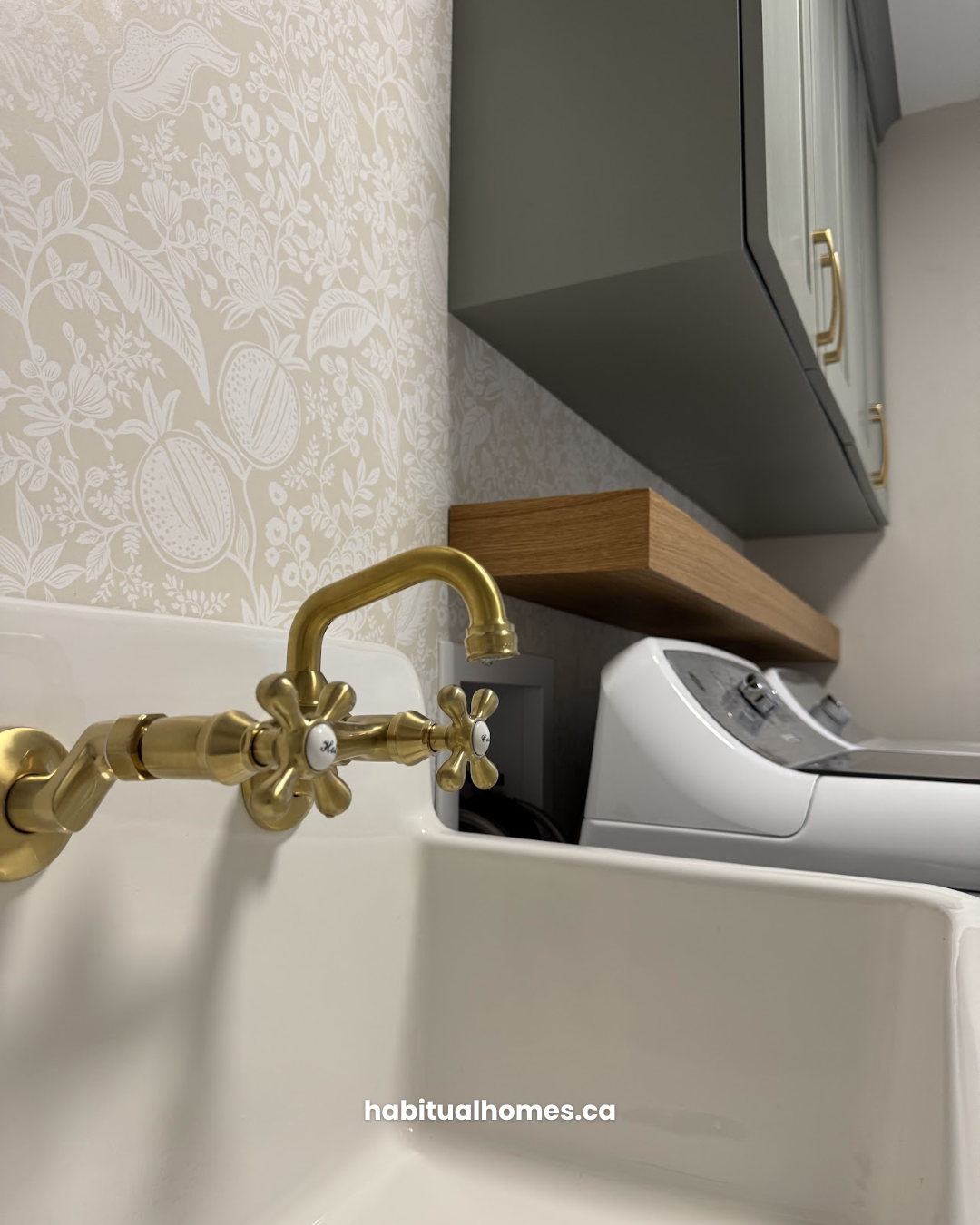
Brass or unlacquered brass hardware reads warm against dark cabinet finishes. Matte black hardware is sleek but cool-toned. It can work, but it does not add warmth the way a warm metal does.
| Finish | Temperature | Notes |
|---|---|---|
| Unlacquered brass | Warmest | Develops patina and organic warmth over time |
| Satin brass or gold | Warm | Consistent warm tone without aging |
| Aged bronze | Warm neutral | Adds warmth with a more subtle contrast |
| Matte black | Cool | High contrast but no warmth shift |
Natural wood is one of the fastest ways to bring life into a dark space. A butcher block island, open wood shelves, a wooden stool beside the counter, or even a cutting board left on the counter adds organic texture that dark cabinetry alone cannot provide.
Warm white paint on the walls is not the same as stark bright white. If the goal is to warm up the kitchen rather than bleach it out, reach for whites with a yellow, cream, or beige undertone, not blue or gray undertones. The wrong white on the walls of a dark kitchen can make the space feel colder, not lighter.
| Paint Undertone | Effect in a Dark Kitchen | When to Use |
|---|---|---|
| Yellow or cream | Adds warmth and softness | Best with warm metals or wood tones |
| Beige or greige | Gentle neutral contrast | Works with most cabinet tones |
| Blue or gray | Makes the space feel cooler | Avoid unless the intent is a stark modern look |
| Pure bright white | Creates harsh contrast | Use on trim, not full walls |
Linen, rattan, or woven textures in small doses (a pendant shade, a runner, a stool seat) add softness and visual variety that a kitchen made entirely of hard surfaces tends to lack.
Stone with movement (a veined marble, a honed travertine, a leathered granite) catches light differently than a flat surface and adds depth without adding clutter.
The goal is not to remove the moodiness of a dark kitchen. A dark kitchen can be one of the most beautiful spaces in a home. The goal is to give it balance so it does not feel like it is working against the people in it.
What This Looks Like in Practice
When we work on a kitchen where the client loves the idea of dark cabinetry but is worried about the space feeling dim, we usually work through these three layers together rather than treating them as separate projects.
The contrast work and the material choices inform each other. The lighting plan fills in what the materials cannot do on their own. Done together, the result is a kitchen that reads as dark in the best sense: rich, intentional, and calm, without ever feeling heavy or closed in.
If you are trying to figure out where to start, begin with the lighting. It is the most impactful change for the least physical disruption, and it will immediately clarify which other changes are actually necessary.
A kitchen renovation should feel like something you thought through carefully, not something you pieced together over time. If you want to talk through what would make the most difference in your specific kitchen before committing to anything, that is exactly the kind of conversation we have before we ever pick up a tool.
Frequently Asked Questions
Do I need to paint my dark cabinets to make my kitchen feel brighter?
Not necessarily. In most cases, adding layered lighting (especially pot lights and under-cabinet lighting) and introducing lighter materials on the countertop and walls makes a more immediate difference than repainting the cabinets. Dark cabinets can absolutely stay dark and still feel open when the rest of the space is working with them.
Can I use dark cabinets in a small kitchen without making it feel claustrophobic?
Yes, but the key is vertical contrast and good lighting. Keep upper cabinets lighter or use open shelving in the upper zone, and make sure pot lights and under-cabinet lighting are part of the plan before cabinets go in. A small kitchen with dark lowers and light uppers can actually feel more spacious than an all-white small kitchen because the eye reads the vertical break as height.
What color should I paint my walls if I have dark kitchen cabinets?
Warm whites and soft creams tend to work best. Look for whites with a yellow or beige undertone rather than blue or gray ones, as those can make the kitchen feel colder rather than lighter. The specific paint color matters less than the undertone.
What is the biggest lighting mistake people make with dark kitchens?
Installing only overhead lighting and expecting it to do all the work. Overhead light alone creates shadows exactly where you need to see most: on your countertop and inside your cabinets. The second mistake is using daylight bulbs (5000K and above) because they make dark finishes look flat and cold rather than rich.
What hardware finish works best with dark kitchen cabinets?
Warm metals (brass, aged bronze, satin gold, or unlacquered brass) tend to complement dark cabinetry while adding warmth to the space. Matte black hardware is a popular choice but adds contrast without warmth. For a kitchen that already feels cool or heavy, a warm metal finish is usually the better call.
Can I add warmth to a dark kitchen after it is already installed?
Absolutely. Swapping hardware to a warm metal finish, adding under-cabinet lighting, placing a wood cutting board or tray on the counter, and switching to warmer-toned bulbs are all changes you can make after the fact. A small wood stool, open wood shelving, or a warm-toned runner also bring in organic texture without touching the cabinets.
Can a dark kitchen feel just as bright as a white kitchen?
It depends on how you define bright. A well-lit dark kitchen with warm materials and good contrast can feel open, airy, and livable. It just reads differently than a white kitchen. The goal should not be to replicate the look of a white kitchen but to make the dark kitchen feel balanced and comfortable on its own terms.
Planning a Kitchen Renovation in Toronto?
If you are thinking through a kitchen renovation, whether that means working with what you have or starting over, we can help you figure out what the right scope actually looks like before any decisions are made.
We are a licensed Toronto design-build studio. We handle everything from planning and design through to the finished result, with no outsourcing and no surprises.