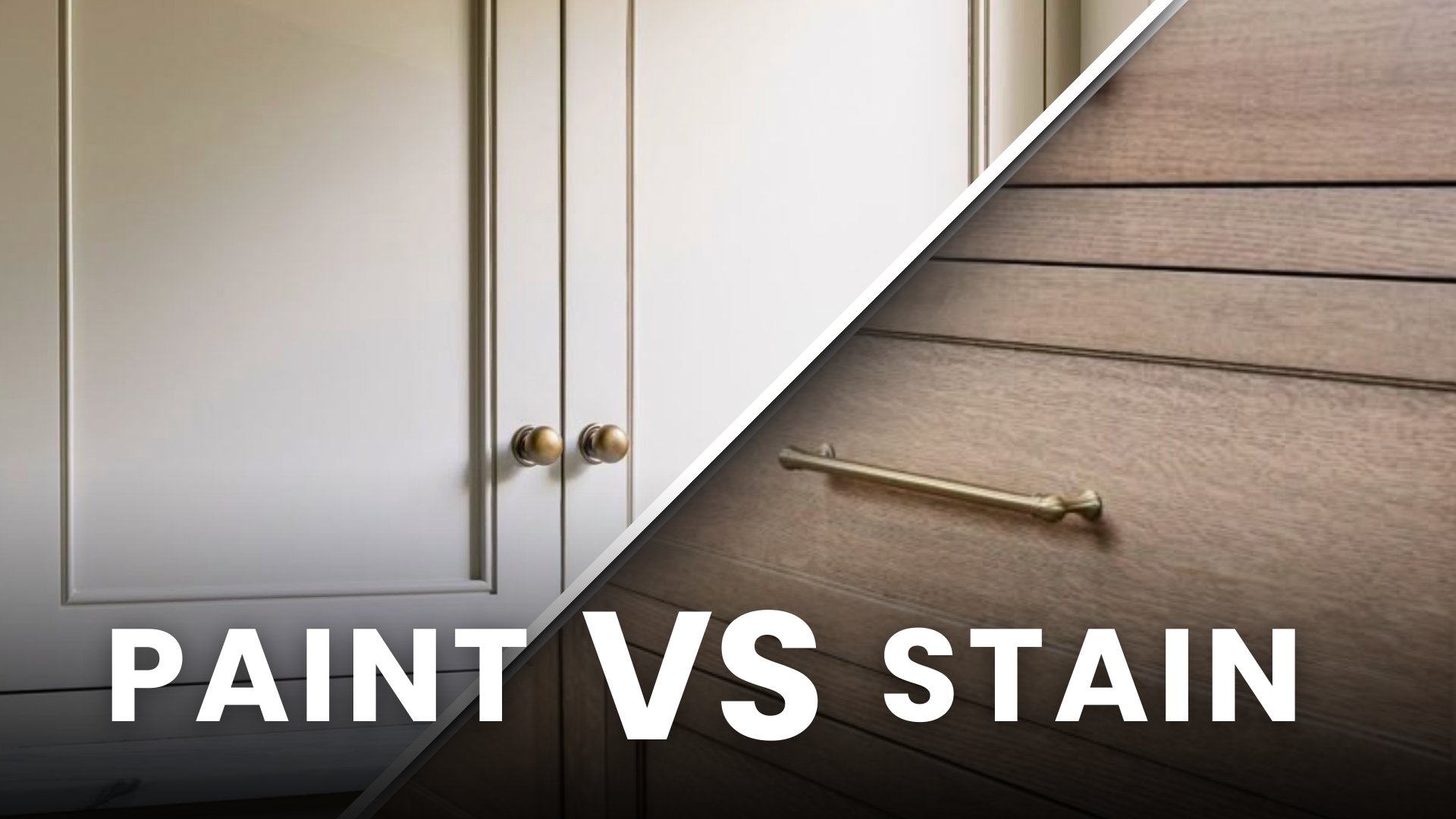
If you’re renovating your home and installing a brand-new kitchen, one of the biggest decisions you’ll face is this: Should you paint or stain your kitchen cabinets?
Most homeowners choose based on what’s trending on Pinterest or Instagram. But this decision will shape how your kitchen looks, feels, and ages for the next 15 to 25 years—longer than most people stay in their home.
The answer isn’t that one finish is universally “better.” It’s about choosing the right material strategy for your specific house, your lifestyle, and your long-term goals.
As Toronto-based architects who design and build custom kitchens, we’ve helped dozens of homeowners navigate this exact decision. In this guide, we’ll break down when painted cabinets make sense, when stained cabinets work better, and the designer solution that combines both.
Watch the Full Video Breakdown
Prefer to read? Continue below for the complete breakdown.
How to Think About This Decision
Before we dive into painted vs. stained cabinets, let’s reframe the question:
This isn’t a paint versus stain debate.
It’s about choosing the right material strategy for a long-term investment.
There isn’t one “correct” answer for everyone. But there absolutely is a wrong choice for the wrong house, the wrong lifestyle, or the wrong budget.
Here’s what actually matters when making this decision:
- Your house style (traditional, modern, transitional, heritage)
- Natural light (how much daylight your kitchen receives)
- How you live (kids, heavy use, entertaining, minimal cooking)
- Your budget (paint allows more flexibility; stain demands quality)
- Your timeline (staying 5 years vs. 25 years)
Let’s break down each option.
When Painted Cabinets Make the Most Sense
Painted cabinets have dominated kitchen design for the past 15 years—and for good reason. When done well, they create a clean, calm, classic look that ages slowly.
Painted Cabinets Work Best When:
1. You Want a Clean, Classic Look
White and light-painted kitchens feel timeless because they don’t lock you into a specific color era. A well-chosen warm white or creamy neutral can work beautifully for decades.
2. You Want Flexibility
If your tastes change or you want to update your kitchen’s look down the road, painted cabinets give you more options. You can change countertops, backsplash, hardware, and lighting without fighting against a strong wood tone.
3. You’re Designing a Light-Filled Kitchen
Painted cabinets—especially in whites, creams, and soft grays—maximize natural light and make smaller kitchens feel more spacious.
4. You’re Focused on Resale Value
If you’re planning to sell within 5-10 years, painted cabinets in neutral tones are typically the safest bet. Most buyers expect and prefer them, which means you’re less likely to turn people away.
The Pros of Painted Cabinets
- Timeless when the undertones are right (warm whites and creams age better than stark or cool whites)
- Easy to pair with materials (stone, tile, hardware, flooring)
- Predictable outcome (what you see in the sample is what you get)
- Works with any design style (traditional, modern, transitional)
The Cons of Painted Cabinets
- Paint can chip with heavy use (especially around handles, edges, and corners)
- Shows wear more than wood (scratches, dings, and scuffs are more visible on solid color)
- Requires quality finishing (if the prep or finishing is rushed, it will show—especially over time)
- Can feel flat without warmth (all-white kitchens sometimes lack depth and character)
What Paint Colors Work Best in 2026?
The safest choices for painted cabinets are warm neutrals—not stark white, not cool gray.
Top paint colors for kitchen cabinets:
- Benjamin Moore Swiss Coffee
- Benjamin Moore Creamy White
- Benjamin Moore Natural Cream
- Sherwin-Williams Accessible Beige
- Sherwin-Williams Fawn Brindle
Avoid: Cool grays (dated as of 2024-2026), stark whites (feel sterile), and trendy colors like navy or green (date quickly in kitchens).
When Stained Cabinets Work Better
Here’s what most people don’t realize: Stained cabinets aren’t outdated. Specific stains are.
The orange oak from the 1990s? Dated.
The dark espresso from the early 2000s? Dated.
Light to mid-tone natural wood with minimal yellow undertones? Timeless.
Stained Cabinets Work Best When:
1. You Want Warmth and Depth
Stained wood cabinets add a richness and materiality that paint simply can’t replicate. They bring organic texture and visual interest to a kitchen.
2. You Have a Traditional or Transitional Home
If you live in a Toronto heritage home, a century home, or a house with traditional architectural details, natural wood cabinets can feel more authentic and appropriate than painted boxes.
3. You Want Cabinets That Age Gracefully
Wood hides wear better than paint. Scratches, dings, and daily wear blend into the grain instead of standing out as chips and scuffs.
4. You Value Material-Driven Design
If you appreciate working with actual wood—seeing its grain, respecting its character—stained cabinets align with that philosophy. You’re not covering up the material; you’re showcasing it.
The Pros of Stained Cabinets
- Add warmth and depth that paint can’t achieve
- Age more gracefully (wear blends into the wood)
- Hide daily use better than solid paint colors
- Feel more material-driven and authentic
The Cons of Stained Cabinets
- Less forgiving if you choose the wrong tone (orange and yellow undertones date quickly)
- Harder to change later (you can’t easily repaint over stain without significant work)
- Poor stains date your kitchen (the wrong choice can make a brand-new kitchen feel decades old)
- Require pairing with light surfaces (dark wood + dark granite = heavy, dated look)
What Stain Colors Work Today?
The key is to avoid anything with strong yellow or orange undertones.
What works in 2026:
- Light to mid-tone natural oak (clear-coated, minimal yellowing)
- Natural maple or ash (light, fresh, modern)
- White oak with matte finish (not high-gloss)
- Rich brown tones (not orange, not red)
What to avoid:
- Golden oak (1980s-90s)
- Cherry or orange maple (1990s-2000s)
- Espresso or dark mahogany (early 2000s)
- Grey-washed or cerused finishes (trendy, will date)
Critical pairing rule: Stained cabinets MUST be paired with white or very light countertops and backsplash. If you pair dark stained cabinets with dark granite, the kitchen can quickly feel heavy and dated—very early-2000s.
The Designer Solution: Two-Tone Cabinets (Paint + Stain)
Here’s what many professional designers do when they can’t decide between painted or stained cabinets:
They use both.
How the Two-Tone Strategy Works
Painted perimeter cabinets (white, cream, or light neutral) keep the kitchen bright, timeless, and easy to pair with materials.
A stained wood island (light to mid-tone natural wood, not orange) adds warmth, grounding, and visual interest.
This combination:
- Avoids an all-white kitchen feeling flat or sterile
- Avoids an all-wood kitchen feeling heavy or dated
- Puts durable wood where you work most (the island)
- Gives you flexibility with finishes and materials
- Creates depth and contrast without overwhelming the space
Why Designers Love This Approach
The two-tone kitchen has become a signature move in high-end residential design—not because it’s trendy, but because it solves real design problems.
It balances:
- Light (painted perimeter) with warmth (stained island)
- Timelessness (paint) with character (wood)
- Practicality (durability) with aesthetics (visual interest)
If you’re genuinely torn between painted and stained cabinets, this is often the safest and most balanced option.
How to Choose for YOUR House (Decision Framework)
Now let’s get specific. Here’s how to decide based on your unique situation.
Question 1: What Style Is Your House?
Traditional or transitional homes:
Paint or mixed (painted perimeter + stained island) works beautifully.
Modern or warm modern homes:
Stain or mixed. Clean-lined wood cabinets fit modern design language.
Century home or heritage property:
Stain can look incredible—especially if your home has original wood trim, floors, or architectural details.
Question 2: How Much Natural Light Do You Have?
Limited natural light (north-facing, small windows, urban lot):
Go with paint or lighter wood to keep the kitchen bright. Dark stain will make the space feel closed in.
Plenty of natural light (south-facing, large windows, open floor plan):
You have more freedom. Both painted and stained cabinets will work well.
Question 3: How Do You Actually Live?
Kids, heavy use, high traffic, daily cooking:
Stain hides wear better. If your kitchen is the hub of your home, wood cabinets will age more gracefully than paint.
Low traffic, minimal cooking, design-focused:
Paint is fine. If you’re not putting heavy wear on your cabinets, paint’s drawbacks matter less.
Frequent entertaining, guests in the kitchen:
Consider two-tone. The stained island becomes a focal point while the painted perimeter keeps the space bright.
Question 4: What’s Your Budget?
Paint allows more cost control.
You have more flexibility with cabinet box quality because the paint finish hides the base material. You can use maple (which takes paint beautifully) and get a great result without spending on premium wood.
Stain demands better wood and better finishing.
You can’t fake quality with stain. The wood grain shows, so you need solid wood construction, proper finishing, and quality hardware. This costs more.
The Biggest Mistakes to Avoid
Before you finalize your decision, here are the costly mistakes we see Toronto homeowners make:
Mistake #1: Choosing Stain Without Sampling
Never, ever choose a stain color from a catalog or website image.
What to do instead: Request samples on your actual wood species in your actual lighting. The same stain looks completely different on oak vs. maple, and what looks warm in a showroom can look orange in your north-facing kitchen.
Mistake #2: Picking Trendy Grey-Washed or Cerused Stains
Grey wood finishes, taupe stains, and whitewashed effects belong to the 2015-2020 grey trend. They’re already starting to look dated.
What to do instead: If you love grey tones, use them on furniture or accents—not on permanent kitchen cabinetry that costs $20,000+ to replace.
Mistake #3: Ignoring Undertones
This is where most people go wrong with both paint and stain.
With paint: Cool whites and grays can feel sterile. Warm whites and creams age better.
With stain: Yellow and orange undertones date quickly. Look for natural brown tones with minimal warmth.
Test this: Look at your samples at different times of day (morning, afternoon, evening) and in different lighting (natural light, overhead lights, under-cabinet lights).
Mistake #4: Treating Cabinets in Isolation
Your cabinets don’t exist in a vacuum. They need to work with:
- Countertops
- Backsplash
- Flooring
- Wall color
- Natural light
- Architectural style
A beautiful stain color can look terrible if paired with the wrong granite. A perfect white paint can feel cold if your floors are dark and your lighting is harsh.
What to do instead: Make material selections together, not one at a time.
Toronto-Specific Considerations
Most Toronto Homes Have 9-Foot Ceilings
If you live in a pre-1960 Toronto home, you likely have 9-foot ceilings—which is ideal for extending cabinets to the ceiling with proper crown molding.
Whether you choose painted or stained cabinets, how high they go affects the final look just as much as the finish.
Read our guide: Should You Extend Kitchen Cabinets to the Ceiling?
Toronto Building Codes and Permits
Choosing cabinet finishes doesn’t require a permit, but if you’re doing a full kitchen renovation that involves moving plumbing, gas lines, or electrical work, you’ll need permits from the City of Toronto.
We handle all permits and work exclusively with licensed trades to ensure your renovation meets Ontario Building Code requirements.
Heritage Home Considerations
If you own a designated heritage property in Toronto, any exterior or structural changes require approval from the City’s Heritage Preservation Services. Interior renovations (including kitchens) typically don’t require heritage approval unless they affect original architectural features.
However, if your home has original millwork, consider how painted vs. stained cabinets will relate to existing wood trim, floors, and built-ins.
What About Refinishing Existing Cabinets?
This guide focuses on new cabinet installations—when you’re renovating and installing a brand-new kitchen.
But what if you already have cabinets and you’re deciding whether to paint them, refinish them, or replace them entirely?
Quick guidance:
Paint existing cabinets if:
- Cabinet boxes are solid and well-constructed
- Doors and drawers operate smoothly
- Layout works for how you live
- You just want a fresh look
Refinish (strip and re-stain) if:
- You have quality wood cabinets with poor stain
- Construction is solid but color is dated
- Wood grain is worth preserving
Replace entirely if:
- Cabinet boxes are particle board or low quality
- Doors are warped, damaged, or poorly constructed
- Layout doesn’t work for your needs
- You’re doing a full kitchen redesign
The Bottom Line: What Should You Choose?
There’s no universal “right” answer to painted vs. stained cabinets.
But here’s our recommendation as architects who design kitchens in Toronto:
Choose Painted Cabinets If:
- You want a clean, classic, timeless look
- Your kitchen has limited natural light
- You’re planning to sell within 5-10 years
- You want maximum flexibility with materials and finishes
- Your budget is moderate (paint allows more cost control)
Choose Stained Cabinets If:
- You want warmth, depth, and material-driven design
- You have a traditional or heritage home
- Your kitchen gets plenty of natural light
- You’re committed to quality wood and finishing
- You plan to stay long-term (10+ years)
Choose Two-Tone (Painted + Stained) If:
- You want the best of both worlds
- You can’t decide between paint and stain
- You want a kitchen that feels balanced and layered
- Your budget supports custom work
Next Step: Cabinet Height Matters Too
Once you’ve decided whether to paint or stain your cabinets, the next decision that affects how custom your kitchen feels is how high they should go.
That choice affects proportion, storage, and whether your kitchen reads as permanent architecture or temporary furniture.
Read next: Should You Extend Kitchen Cabinets to the Ceiling? (Pros & Cons)
Planning a Kitchen Renovation in Toronto?
If you’re thinking through architectural decisions like cabinet finishes, height, layout, and materials, we offer free 15-minute consultations.
No sales pitch—just honest guidance from architects who build.
What we cover in a consultation:
- Whether your layout works (or how to improve it)
- Material and finish decisions (cabinets, countertops, backsplash)
- Realistic budget expectations for Toronto renovations
- Permit and building code requirements
- Timeline and process overview
About Habitual Homes
We’re Sandra and Johanna—Venezuelan-trained architects and licensed builders specializing in custom homes and major renovations in Toronto.
Our approach: Timeless over trendy. Education over sales. Quality over shortcuts.
We handle the complete process from design and permits through construction, using only licensed trades and proper building practices.
Learn More About Our Process →
Related Reading
Kitchen Cabinet Decisions: