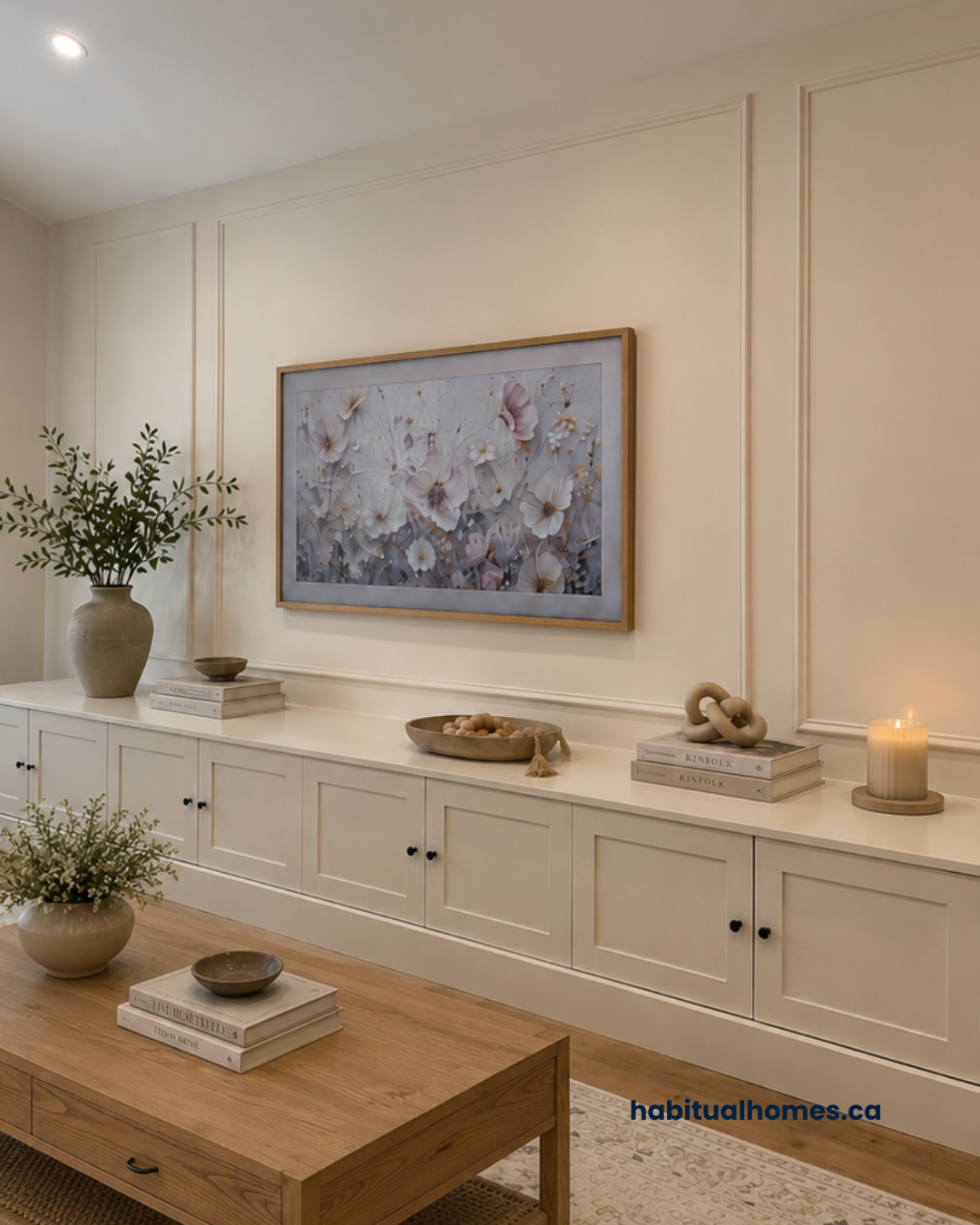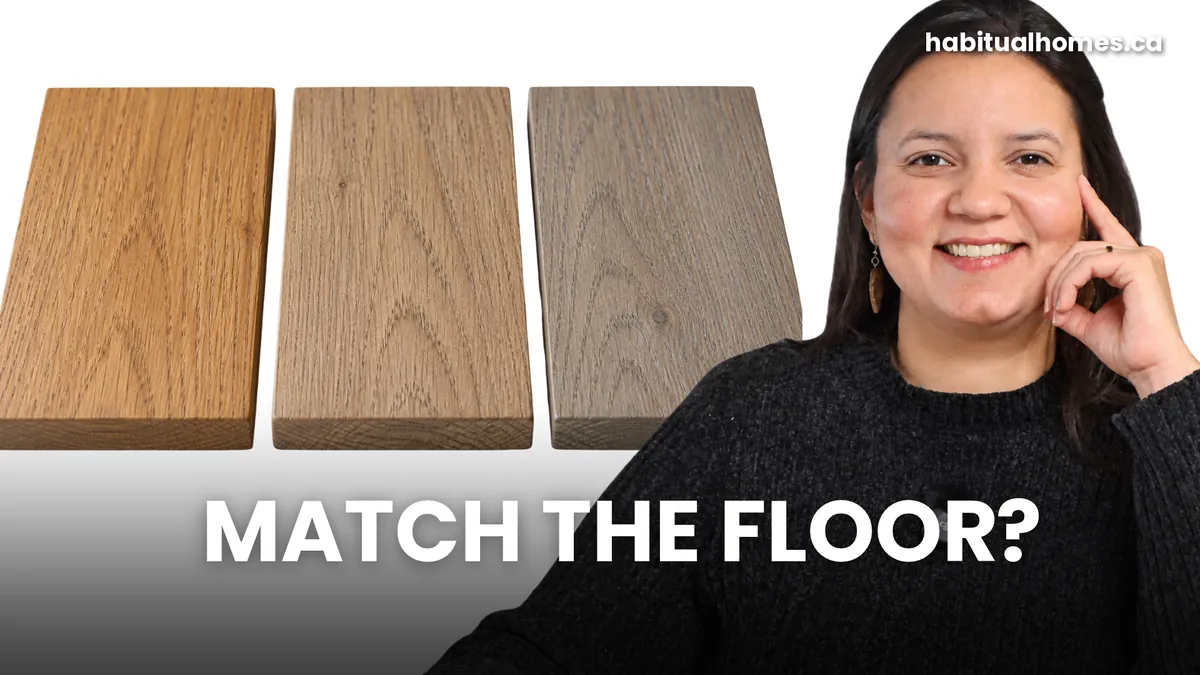
Should kitchen cabinets match the floor? Short answer: no. They don’t need to match. They need to get along.
It’s one of the most common questions we hear when someone is choosing cabinets. You find a wood you love in the showroom. Then you bring the sample home, set it next to your floor, and something feels off. You can’t say why. Here’s why, and how to avoid it before you buy a single cabinet.
Why matching everything backfires
When the cabinets, the floor and the island are all the same wood, the kitchen loses depth. Nothing stands out, and nothing rests the eye. It looks flat.
And when they’re almost the same, it’s worse. Two woods that are close but not equal look like a mistake, not a choice.
So the goal isn’t a match. The goal is woods that clearly belong together.
Every wood leans warm, neutral or cool
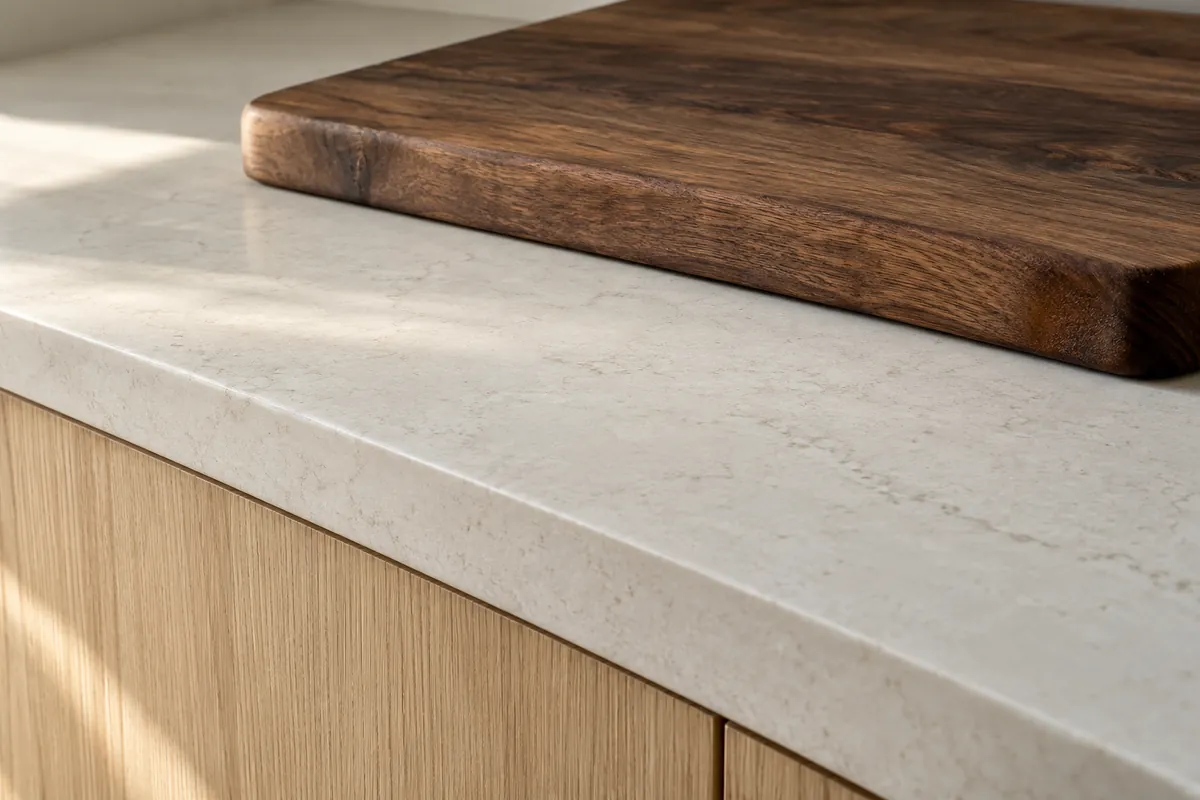
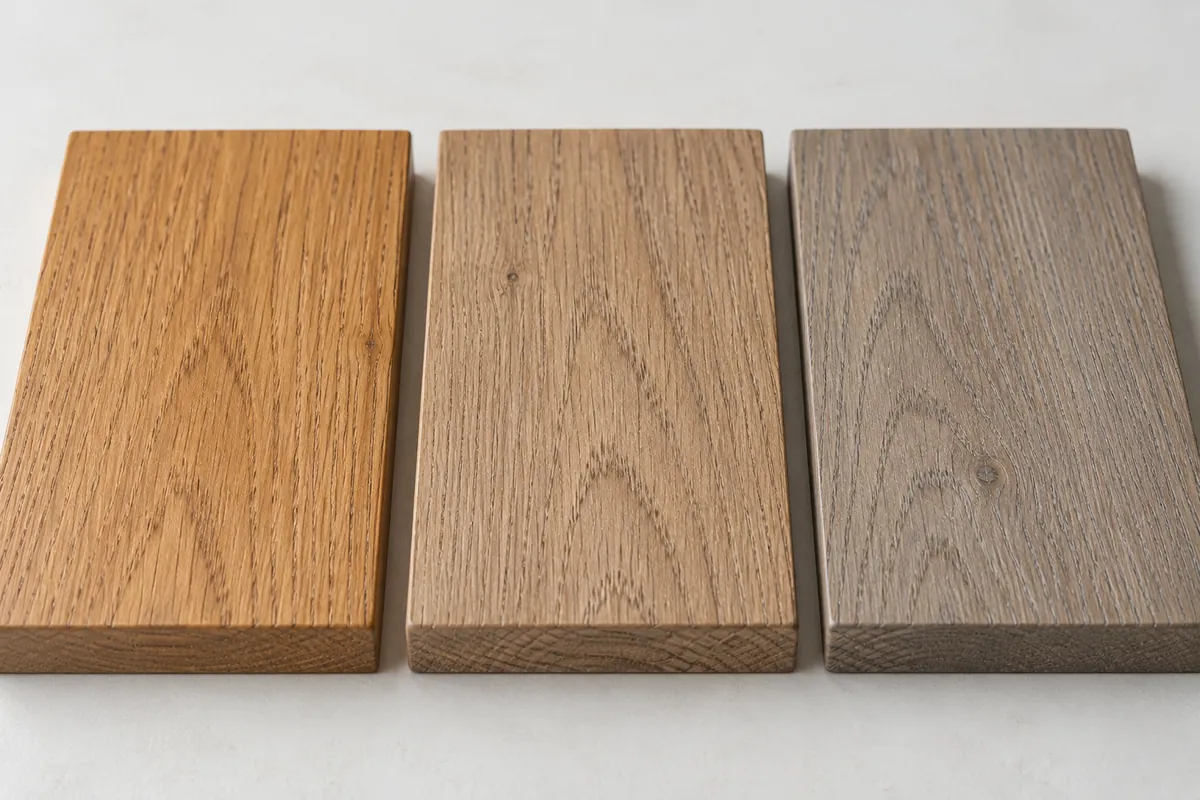
Every wood has a colour underneath. Designers call it the undertone. Some woods lean warm, toward orange, red or yellow. Some lean cool, toward grey. Some sit in the middle, neutral.
Two things make this tricky:
- On its own, almost every wood looks “neutral”. You only see the undertone when you put it next to another wood.
- The stain decides as much as the species. The same wood can lean warm, neutral or cool depending on the stain. So choosing “oak” or “maple” isn’t enough. You need to see the actual finish.
That’s why a sample can look perfect in the store and wrong at home. In the store, it was next to other samples. At home, it’s next to your floor.
The same idea works for paint, counters and trim. Here’s how undertones work in kitchen colours.
Start with the wood that leads
Before you choose cabinets, decide which wood is in charge. In most kitchens, it’s the floor, especially when the floor runs in from the hallway or the rest of the main floor and you’re keeping it.
The floor sets the rules. Everything else follows it.
If you’re replacing the floor too, pick one of the two to lead, and choose the other one to support it.
4 rules for cabinets and floors that get along
1. Same family, different shade
Keep the undertones in the same family. Then play with light and dark.
| Your floor leans | Safest cabinet woods | Riskiest |
|---|---|---|
| Warm | Warm or neutral | Cool |
| Cool | Cool or neutral | Warm |
| Neutral | Warm, neutral or cool | (most flexible) |
Neutral woods work as a bridge. That’s why they’re so easy to live with.
2. Light with dark
Once the undertones agree, contrast is your friend. A lighter cabinet with a darker floor, or the other way around, usually looks more balanced than one shade everywhere.
3. Repeat each wood
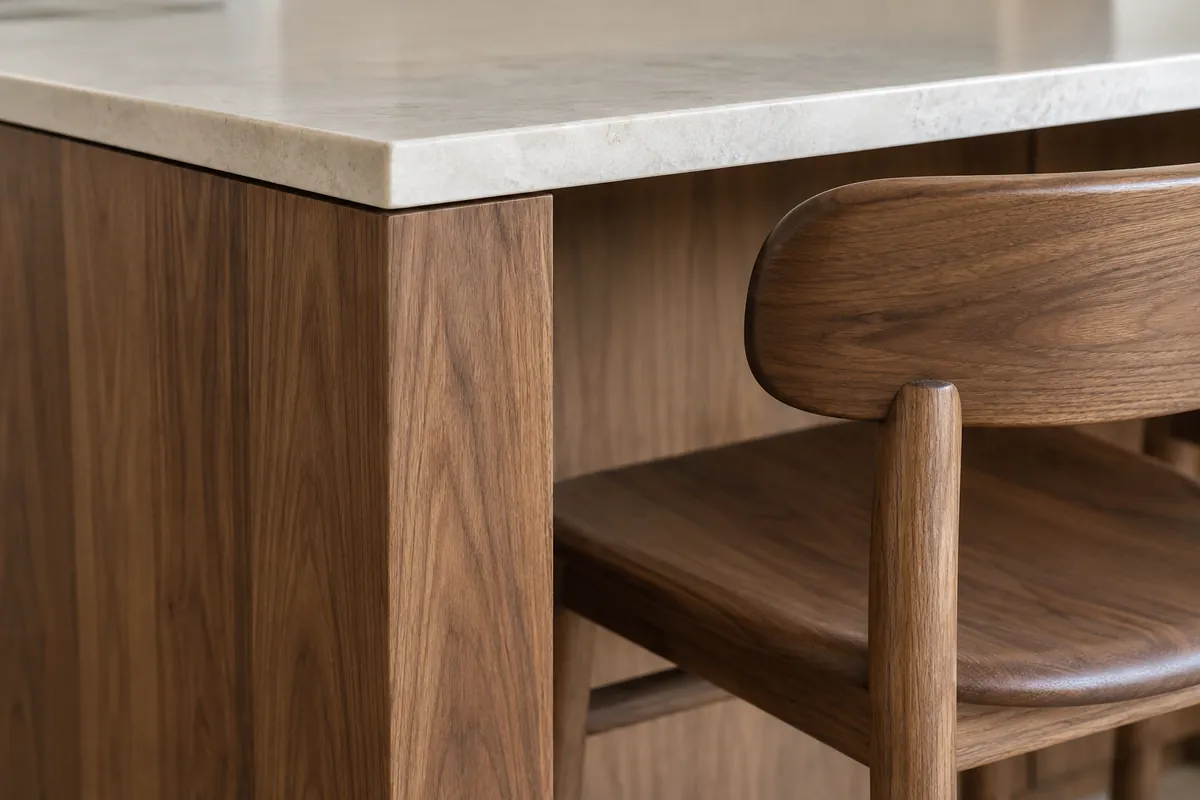
A wood that shows up once can look like an accident. Twice looks like a plan. If the island is a different wood, repeat it somewhere else: the stools, open shelves, a frame, a light fixture.
4. Give them space
Two different woods touching can compete. Put something between them: a stone counter, a rug, a strip of tile, some metal. It gives each wood room to breathe.
What about warm with cool?
It can work. But only when it’s clearly on purpose, with strong contrast, and repeated with care. When it’s half and half, it just looks wrong.
This is the case where most people get stuck, and where a designer’s eye pays for itself.
What if your floor is very orange or red?
Some floors are so strong that they stop acting like a neutral. They act like a colour. In that case, don’t fight them with more warm wood. Treat the floor as the accent, and keep the rest calmer: painted cabinets, a quiet counter, cooler wall colours.
If you’re not sure your floor falls into this group, compare it with other woods side by side. If it looks clearly orange or red next to them, it’s a colour, not a neutral.
We recently saw a homeowner ask online: “Does this cabinet door work with my floors?” The floor was a strong orange oak. The cabinet sample was a light maple with a taupe stain. One rule says a cool cabinet fights a warm floor. Another says a strong floor needs everything else calmer. Both are right, and that’s exactly why the answer depends on your light, your other finishes and how much you want the floor to lead.
Decide it before you buy a single cabinet
Cabinets are the biggest purchase in your kitchen and one of the hardest things to change. Wood that fights your floor isn’t fixed with paint on the walls. It’s the cabinets or the floor.
That’s why we choose cabinet wood and finishes as part of the plan, next to what you’re keeping, before anything is ordered. If you’d like help with that, see our kitchen design service in Toronto.
And if you’re still deciding on the cabinet finish itself, read 5 Kitchen Cabinet Choices That Won’t Look Dated in 10 Years.
FAQ
Can you mix wood tones in a kitchen?
Yes. Most well-designed kitchens mix two or three woods. Keep the undertones in the same family, use light and dark for contrast, and repeat each wood at least twice.
Should the island match the cabinets?
It doesn’t have to. A different wood or colour on the island can make it a focal point. Just repeat that wood somewhere else, like the stools or shelves, so it looks planned.
Should the floor be lighter or darker than the cabinets?
There’s no fixed rule. What matters is clear contrast. Lighter cabinets over a darker floor, or the reverse, both work. Avoid two shades that are almost the same.
Do painted cabinets go with any wood floor?
Paint takes the wood-on-wood problem away, which is why it’s a safe choice with a strong floor. But paint colours have undertones too, so test the paint sample next to your floor before you commit.