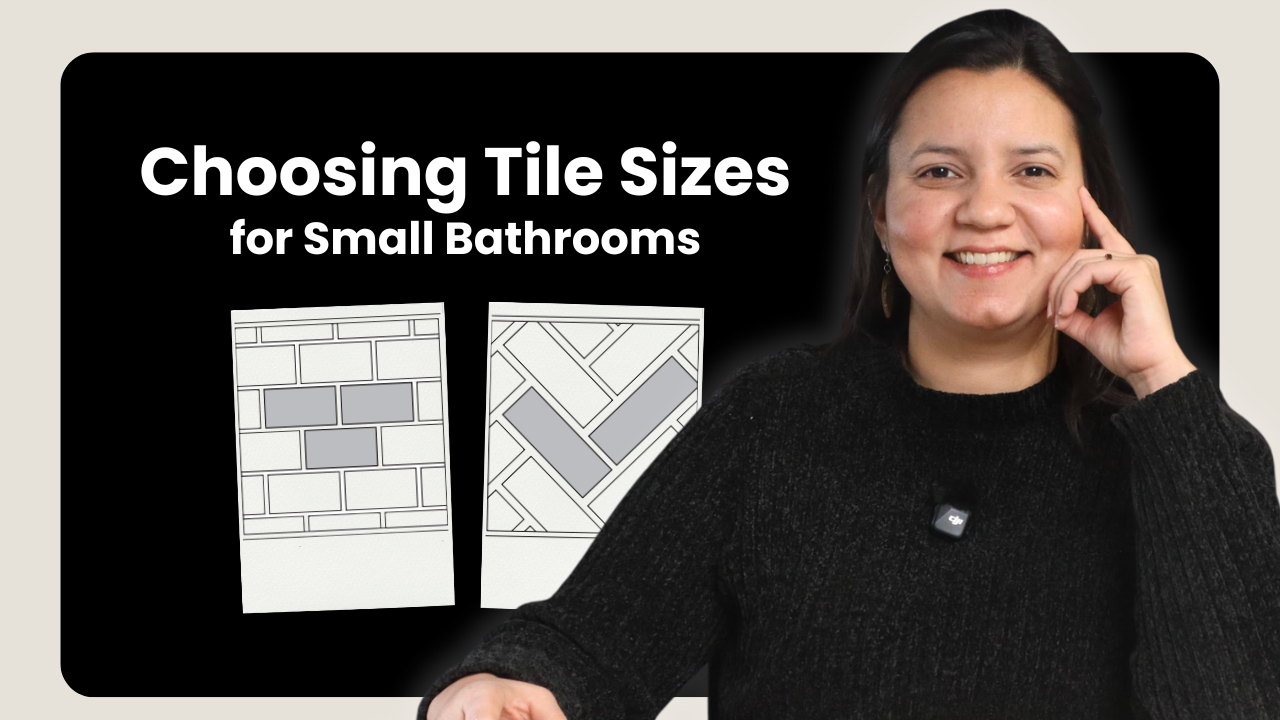
If you’re renovating a small bathroom in Toronto and staring at hundreds of tile options, you’re probably wondering: should I go with large format tiles or smaller mosaics? Subway tiles or something more detailed?
Here’s the truth: there’s no single “right” tile size for a small bathroom. But once you understand a few key principles about how tile size affects the feel of a space, the decision becomes much clearer.
In this guide, I’ll walk you through exactly what to consider when choosing bathroom tile sizes – not to tell you what you should do, but to help you understand the trade-offs so you can make the choice that’s right for your home.
Watch the full video explanation here:
The Real Question Isn’t About Size – It’s About Grout Lines
When people ask about tile size, they’re usually thinking about whether larger tiles make a space look bigger. But that’s only part of the story.
The main thing to understand is this: every grout line creates a visual break.
So the real question becomes: do you want your eye to move smoothly across the surface, or do you want to see more pattern and texture?
Neither is wrong. It’s about the feeling you’re creating:
- A calm, minimal bathroom has fewer visual breaks (fewer grout lines)
- A more detailed, textured bathroom shows the tile pattern more clearly (more grout lines)
Large format tiles (like 12×24″ or 24×24″) create fewer grout lines, which can make a small space feel more open and serene. Smaller tiles (like 2×2″ mosaics or 3×6″ subway tiles) create more grout lines, adding texture and visual interest – which some people love, and others find too busy in a small space.
Four Key Factors to Consider When Choosing Tile Sizes
1. Color and Undertones (More Important Than Size)
Before you even think about tile size, consider color and undertones. This is actually more impactful than the dimensions of the tile itself.
In a small bathroom:
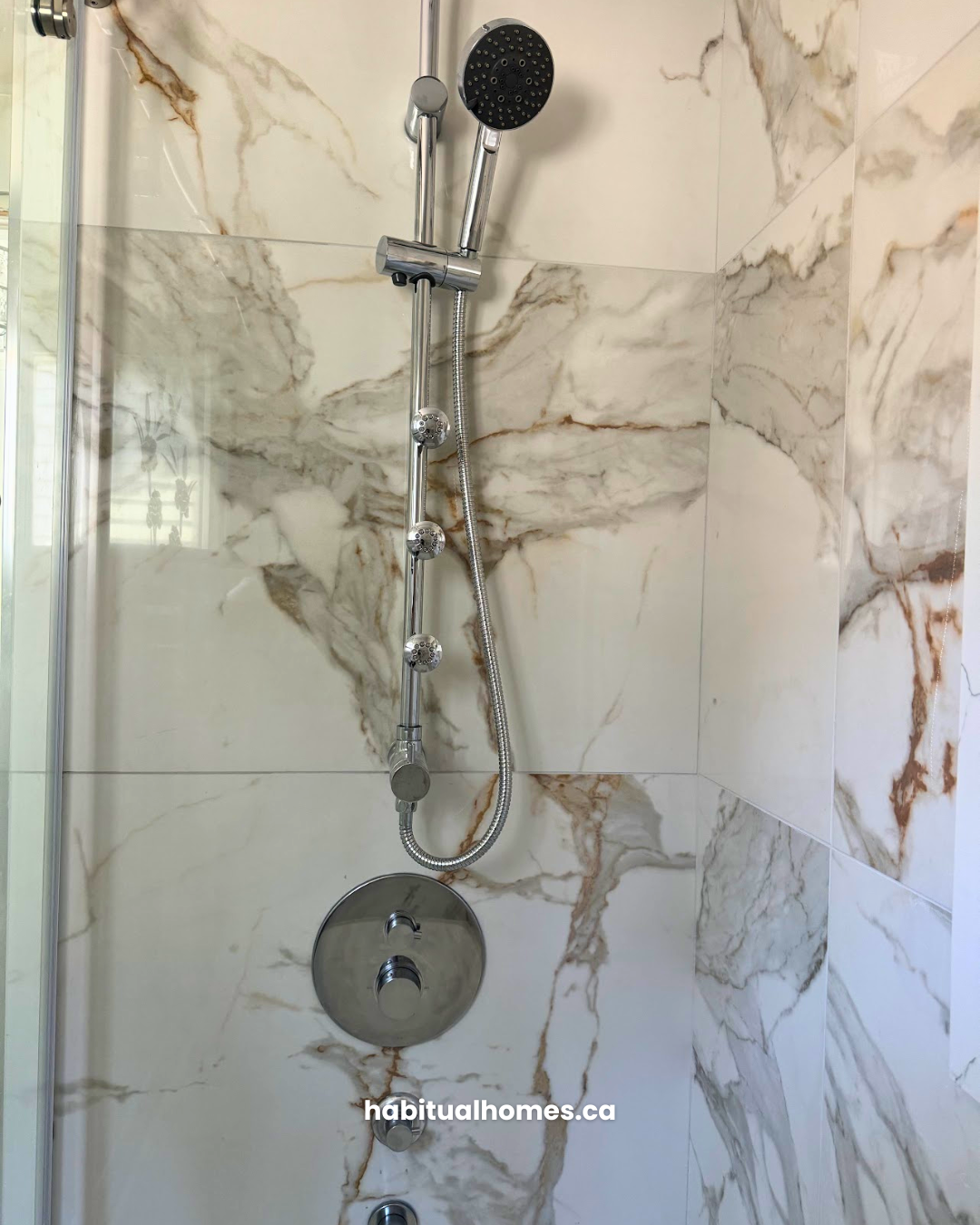
- Busy patterns or heavily veined tiles can make the space feel cluttered
- Simpler tiles with subtle variation usually work better
- Lighter, neutral tones reflect more light, helping a small space feel more open
But here’s what most people miss: undertones.
If you’re mixing tiles – say, one on the walls and another on the floor – they need compatible undertones. A warm cream tile next to a cool gray tile will feel off, even if they’re both neutral. The undertones need to speak the same language.
For example, if you’re using a white subway tile with warm beige undertones on your walls, don’t pair it with a cool gray hexagon tile on the floor. The clash in undertones will make the space feel disjointed, no matter how beautifully each tile is laid out.

Pro tip: When selecting tiles at the showroom, look at them together under natural light. Don’t rely on how they look under fluorescent showroom lighting – bring samples home and see them in your actual bathroom.
2. Grout Lines and Visual Weight
The number of grout lines directly affects how busy or calm your bathroom feels.
Larger tiles (12×24″ or larger):
- Fewer grout lines
- More open, contemporary feel
- Can make a small space feel less cluttered
- Require very flat walls for proper installation
Smaller tiles (under 6×6″):
- More grout lines
- More texture and pattern
- Can feel detailed and crafted
- More forgiving on slightly uneven surfaces
Your grout color matters too:
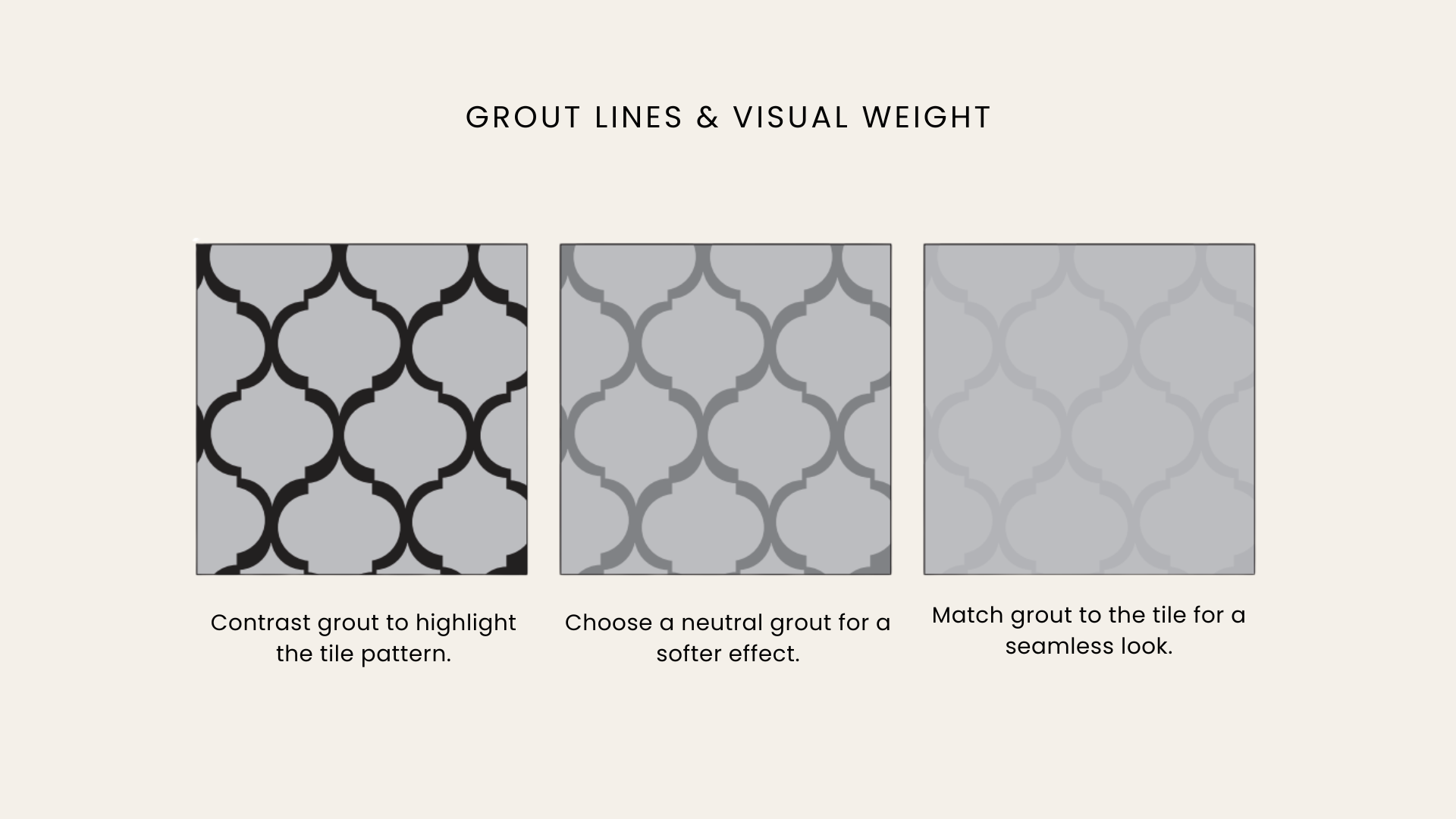
Matching your grout to your tile color makes the grout lines less noticeable – creating a cleaner, simpler look. For example, white tile with white grout feels more open and calm.
Contrasting grout – like dark grout with white tile – highlights the pattern and tile layout. This can look beautiful and intentional, but it creates more visual activity. In a small bathroom, that might feel busy, or it might feel detailed and interesting. It depends on what you’re going for.
There’s no wrong answer here. Just understand that contrasting grout makes your tile pattern more prominent, which adds visual weight to the room.
3. Mixing Tile Sizes (When It Works and When It Doesn’t)
You absolutely can use different tile sizes in different areas of your bathroom. In fact, this is common and often works beautifully.
A safe approach:
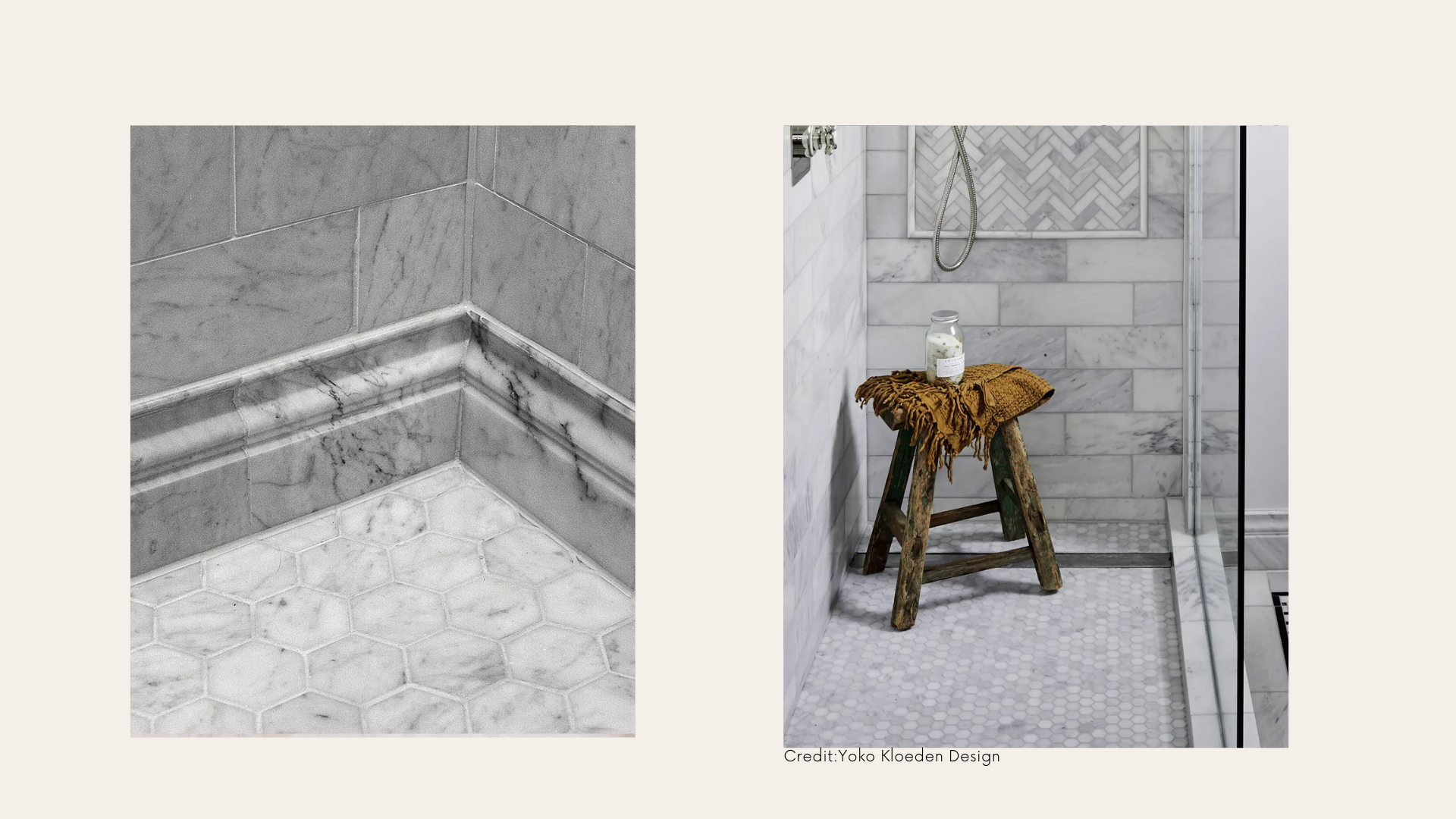
Use one tile size on your walls (like 3×6″ or 4×12″ subway tiles) and a smaller mosaic on your shower floor (like 1″ hexagons or 1″ penny rounds). The smaller floor tile gives you better traction where you need it, and creates a nice visual contrast without feeling chaotic.
A more advanced approach:
You can mix multiple tile sizes throughout the bathroom – on walls, floors, and different surfaces – if they’re in the same color family and finish. This can create a really beautiful, intentional layered look.
But here’s the caveat: this takes more design skill to pull off well. If the sizes, colors, or finishes start to vary too much, the space can feel chaotic instead of cohesive.
My advice: If you’re not confident in your design skills, stick with 1-2 tile sizes maximum. Use one for the main walls/floor and one accent tile for a specific area like the shower floor or a niche.
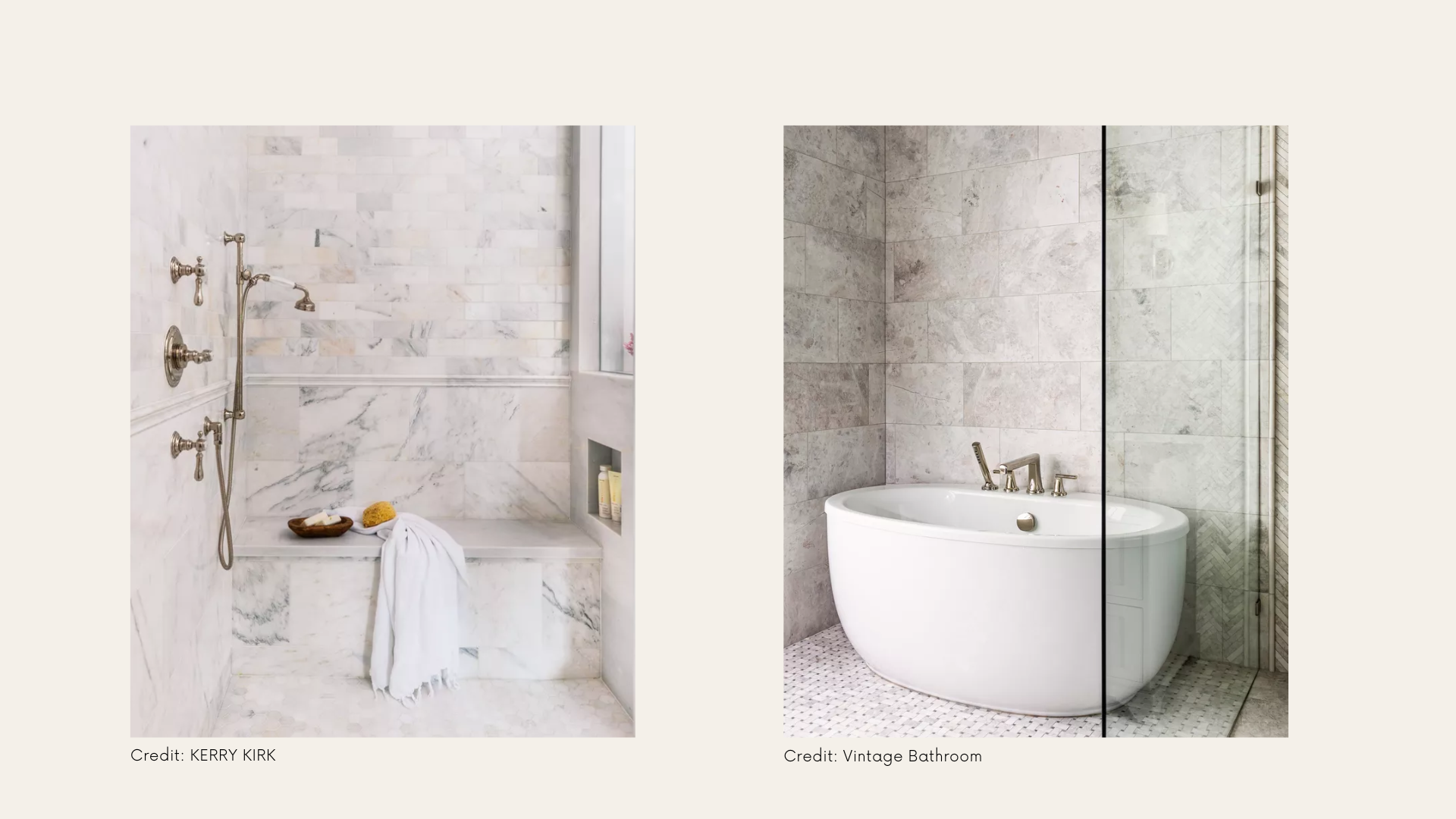
4. Tile Pattern and Layout
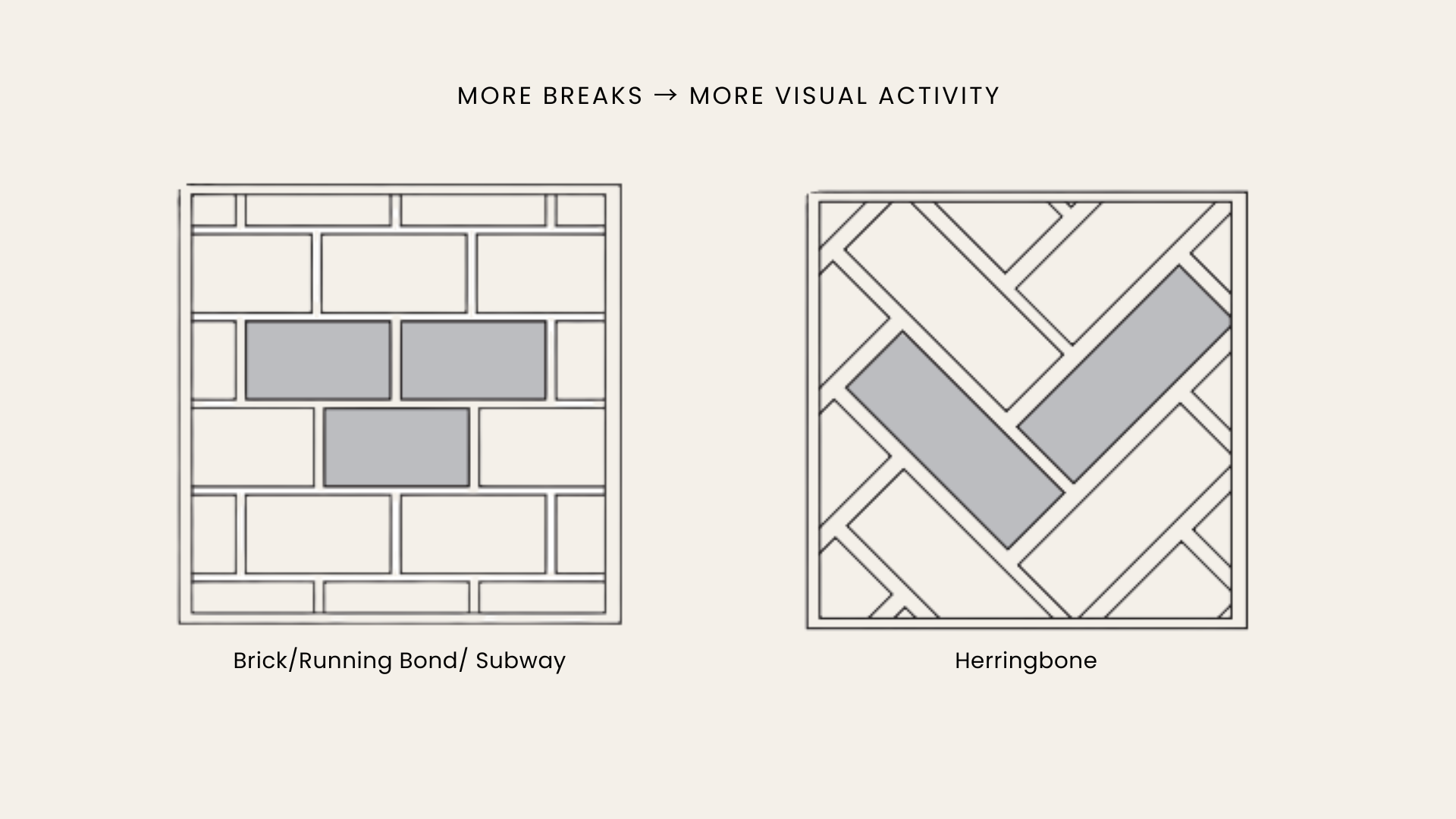
Even with the same tile size, the pattern you choose changes how the space feels.
Simple horizontal layout (like standard subway tile):
- Most neutral option
- Doesn’t fight for attention
- Timeless and clean
- Easy for installers (which can mean lower labor costs)
Herringbone, chevron, or diagonal patterns:
- Add visual interest and movement
- Can make a space feel more dynamic
- More complex to install (higher labor costs in Toronto typically add $3-5/sq ft)
- In a small bathroom, can feel busy or sophisticated depending on execution
Stacked grid (tiles lined up, not offset):
- Modern and clean
- Shows the tile shape very clearly
- Can feel stark or intentional depending on tile choice
Remember: in a small bathroom, you’re working with limited square footage, so every design choice has more visual impact. A busy pattern in a 5×8′ bathroom will dominate the space much more than the same pattern in a 10×12′ bathroom.
Common Small Bathroom Tile Scenarios
Let me walk through a few real-world scenarios I see with Toronto clients:
Scenario 1: “I want my small bathroom to feel spa-like and calm”
Consider: Large format tiles (12×24″ or 24×24″) in a neutral color with subtle variation. Use matching grout color. Simple horizontal or vertical layout. Maybe add a small strip of mosaic as an accent – but keep it minimal.
Scenario 2: “I love detailed, traditional bathrooms with character”
Consider: Smaller tiles like 3×6″ subway or 2×4″ brick shapes. You could use contrasting grout to emphasize the pattern. Maybe a hexagon mosaic floor. This will feel more detailed and textured – which you might love, but know it won’t feel as open and minimal.
Scenario 3: “I’m working with a tiny 5×5′ bathroom”
This is where simplicity really helps. Large or medium-sized tiles with minimal grout lines will probably serve you better than lots of small tiles. But if you love mosaic tiles, you can absolutely use them – just know you’re prioritizing texture and detail over visual openness. Neither is wrong.
Scenario 4: “I’m renovating an older Toronto home and want to respect the original character”
Classic subway tiles (3×6″) or hexagon floor tiles were common in early 1900s Toronto homes. Using these traditional sizes and patterns can feel authentic to your home’s history. You might use white with white grout for a fresh, updated look that still respects the original era.
What About Popular Tile Trends?
Here’s where I’m going to be honest with you: tile trends change, but good tile doesn’t.
Right now, these are popular:
- Large format tiles (24×48″ or even larger)
- Terrazzo and terrazzo-look tiles
- Zellige-style handmade look tiles
- Elongated subway tiles (3×12″ or 4×16″)
Some of these will have staying power. Others might start to look dated in 5-10 years.
My approach: Choose tiles based on whether you genuinely love them and whether they fit the architecture and character of your home – not just because they’re trendy right now.
Classic options like white subway tiles, hexagon mosaics, and simple neutral field tiles have been used for over 100 years and still look good. There’s a reason for that.
The Decision Framework: How to Actually Choose
Stop trying to find the “right” tile size. Instead, use this framework:
Step 1: Decide what feeling you want
Calm and timeless? Or detailed and textured?
Step 2: Consider your color and undertones first
Choose tiles that work together – not just tiles you like individually.
Step 3: Think about grout lines
More grout lines = more visual activity. Fewer grout lines = more open feel.
Step 4: Match your pattern to your goals
Simple patterns feel more neutral. Complex patterns add more interest.
Step 5: Consider your budget
In Toronto, tile installation typically runs $8-15/sq ft for standard layouts, $12-18/sq ft for more complex patterns. More grout lines and complex patterns mean higher labor costs.
The tile itself can range from $2-30+/sq ft depending on material and quality. For a small bathroom (say, 50 sq ft of tile area), your tile material might be $100-1,500, and installation might be $400-900.
These are general ranges – your actual costs depend on your specific project and tile choices.
What I Actually See Working in Toronto Bathrooms
After years of working on Toronto renovations, here’s what I’ve noticed:
In very small bathrooms (under 40 sq ft): Simple tiles tend to work better. The space is already limited, so visual simplicity helps it feel less cramped.
In older Toronto homes (pre-1950s): Classic tile sizes and patterns often feel more appropriate to the home’s character. A 1920s Toronto house might look odd with ultra-modern large format tiles – or it might look like a great juxtaposition. It depends on your overall design direction.
In newer condos and modern homes: Larger format tiles and simpler patterns tend to match the clean, contemporary aesthetic.
But these are observations, not rules. I’ve seen beautiful exceptions to all of these.
Common Tile Size Mistakes to Avoid
Mistake 1: Choosing tile based on a photo without considering your specific space
What works in a 200 sq ft bathroom in a magazine might feel completely different in your 35 sq ft bathroom.
Mistake 2: Mixing too many tile types
Using three different tile sizes, two different colors, and multiple patterns can feel chaotic. Simplify.
Mistake 3: Ignoring undertones
This is the number one mistake I see. People choose tiles they love individually, but the undertones clash when they’re together.
Mistake 4: Not getting actual samples in your space
Tiles look completely different in your bathroom lighting than they do in a showroom. Always get samples and look at them together in your actual space.
Mistake 5: Following trends over personal preference
If you don’t actually like large format tiles, don’t use them just because they’re popular right now.
Should You Work With a Designer?
Here’s my honest take: most people can choose good bathroom tiles on their own if they understand these principles and take their time.
But a designer or design-build firm can be valuable if:
- You’re mixing multiple tile types and want to make sure they work together
- You’re renovating an older home and want to respect its character while updating it
- You’re overwhelmed by options and keep second-guessing yourself
- You want to avoid costly mistakes (wrong tile for the application, poor layout planning, etc.)
At Habitual Homes, we offer design consultations specifically for situations like this. We can review your tile selections, suggest alternatives, and help you understand what will actually work in your space before you spend thousands on materials and installation.
Learn more about our free consultation – it’s a one-time consultation that gives you clarity and confidence before you start your renovation.
The Bottom Line
There’s no universally “best” tile size for small bathrooms. But there are better choices for the specific feeling you want to create.
For a calm, open feeling: Larger tiles, fewer grout lines, simple patterns, matching grout.
For a detailed, textured feeling: Smaller tiles, more grout lines, possibly contrasting grout, more complex patterns.
Both can be beautiful. Both can work in a small bathroom. It’s about understanding the trade-offs and choosing what fits your taste and your home.
The most important thing is color and undertone harmony. Get that right first, and the tile size decision becomes much easier.
What Questions Do You Have?
If you’re working through a tile decision for your bathroom renovation, I’d love to hear what you’re considering. Drop your question in the comments, and I’ll use it for future content.
And if you’re planning a bathroom renovation in Toronto and want professional guidance, reach out to us at Habitual Homes. We specialize in thoughtful renovations that respect what you have while creating spaces that work beautifully for how you actually live.
About Habitual Homes We’re a Toronto-based design-build firm specializing in custom home renovations and thoughtful interior design. We help homeowners make informed decisions early in the process – before costly mistakes happen.
Learn more: habitualhomes.ca
Related Articles:
- How to Choose Tile for a Small Bathroom: Our 3 Go-To Styles
- What Bathroom Tile Never Goes Out of Style?
- 2025 Toronto Bathroom Renovation Cost Guide
Have a question? Drop it in the comments – I read every one and use them to create future videos and articles.