Alternative to a Painted Accent Wall: 3 Layers I Used in a Toronto Bedroom
A painted accent wall is one of the most committed design moves you can make. Once it’s done, every other choice — pillows, art, throws, what sits on the nightstand — has to play nice with that color for years. If you outgrow the color, you’re not changing pillows. You’re repainting a wall.
Recently a client of ours fell in love with burgundy for her primary bedroom. Deep, moody, almost wine-dark. She wanted that color to live in the room. The first instinct most people have is to paint the wall behind the bed and call it done. We proposed a different path — a three-layer approach that delivers the same warm, moody energy without locking her into a single color for the next ten years.
This is the framework. It works for any bold color in a bedroom — burgundy, forest, navy, terracotta — and it’s the same one I’d use in your bedroom if you walked in tomorrow with a paint chip and a feeling.
The bedroom we’re working with
The room is a primary bedroom in a Toronto home. Existing condition: warm white walls, decent ceiling height, a window seat with a rug already in it that has soft warm tones. The bed wall — the one you see when you walk in — is the obvious target for a “feature wall” treatment. The client wanted that wall to read deep burgundy.
We documented the room, mocked the burgundy paint on the wall digitally, and then mocked the alternative we’re going to walk through. Both versions read warm and moody. One of them is also reversible.
Layer 1 — Paint as the foundation
The first layer is the most permanent: paint everywhere, including the wall behind the bed. We used Sherwin-Williams Alabaster, which is a warm white with a soft yellow undertone. It pulls warmth from any colored decor in the room without competing with it.
The instinct most people have here is wrong. They think the wall behind the bed needs to be a different color to feel like a “feature.” It doesn’t. What makes the bed wall feel like a feature is what’s on the wall and what surrounds it — not the color of the paint behind it.
Painting all four walls the same warm white means the moody color has somewhere quiet to land. Burgundy on a stark white wall fights you. Burgundy on a warm white wall sings.
The tradeoff is real — a fully painted accent wall is faster to install. One color, one room, done in a day. The three-layer approach is more work upfront. But the work pays back the first time the client wants to update the room.
Layer 2 — Trim as cohesion
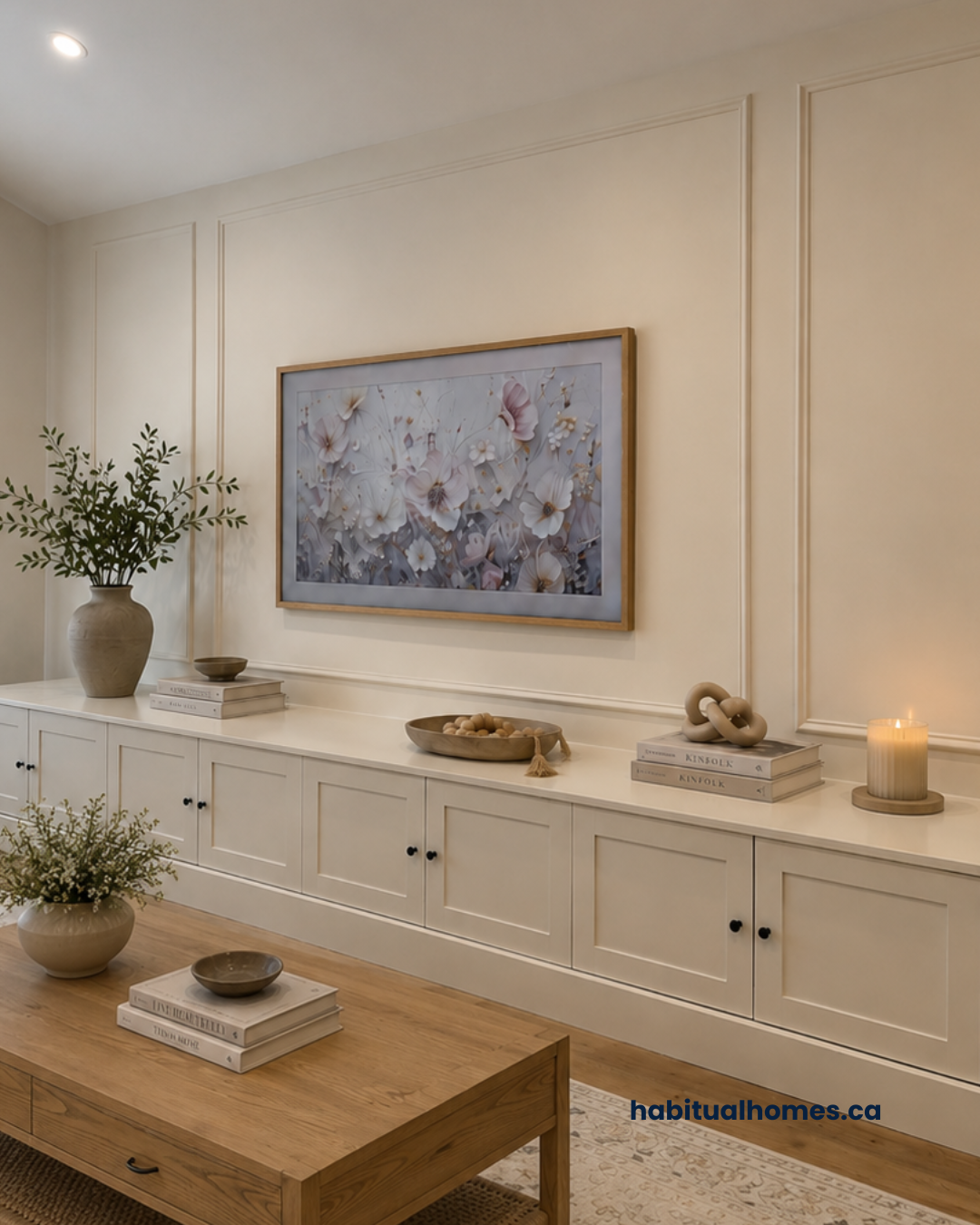
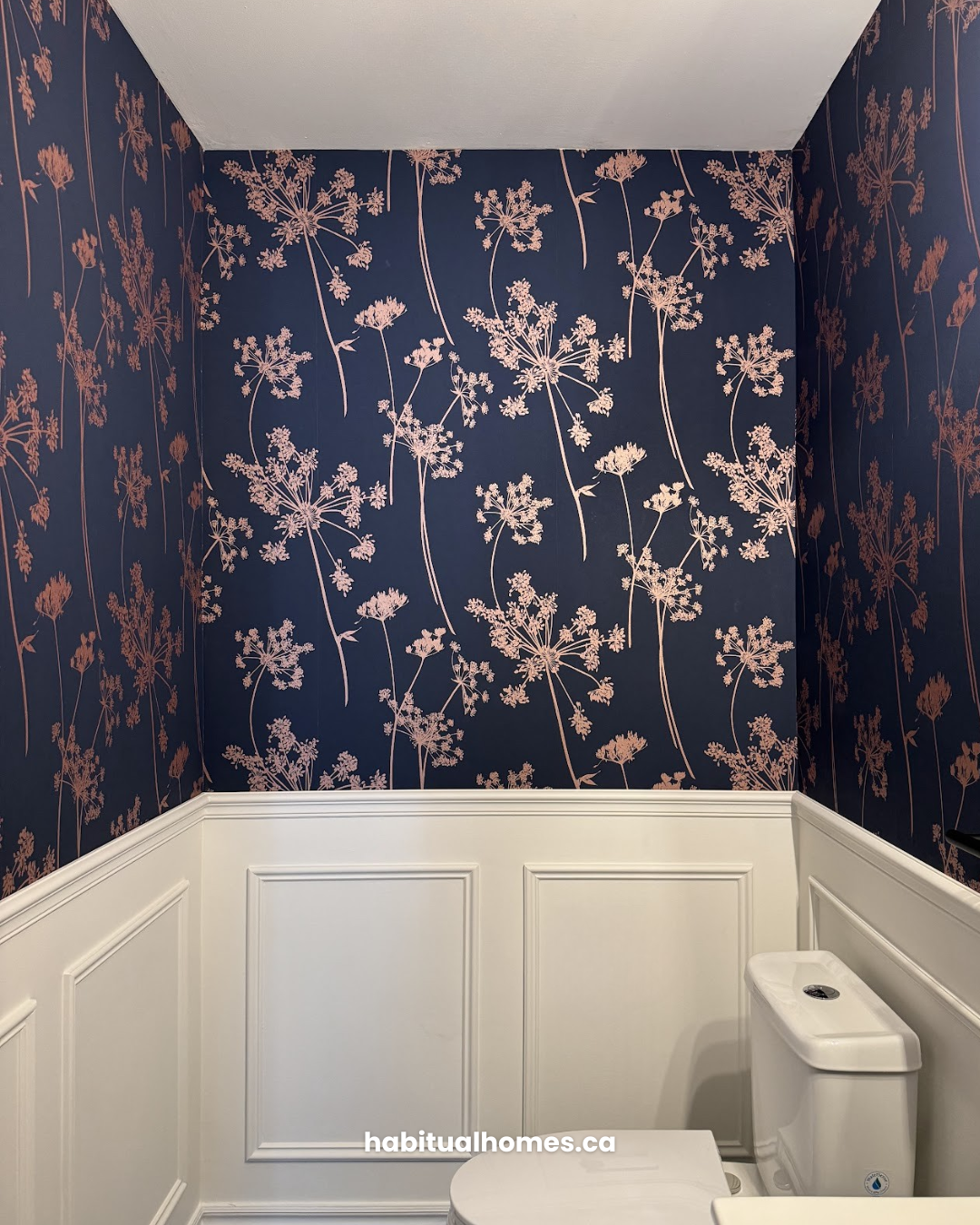
The second layer is the trim work: wall paneling behind the bed and a chair rail wrapping the perimeter of the room.
Paneling behind the bed reads as a permanent design decision without committing to a color. It gives the bed wall the visual weight an accent wall would have given it — same focal point, same “this wall is important” signal — but the paneling stays warm white. The shadow lines do the work that the color would have done.
The chair rail wraps the room at a consistent height — typically 30 to 36 inches off the floor depending on the room — and ties the paneling on the bed wall to the rest of the bedroom. Without the chair rail, the paneling would feel marooned. With it, the bedroom reads as one cohesive room with a more architectural feel.
The tradeoff: paneling and trim work cost more than paint. We’re talking about a custom millwork install — site-built, primed, painted, scribed to existing walls. It’s the most expensive layer of the three. But it’s also the layer that makes the room feel intentional, not staged. And it’s still color-neutral, so it carries forward into whatever the client wants the room to feel like in five years.
Layer 3 — Decor where the burgundy actually lives
The third layer is where the bold color shows up. Velvet pillows on the bed in deep burgundy. A throw across the foot of the bed in a slightly lighter wine. Dried florals on the nightstand, a few stems of something dark and matte. The rug she already had under her window seat, which has burgundy and rust threads running through it.
Same warm, moody energy she fell in love with. Without the same level of commitment.
This is the layer that’s supposed to change. Pillows wear out. Throws come and go with seasons. Rugs evolve as the rest of the home evolves. If her taste shifts toward olive or navy in five years, she swaps pillows. The structure of the room — the warm white paint, the paneling, the chair rail — stays the same. The room reinvents itself without a renovation.
When a painted accent wall is the right call
This isn’t a hard rule. There are bedrooms where a painted accent wall is the right answer.
If the room has very little decor potential — small space, no room for layered textiles, narrow nightstands — then a painted accent wall might be the only place color can live. If you’re committed to the color long-term and you know your taste doesn’t shift fast, the simpler path is fine. If the wall is plaster with great texture and you want to lean into that, paint is the right choice.
The honest version: a painted accent wall is the right call when the room can’t carry color any other way. In most Toronto bedrooms we work in — average size, decent decor potential, clients who renovate every 7 to 10 years — the layered approach gives you more flexibility for a similar visual outcome.
FAQs about accent walls and bedroom design
What’s the alternative to a painted accent wall in a bedroom?
A three-layer approach: warm white paint on all walls (including behind the bed), wall paneling and trim work for architectural cohesion, and bold color in the decor — pillows, throws, rugs, dried florals. Same moody energy, none of the long-term commitment.
Do I need wall paneling for a moody bedroom?
No. Paneling adds permanent visual weight to the bed wall, which is what an accent wall does with color. If you’re not adding paneling, you can still do the layered approach — just rely more heavily on textiles and a strong headboard for visual weight.
How much does a custom paneling and chair rail install cost in Toronto?
It depends on the room size, paneling style, and existing wall condition. A small bedroom is cheaper than a primary bedroom. Walls that are square and plumb cost less to install on than older homes with wavy walls. We give a real number once we have the existing-conditions drawings and a confirmed scope. Anything before that is a guess.
Should the wall behind the bed be painted differently from the others?
Not necessarily. The wall behind the bed reads as a feature regardless of color, because the bed itself anchors the room. Painting it differently is one way to emphasize it. Adding paneling, a strong headboard, or layered textiles is another. Both work. The painted version is harder to undo.
Can I add color back later without repainting?
Yes — that’s the point of the layered approach. The decor is the layer that changes. New pillows, a new throw, a different rug. The room shifts season to season or year to year without touching the walls. If you start with a painted accent wall, every taste change becomes a paint job.
Planning a bedroom renovation in Toronto?
We help homeowners in Toronto and the GTA think through these design decisions before they get committed in paint or millwork — using the same framework you saw in the video and in this post. If you’re planning a bedroom refresh and you’re falling in love with a bold color, we’d rather help you find the right way to use it than watch you repaint in three years.
Look through our work at habitualhomes.ca, and reach out when you’re ready to walk through your bedroom together.
Related articles
Primary Bedroom Transformation with SW Urbane Bronze — Downtown Toronto
A different bedroom, a different Sherwin-Williams color, and a fully committed approach — when the bold paint is the right answer.
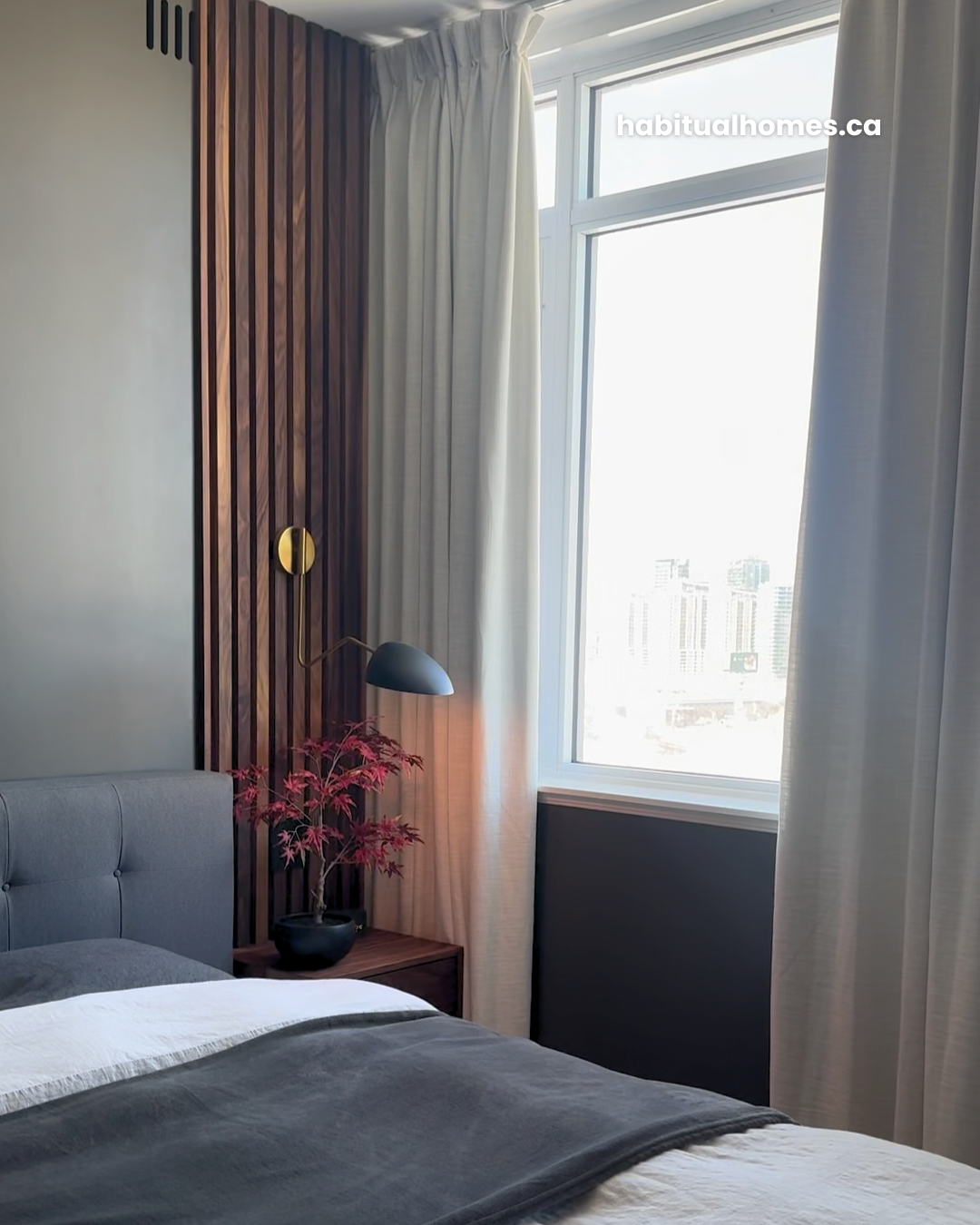
Custom Walnut Night Tables & Slat Feature Wall — Downtown Toronto
Another way to give the bed wall architectural weight without leaning on paint — slat paneling and custom millwork.
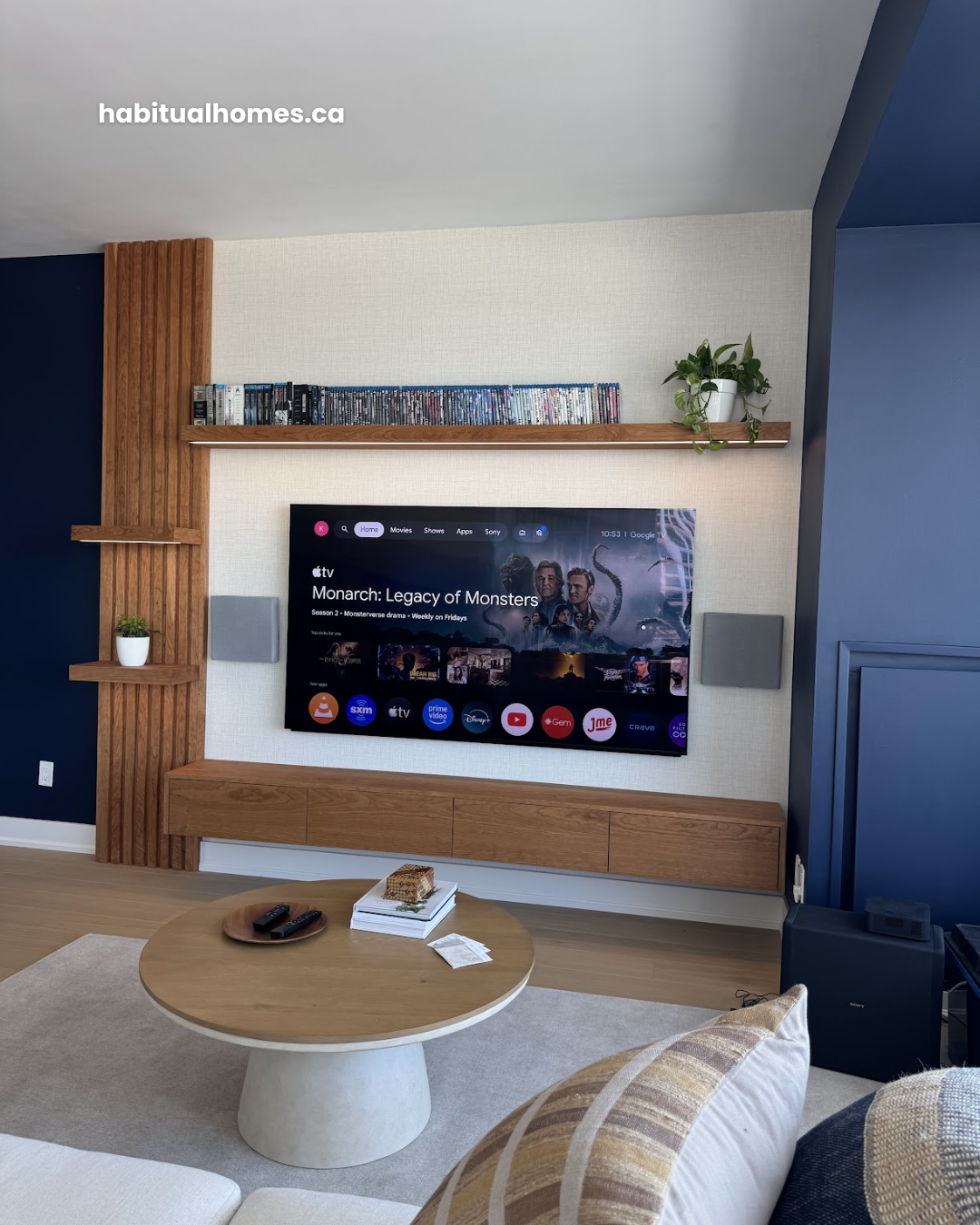
Living Room Renovation with Fireplace Update & TV Feature Wall – North York
The same “make the wall a feature without painting it” thinking, applied to a living room with a fireplace and TV.