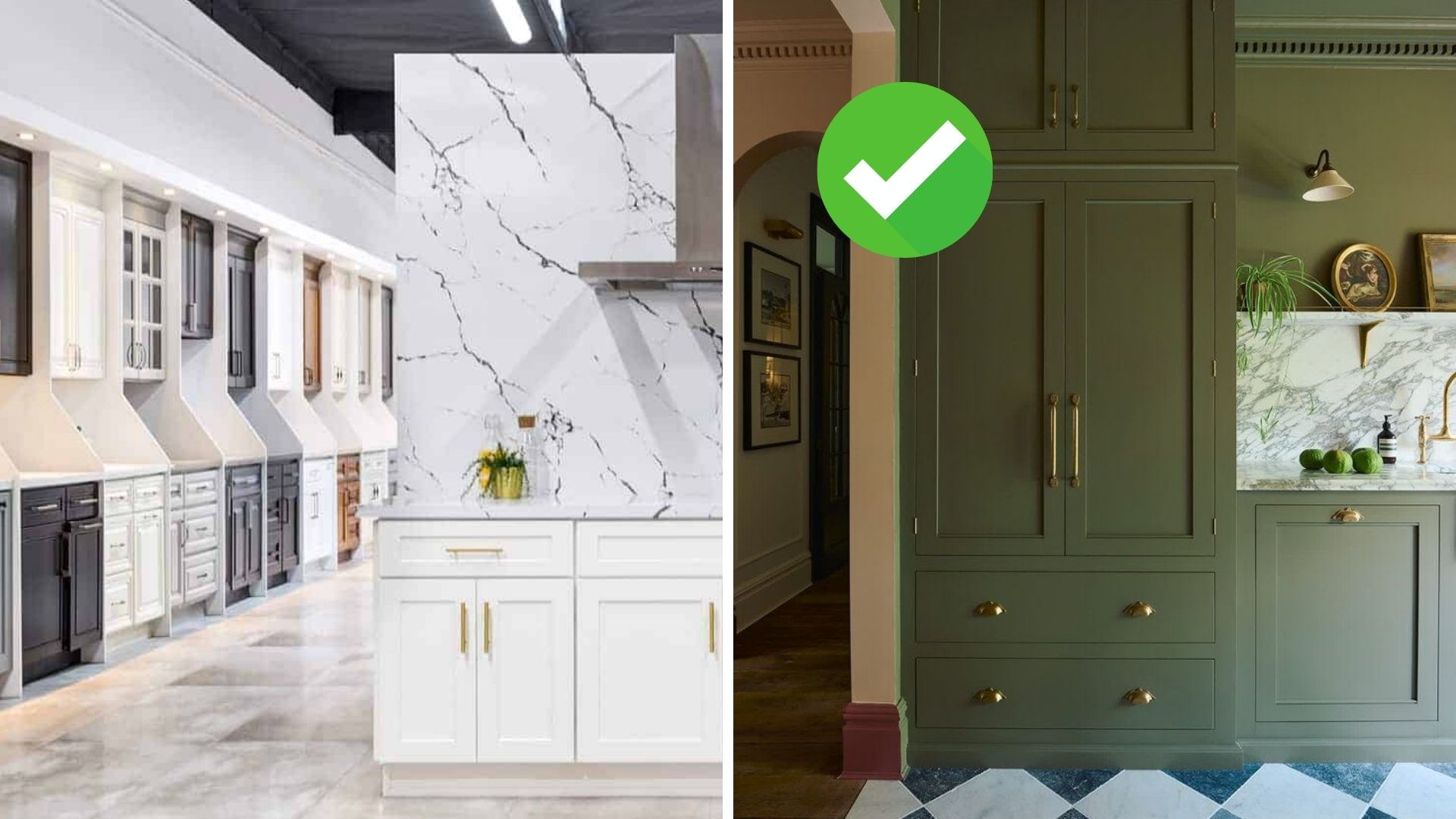
5 Details That Make Kitchen Cabinets Look Custom (And What to Ask Your Cabinet Maker)
If you’re planning a kitchen renovation and shopping for cabinets, you’ve probably noticed a huge range in pricing—from $15,000 for builder-grade to $50,000+ for custom. But what are you actually paying for?
The difference between builder-grade cabinets and custom comes down to five specific details. When you know what creates that custom look, you can decide which details matter for your kitchen and your budget.
Watch the full breakdown in this video, then read on for more details:
The 5 Cabinet Details That Create a Custom Look
1. Inset Doors vs. Overlay Doors
The single biggest detail that makes cabinets look like furniture rather than storage boxes is inset doors.
What are inset doors?
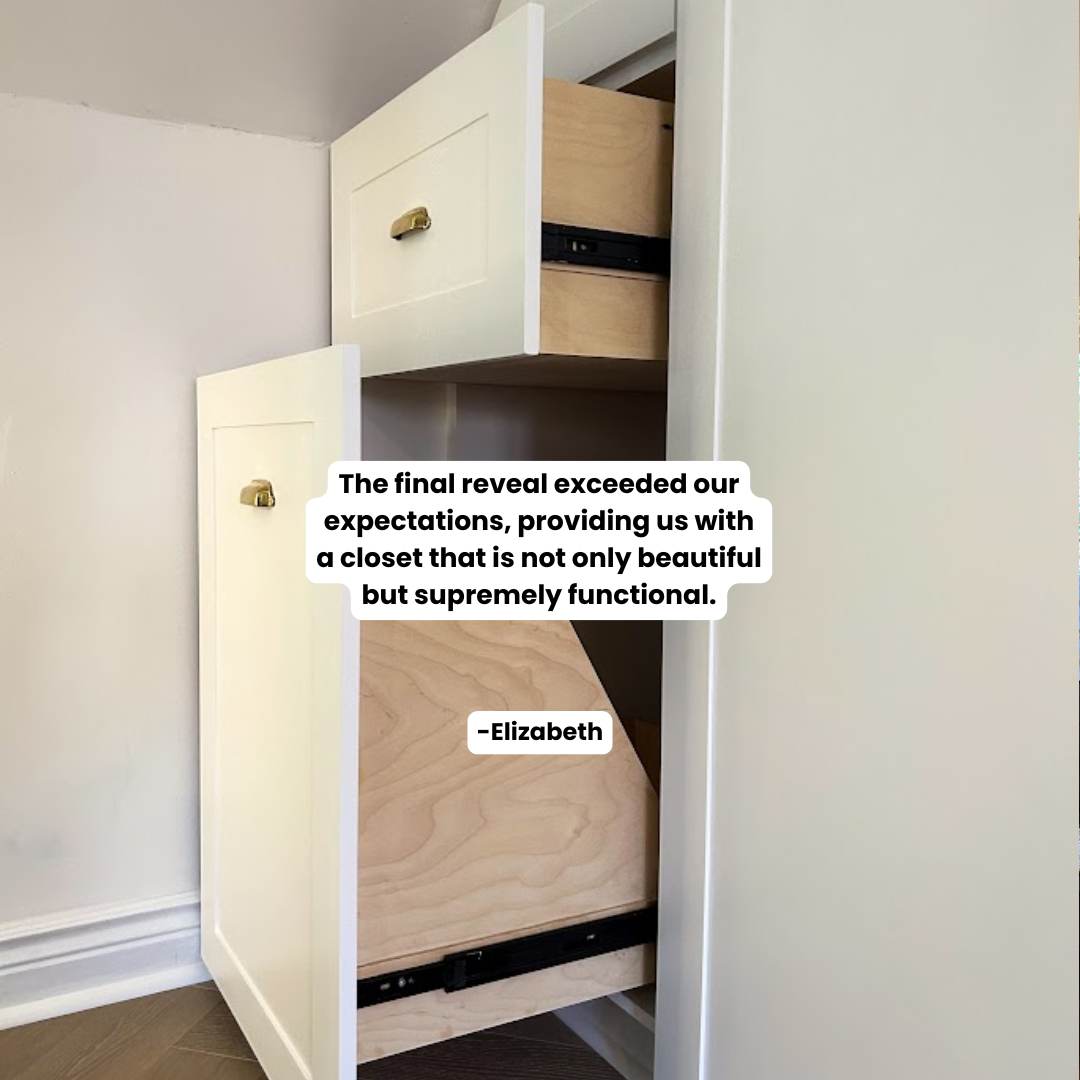
With inset doors, the door sits inside the cabinet frame rather than laying on top of it. This creates thin, clean reveal lines around each door—the hallmark of custom, furniture-quality cabinetry.
What you might hear:
Some cabinet makers will tell you that inset doors require constant adjustment because wood expands and contracts with humidity. In our experience building in Toronto—where we have significant seasonal humidity changes—this is usually an excuse for cabinet makers who don’t want to do the more precise work that inset requires.
The real trade-off:
Inset doors take more skill to build well and cost more upfront. You need to find a cabinet maker who’s actually comfortable building them. But if you want that custom, furniture-quality look, this is the detail that creates it.
2. Crown Molding Depth
Most cabinet makers will give you about 3 inches between your cabinet door and the ceiling, then add a simple crown molding. This is the standard, budget-friendly approach.
What makes it custom:
If you ask for 6 inches with a more substantial crown molding, you get a much more formal look—especially in kitchens with 9 or 10 foot ceilings.
Why it matters:
This is one of those details where a little bit of extra material and labor creates a big visual difference. It gives your cabinets architectural presence instead of just looking like storage boxes mounted on the wall.
What to ask your cabinet maker:
“Can we do a 6-inch space above the doors with a more substantial crown?” Show them reference photos of the look you want.
3. Door Thickness and Profile
Standard cabinet doors are about 3/4 of an inch thick. But custom cabinet doors are typically 1 inch to 1-1/8 inch thick.
Why thickness matters:
Thicker doors allow for much deeper, richer profiles on the door edges. You get more shadow, more depth, more character. The door becomes more than just a flat surface closing the cabinet.
The design opportunity:
That flat area around your door panel? You can add different molding profiles—French details, English details, traditional details. This is where you can introduce specific design language that matches your home’s style.
What to ask your cabinet maker:
“Can we do 1-inch thick doors instead of 3/4-inch?” and “What profile options do you offer for the door edges?”
4. Toekick Treatment
Standard toekicks are just a recessed panel—pretty basic, pretty boring. But this is one of the more affordable ways to add character.
Custom toekick options:
- Scalloped edges
- Curved profiles
- Furniture-style bases
- Decorative detailing
Why this detail is worth considering:
Most people don’t think about the toekick, but it’s another place where you can move away from that production cabinet look toward something that feels more custom and thoughtful. And the cabinet maker can usually do this without too much extra work, so it’s a good place to ask for something special.
5. Interior Construction Quality
This is where durability lives—but you can’t see it when you’re looking at showroom samples.
Three things to ask about:
1. Cabinet box material: Plywood vs. particleboard
Plywood holds up better over time, especially around water. Particleboard can swell and deteriorate if it gets wet.
2. Drawer box construction: Dovetail joints vs. stapled boxes
Dovetail joints—where the pieces interlock—are much stronger than staples. The drawer boxes last longer and won’t fall apart.
3. Hardware quality: Under-mount vs. side-mount drawer glides
Under-mount gives you full access to the drawer and doesn’t take up interior space. Side-mount reduces your storage width. Also ask about soft-close mechanisms for both doors and drawers.
The key questions to ask:
- “What are you using for the cabinet boxes—plywood or particleboard?”
- “How are the drawer boxes constructed?”
- “What kind of drawer glides do you use?”
This is what determines whether your cabinets last 10 years or 30 years.
Who This Is (And Isn’t) For
Not every kitchen needs all five of these details. If you’re doing a rental property or a quick flip, builder-grade cabinets might be exactly right for your situation.
But if you’re building your forever kitchen and you want it to feel custom and well-made, these are the five specific things to ask for.
When you know what creates that difference, you can decide which ones matter for how you live.
What Comes After Cabinet Construction?
Once you’ve decided on these construction details, your next big decision is finish. Not all cabinet finishes age equally well—some look dated in just a few years, while others remain timeless.
Need Help Deciding What’s Right for Your Kitchen?
Every kitchen is different, and the “right” cabinet details depend on your budget, timeline, and how you actually use your space.
We offer free 15-minute consultations to help you think through these decisions before you start getting quotes from cabinet makers. No sales pitch—just honest guidance on what actually matters for your situation.
About Habitual Homes
Johanna and I run a design-build firm here in Toronto. We both graduated as architects in Venezuela and have 10 years of construction experience helping homeowners navigate major renovations. Our approach is education-first—we want you to understand your options so you can make informed decisions.
More helpful renovation guides:
Related Videos:
FAQ
What’s the difference between inset and overlay cabinet doors?
Inset doors sit inside the cabinet frame, creating reveal lines that give a furniture-quality look. Overlay doors sit on top of the frame—simpler to build but less custom-looking.
Are custom cabinets worth the extra cost?
It depends on your situation. For a forever home, the quality and longevity of custom details often justify the cost. For rentals or short-term homes, builder-grade might be the right choice.
How much more do inset doors cost than overlay?
Inset doors typically add 20-30% to cabinet costs due to the precision required, but this varies by cabinet maker and project scope.
What’s the most affordable way to make cabinets look more custom?
Toekick detailing and crown molding depth offer the biggest visual impact for the lowest cost increase.
How do I find a cabinet maker who can do inset doors?
Ask to see examples of their inset work and request references from past clients. Not all cabinet makers are comfortable with the precision inset requires.