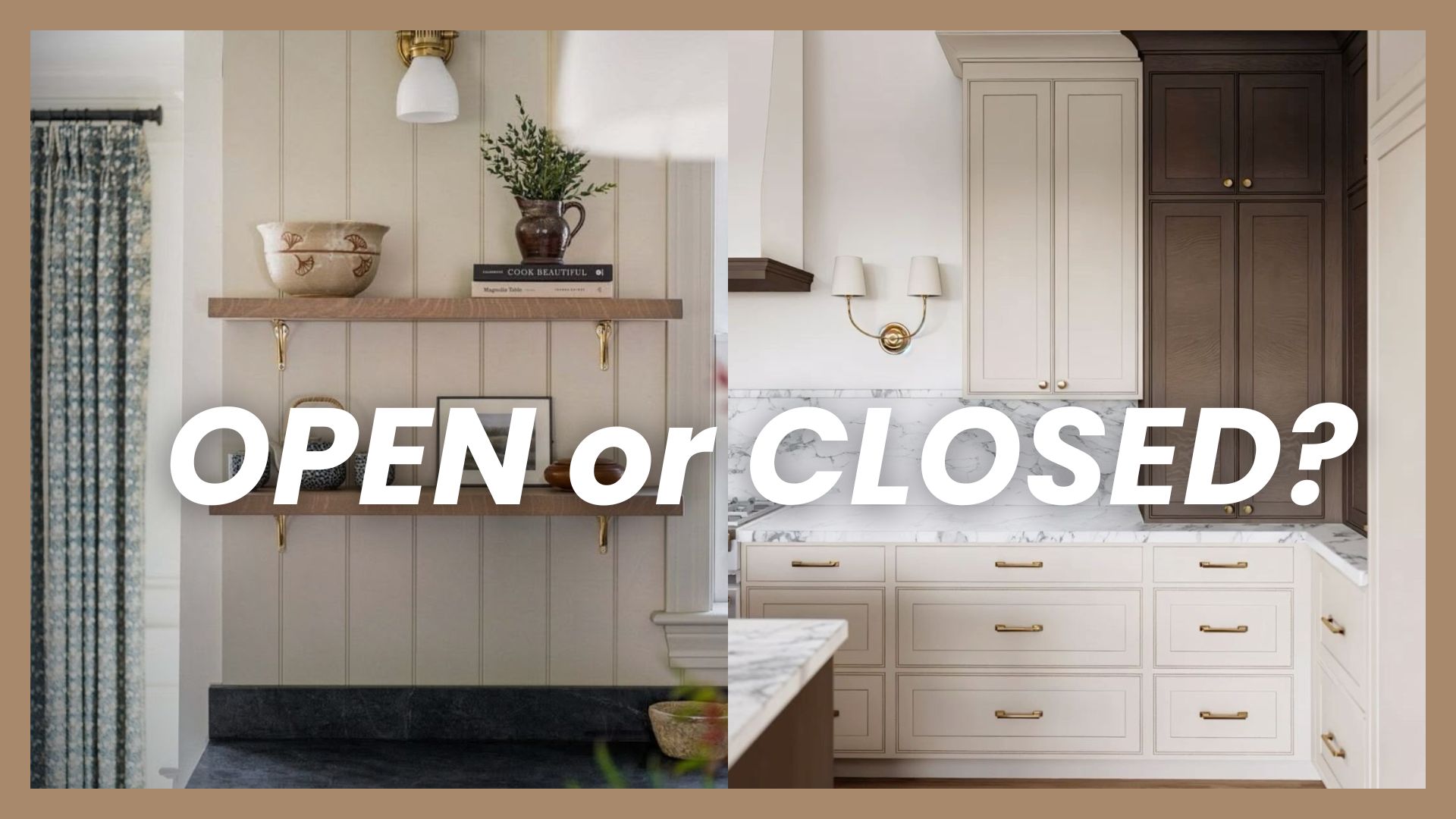
Open shelves are everywhere on design inspiration boards right now, and it’s easy to see why. But before you remove a run of upper cabinets and replace them with wood shelving, it’s worth asking a more useful question than “which one looks better.” When we’re weighing open shelving vs. upper cabinets for a client’s kitchen, we look at how much storage the household actually needs, what they want left on display, and how much upkeep they’re realistically willing to do. Get those three right, and the choice between open and closed stops feeling like a trend decision and starts feeling like the right call for that specific kitchen.
The Three Factors That Actually Decide It
Storage. Closed cabinets give you the most usable, protected storage per square foot of wall. Everything from mismatched food containers to small appliances can live behind a door without affecting how the kitchen looks. Open shelving takes up the same wall space but holds less, and what it holds needs to earn its place.
What stays visible. Closed cabinets hide the everyday clutter that builds up in a kitchen that actually gets used. Open shelving does the opposite. It puts everything on permanent display, which is great for a curated stack of dishware or a favourite collection, and much less great for the odds and ends that accumulate during a normal week.
Maintenance. Anything left in the open collects dust and kitchen grease over time, which means open shelves need more frequent wiping down than a closed cabinet ever will. Closed cabinets protect their contents and ask far less of you day to day.
Why the Difference Matters More Than It Looks
Closed cabinets are the more forgiving option. You can be as messy as you want on the inside, and from across the room, the kitchen still looks clean and put together. Open shelving works in the opposite direction. Because everything on it is visible all day, it only looks good when what’s on it stays curated. Leave a stack of mismatched mugs or a half-empty cereal box up there, and that clutter becomes part of the room’s overall look, not something you can close a door on.
Three Real Kitchen Scenarios
A small kitchen. When square footage is limited, closed cabinets usually win. A smaller kitchen needs every inch of practical storage it can get, and open shelving eats into that without adding much storage back.
A larger kitchen with enough base storage. If the lower cabinets and pantry already handle the household’s everyday storage, open shelving becomes much easier to justify. At that point, it’s being added for how it feels in the room, not because the kitchen needs the space.
The best of both. In most of the kitchens we design, the answer isn’t open or closed, it’s both, used with intention. That usually means mostly closed cabinetry for everyday storage, paired with one open-shelf area near a coffee station, a sink, or a range, where it’s easy to keep tidy and adds character without taking over the room. If you’re also deciding drawers or doors on your lower cabinets, that same principle of matching the choice to how you actually use the space applies there too.
The Cost People Don’t Expect
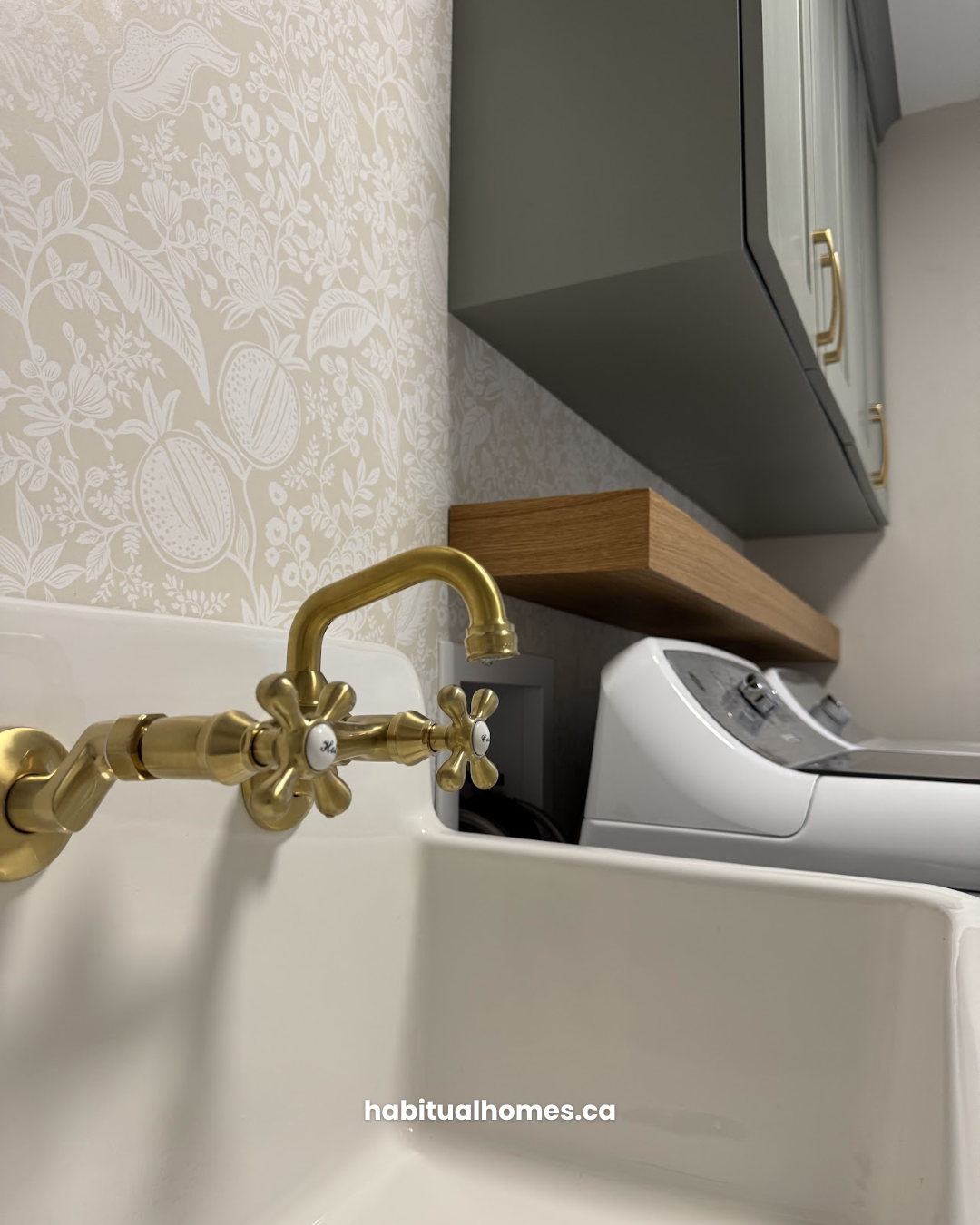
A common assumption is that open shelving is automatically the cheaper option, since you’re removing cabinet doors and boxes. In practice, it’s not that simple. A well-built floating shelf, done properly in a material like white oak, with hidden brackets and blocking installed inside the wall to actually support it, takes real planning and real construction work. It’s not a shortcut version of a cabinet, it’s a different kind of build, and it deserves the same attention to detail as the small touches that make cabinetry look custom.
If you’re weighing open shelving against upper cabinets for your own kitchen and want a second opinion on what actually fits your space, book a consultation with our team.
Book a ConsultationHow to Decide for Your Kitchen
Before you commit either way, answer three questions honestly. How much storage do you actually need day to day? What are you willing to keep visible and curated, and are you being realistic about that? And is your kitchen small enough that every inch of storage matters? Once you’ve settled on open, closed, or a mix, the next decision is usually which cabinet style will hold up over time rather than looking dated in a few years, and whether to extend your cabinets to the ceiling or leave a gap above them.
Frequently Asked Questions
Is open shelving cheaper than closed cabinets?
Not necessarily. Removing cabinet doors and boxes can lower material costs, but a properly built floating shelf with hidden brackets and wall blocking still requires real construction work. The savings are not automatic.
Does open shelving make a small kitchen look bigger?
It can make a kitchen feel lighter and more open, since it removes visual bulk from the upper walls. That said, a small kitchen also needs practical storage, so the visual benefit has to be weighed against how much storage the household actually needs.
How do I keep open shelves from looking cluttered?
Keep the items on display limited and cohesive, and store anything mismatched or purely functional behind a closed door elsewhere in the kitchen. Open shelving works best as a small, curated section rather than the primary storage in the room.
Can I mix open shelving and closed cabinets in the same kitchen?
Yes, and in most of the kitchens we design, that’s exactly the approach. Closed cabinets handle everyday storage, and a smaller, intentional open-shelf area adds character near a coffee station, sink, or range.
Ready to figure out what actually works for your kitchen? Book a consultation with Habitual Homes, and we’ll walk through your space together.