Quick Answer: A home office in a TV wall works when the desk is planned as part of the wall from the start, not squeezed into a leftover corner afterward. On one of our projects, we built the desk directly into the same wall as the TV, sized to the client’s actual workflow, so the living room could hold both without feeling like two rooms fighting for space.
Signs You Need a Home Office in Your TV Wall, Not a Spare Room
Not every home has a room to give up for an office. A few signs this is the right move instead of buying a standalone desk:
- You work from home at least part of the week, but there’s no door you can close on a dedicated office.
- Your living room already has a TV wall, and there’s an underused section of it, a corner, an end panel, a stretch of blank wall next to the media area.
- You’ve thought about a freestanding desk, but every option either blocks the walking path or looks like it was dropped into the room as an afterthought.
- You want the desk to disappear visually when you’re not using it, not become the first thing guests notice.
If any of that sounds familiar, the answer usually isn’t more furniture. It’s rethinking the wall you already have.
Why This Works Better When It’s Planned With the TV Wall, Not Added After
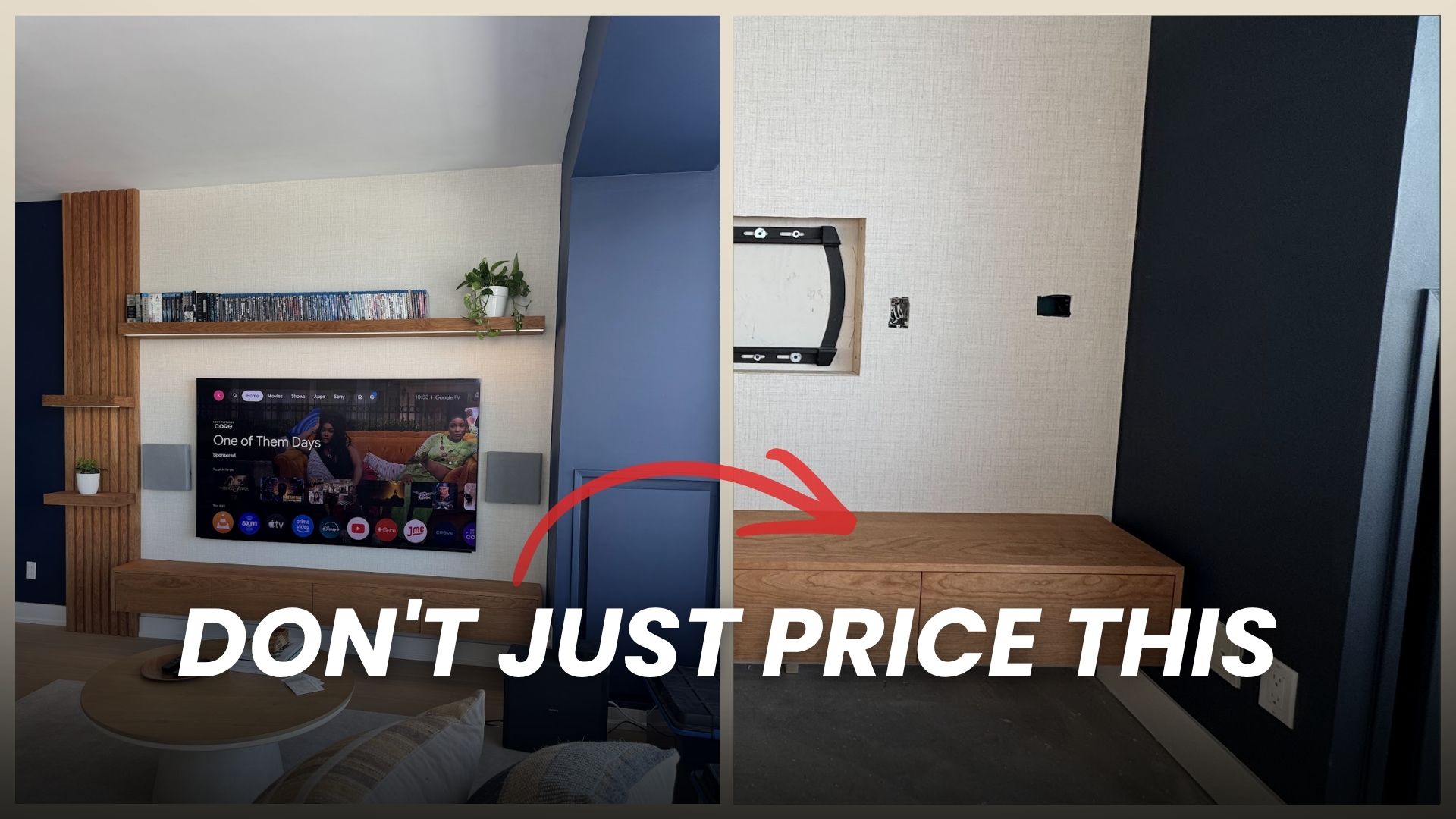
A lot of people start with a TV wall, live with it for a while, and then try to add a desk later once they realize they need one. That’s the harder way to do it. Outlets are already placed for the TV and the media console, not for a desk. The proportions of the wall are already set. Adding a desk after the fact usually means it reads as a separate piece of furniture pushed up against the cabinetry, not part of the design.
When the desk is planned into the TV wall from day one, the whole wall gets designed as one project. The cabinet heights, the depth on each section, the outlet locations, and the desk surface all get worked out together, so the finished wall looks like it was always meant to hold both.
What a TV Wall Home Office Actually Needs
A desk built into a media wall isn’t the same as a plain floating shelf with a laptop on it. A few things have to be planned in from the start:
- Desk height and depth that actually fit how you work. A shelf deep enough to hold a lamp isn’t deep enough to work at for hours.
- A dedicated outlet at the desk, not an extension cord run over from the TV’s power source.
- Cable routing separate from the TV’s cables, so charging a laptop doesn’t mean reaching behind the media console.
- Lighting for the desk area specifically. A TV wall is usually lit for evening viewing, not for reading or video calls during the day.
- Enough visual separation that the desk doesn’t compete with the TV for attention when you’re not working.
Skip any of these and the desk technically exists, but it doesn’t actually function as a workspace day to day.
A Real Example
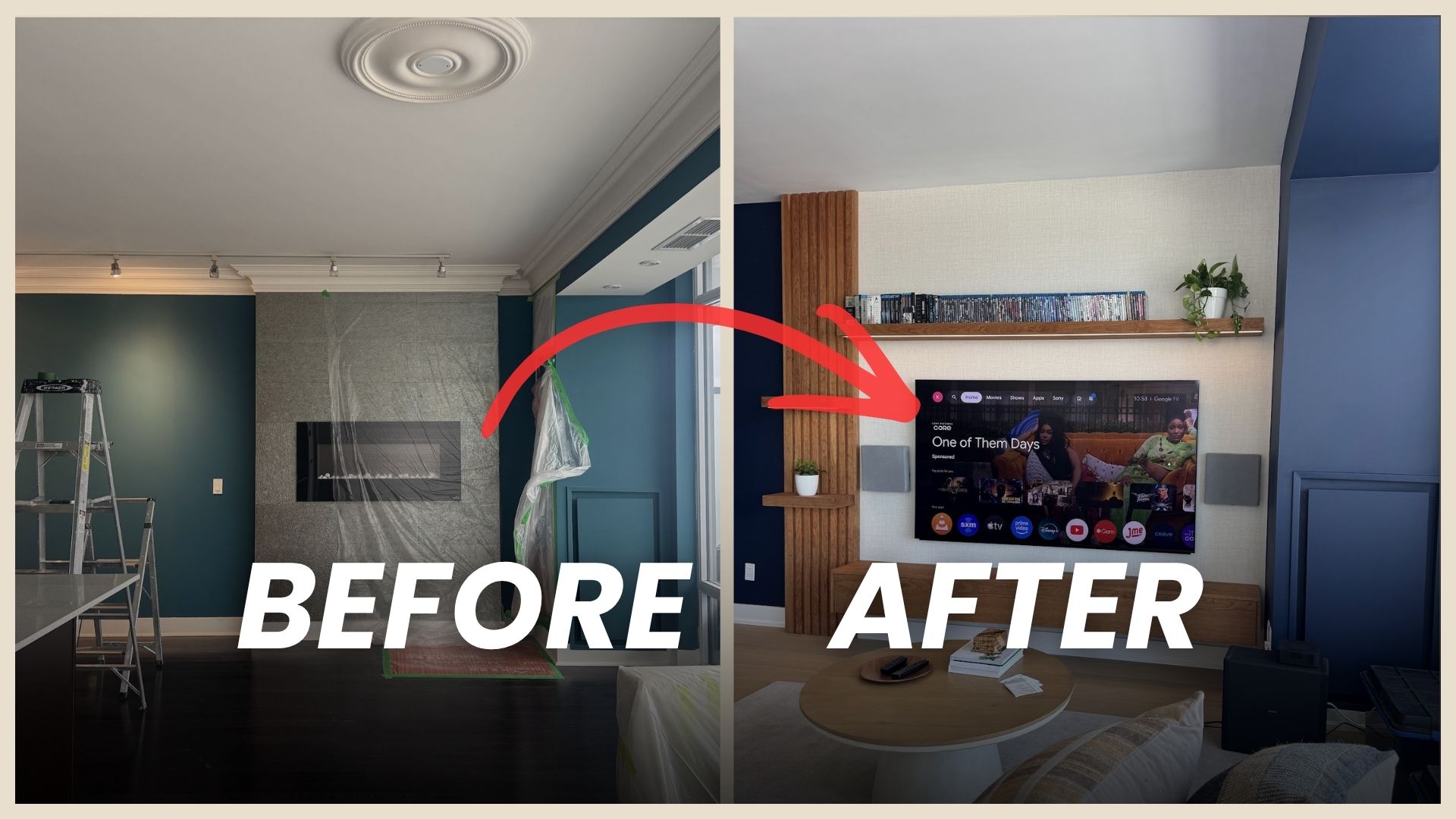
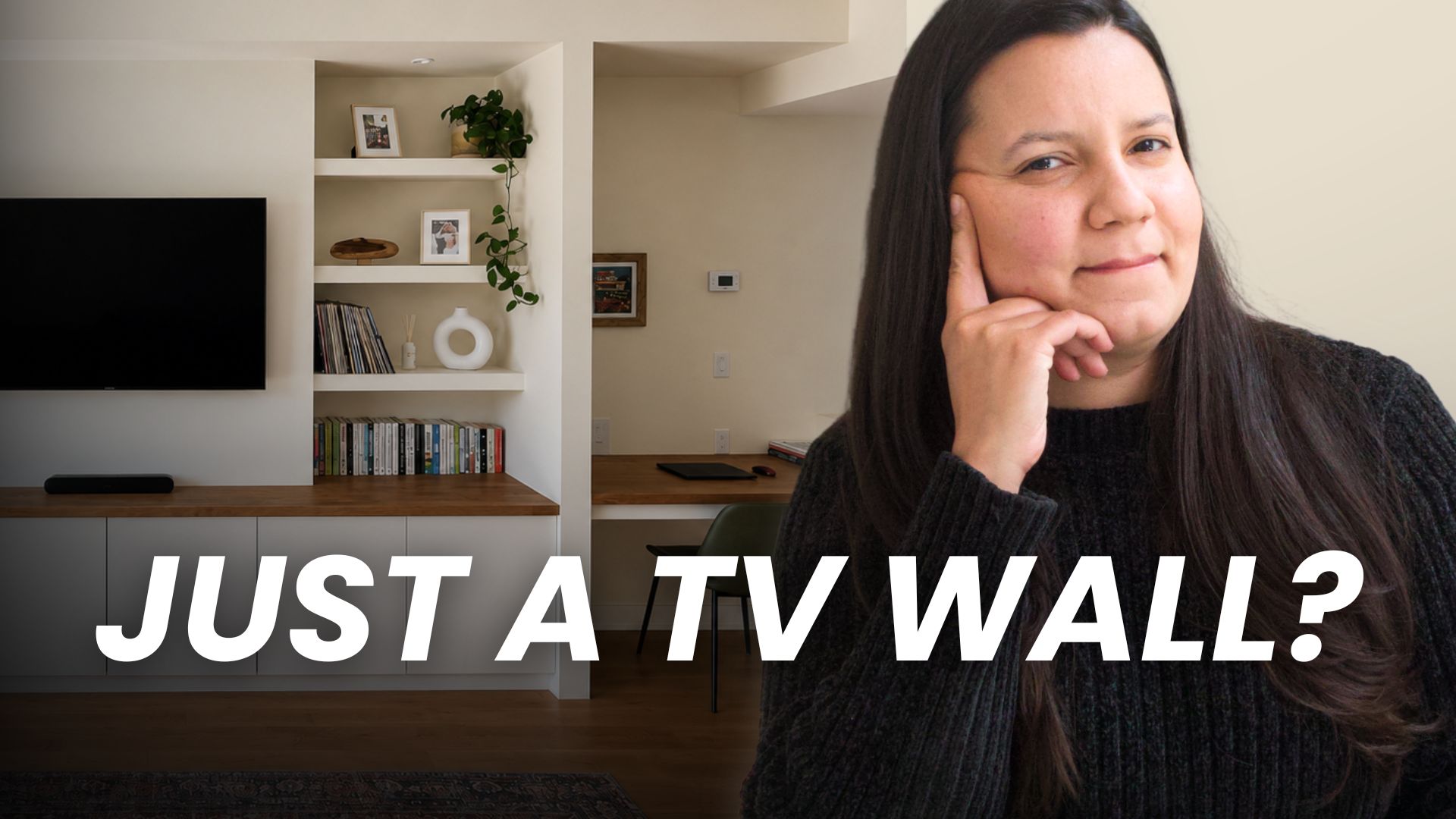
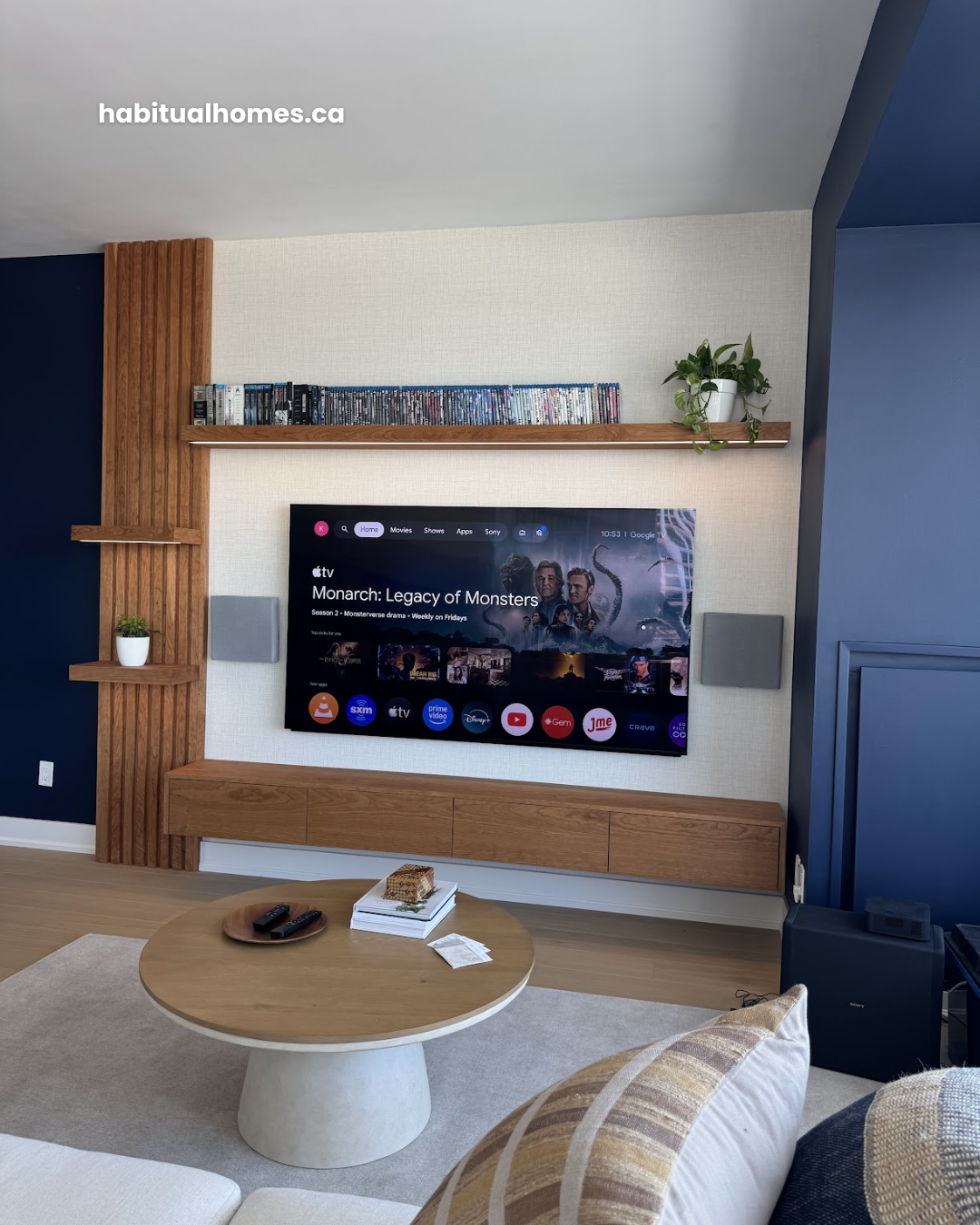
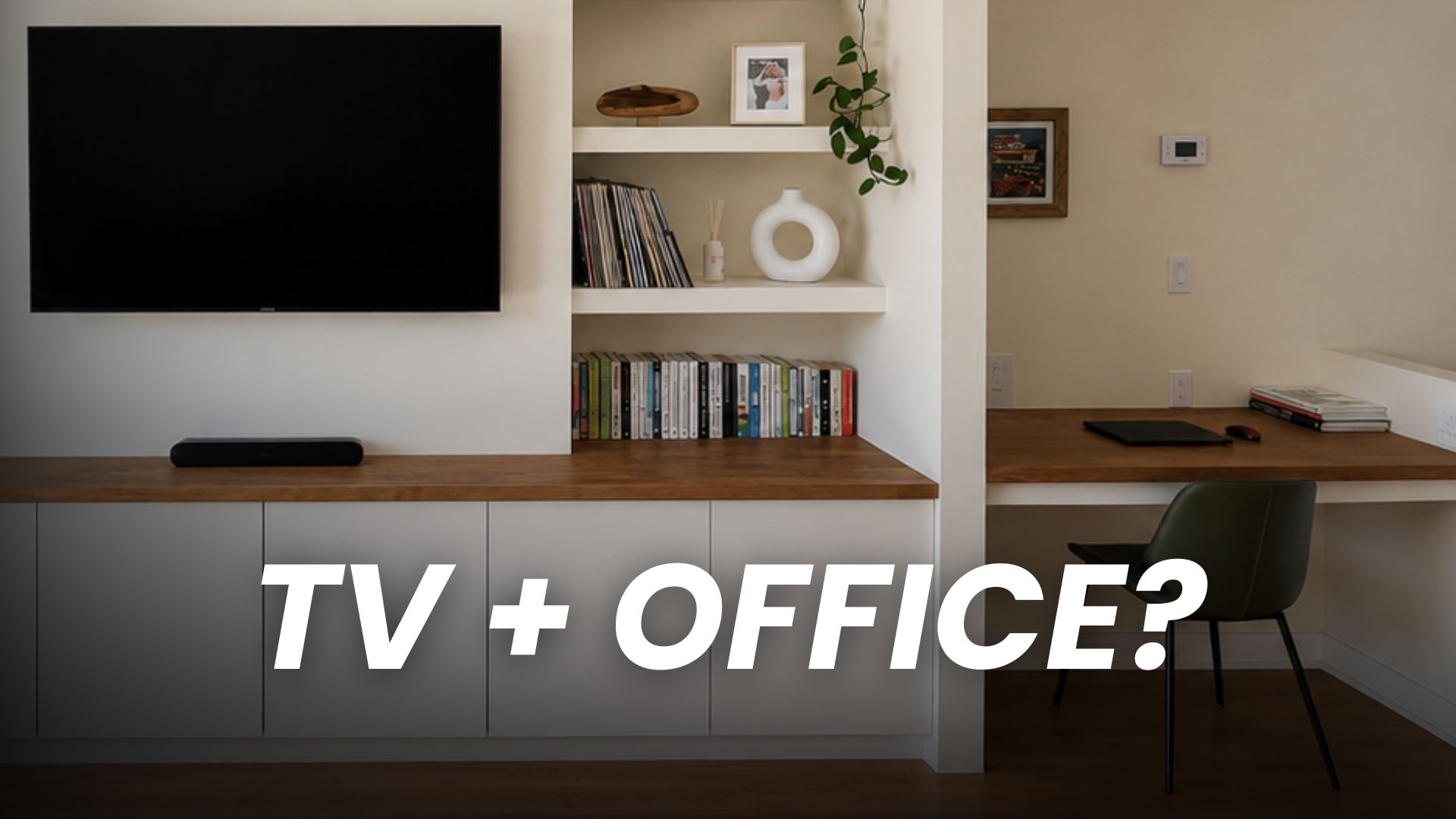
On one of our projects, the client needed exactly this: a place to work from home, but no spare room to convert into an office. We built the desk into one side of the TV wall, sized to fit how she actually worked, with its own outlet and cable routing separate from the media console. The rest of the wall held the TV, storage, and display shelving, so the whole thing read as one designed piece instead of a media wall with a desk bolted onto the end of it.
Want the full breakdown of that project, including the measurements and how the space was laid out? You can see the exact measurements and materials we used or read the full project breakdown.
Ready to see what that could actually look like in your living room?
Book a ConsultationHow to Tell If Your Wall Can Handle Both
Measure the section of your TV wall you’re considering for a desk. You need enough width for a desk surface you’d actually sit at, and enough depth that it doesn’t feel like a shelf. If the space feels too narrow, the fix usually isn’t skipping the desk, it’s rethinking how the rest of the wall is laid out so the desk gets the width it needs.
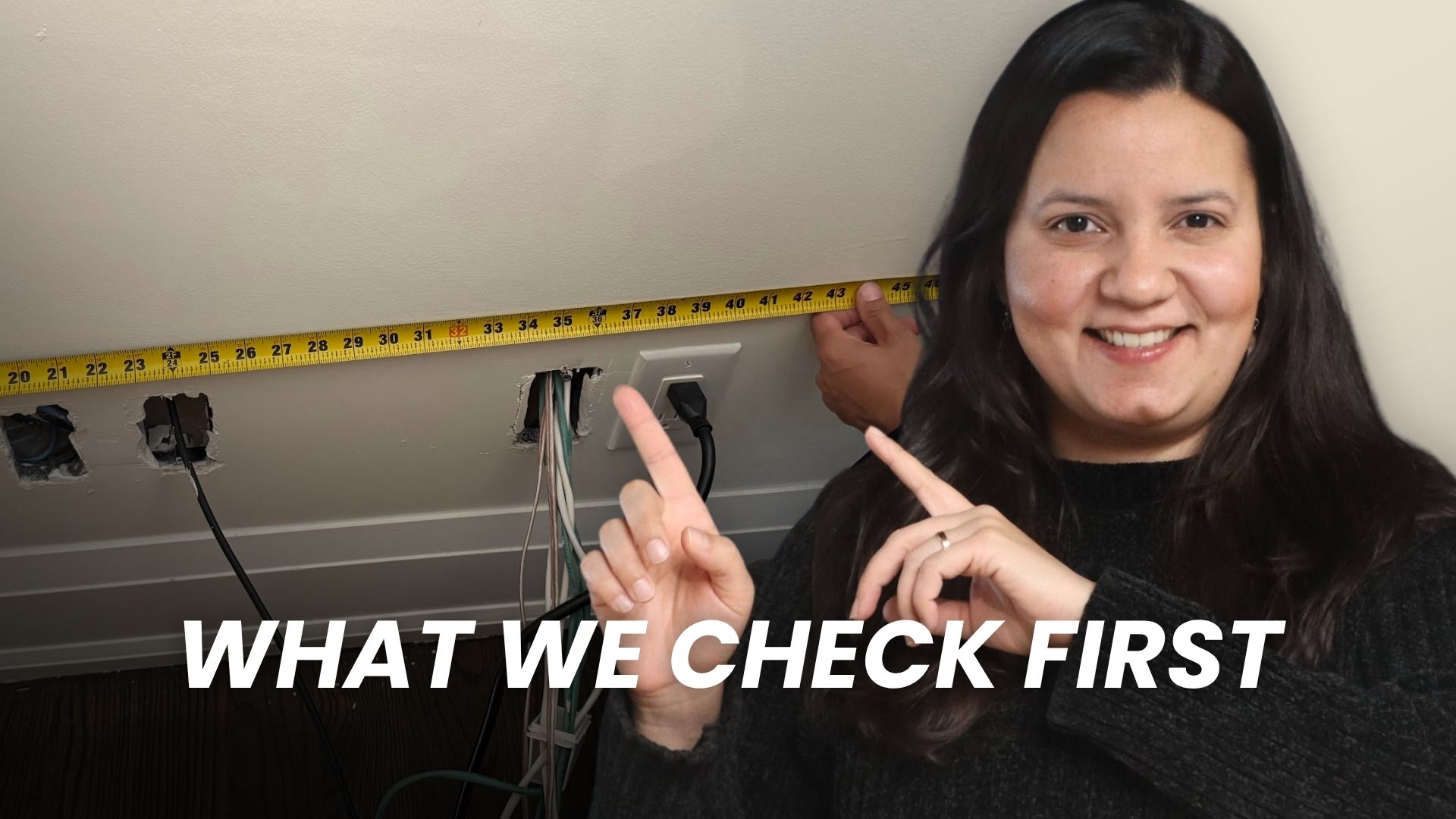
If you’re not sure your wall can support both, that’s exactly what a design consultation is for. We measure the space, check what’s behind the wall, and tell you honestly what will and won’t work before anything gets built.
FAQ
Can any TV wall fit a desk?
Most can, but the right spot depends on the wall’s total width and what else needs to live on it, storage, display, the TV itself. A wall that’s mostly one long stretch usually has more flexibility than a short or broken-up wall.
Will the desk look like an afterthought next to the TV?
Not if it’s planned as part of the wall from the start. The materials, the height, and the proportions should match the rest of the cabinetry so it reads as one design, not two.
Do I need a separate area for video calls?
Not necessarily a separate area, but the desk should be positioned so what’s behind you on camera looks intentional, not like the back of a TV console.
Is this only for larger living rooms?
No. Smaller Toronto living rooms and condos often benefit the most, since there’s no space to spare for a standalone office in the first place.
Can the desk include storage for work supplies?
Yes. Drawers or a closed cabinet section under or beside the desk is common, so work materials have a place to go when you’re not using the desk.
How is this different from just buying a desk and putting it near the TV?
A standalone desk is added to the room. A desk built into the TV wall is part of the room’s design from the start, matched in material, height, and proportion to everything else on that wall.
Still deciding whether your TV wall has room for a desk?
Fill out the consultation form and we’ll help you figure it out.