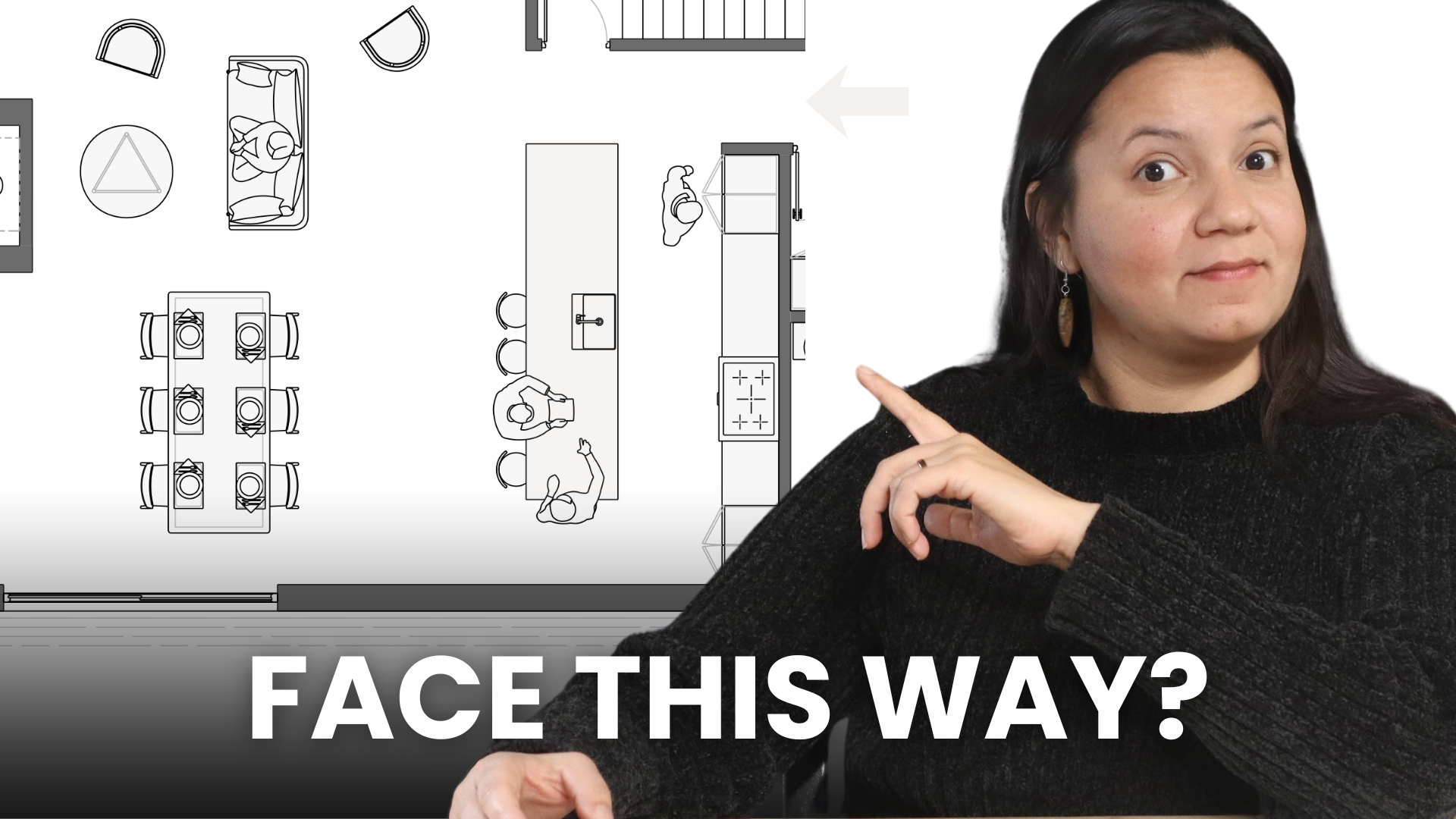
When planning a kitchen renovation, homeowners often focus on things like cabinet colours, countertops, and appliances.
But there is one decision that quietly shapes the entire experience of the kitchen:
Which direction your kitchen island faces.
It might sound like a small detail. In reality, the orientation of the island affects how connected the kitchen feels to the rest of the home, how much natural light you enjoy while cooking, and how the space functions every day.
In the video below, I walk through two real floor plan layouts to explain why there is no single rule for island placement.
Why Kitchen Island Direction Matters
Most people assume the kitchen island should always face the living room.
And in many homes, that makes sense. Facing the living room allows the cook to stay connected to family and guests while preparing meals. The kitchen becomes part of the social life of the house.
But depending on the layout of the home, facing the backyard can create a completely different — and sometimes better — experience.
The direction of the island determines:
• what you see while cooking
• how connected the kitchen is to the living room
• how much natural light enters the space
• whether the kitchen feels social or calm
This is why architects and designers always look at the entire floor plan, not just the kitchen itself.
Layout Example 1: Kitchen Island Facing the Living Room
In many open-concept homes, the kitchen island faces the dining and living areas.
This arrangement creates a strong connection between spaces. While cooking, you can see what is happening in the rest of the home. Conversations continue naturally, and guests often gather around the island.
For families who like to socialize while cooking, this layout works very well.
However, there are also trade-offs.
When the island faces the living room, the kitchen is always visible. From the sofa or dining table, you see the counters, the dishes, and whatever is happening on the stove.
For some households this openness feels welcoming. For others, it can make the kitchen feel constantly “on display.”
Layout Example 2: Kitchen Island Facing the Backyard
In the second layout, the island faces a large glazed wall toward the backyard.
This creates a very different experience.
Instead of facing the living room, the cook faces natural light and outdoor views. Cooking becomes calmer and more focused, while the living room remains in its own zone of the house.
The dining table can still remain close to the kitchen, maintaining a connection for serving meals and conversation.
But this layout also comes with trade-offs. Because the cook faces outside, the living room sits behind them. This can reduce visual connection with the rest of the home.
Again, neither option is universally right or wrong. It depends on how the household uses the space.
Renovating vs Building a New Kitchen
One important difference when planning island placement is whether you’re renovating an existing home or designing a new one.
In renovations, many constraints already exist.
Windows, structural walls, plumbing locations, and ceiling conditions can limit how much the layout can change. Often the best solution is found by working within those constraints rather than forcing a completely new configuration.
When building a new home, there is usually more flexibility. But even then, the site itself influences the layout. Sun direction, backyard orientation, street views, and privacy all play a role in how spaces are arranged.
Good design always responds to these conditions.
Three Questions That Help Decide Island Orientation
When designing kitchens for our clients, we often start with three simple questions:
1. How do you like to cook?
Some people enjoy cooking while talking with family or guests. Others prefer a quieter, more focused experience.
The orientation of the island can support either lifestyle.
2. Where does your best natural light come from?
If the backyard is the brightest side of the house, facing those windows while cooking can make the kitchen feel more enjoyable throughout the day.
3. What is the rest of the floor plan already doing?
Sometimes the dining area or another gathering space already connects people together. In that case, the kitchen doesn’t need to carry the entire social role of the home.
Understanding how all spaces work together is key.
Kitchen Design Is About How You Live
Design decisions like this are rarely about following a universal rule.
Instead, they are about understanding how a home supports daily life.
A well-designed kitchen should reflect the rhythm of the household — whether that means staying connected to conversations in the living room or enjoying a quieter moment looking out toward the garden.
The island direction is just one detail, but it’s a detail that influences how the kitchen feels every single day.
Planning a Kitchen Renovation in Toronto?
At Habitual Homes, we work with homeowners throughout Toronto to design kitchens and renovations that respond carefully to both the architecture of the home and the lifestyle of the people living in it.
If you’re planning a renovation and want help thinking through layout decisions like this, feel free to explore more of our design resources or reach out to discuss your project.
LET’S START A CONVERSATION
To get started, fill out the form below.
If you prefer, you can also email us directly at info@habitualhomes.ca.

Related Articles
1. Should You Extend Kitchen Cabinets to the Ceiling?
A common kitchen design decision that affects storage, proportions, and how finished the kitchen feels. Learn when extending cabinets to the ceiling makes sense and when it doesn’t.
2. What Is the Ideal Size of a Kitchen Island?
Before deciding which way your island should face, it’s important to understand the right island dimensions for your space, including clearance, seating, and circulation.
3. Is It Better to Paint or Stain Kitchen Cabinets?
Cabinet finishes affect the overall look and longevity of your kitchen. This article explains the differences between painted and stained cabinets and when each option works best.